bluename
 spider plant Cutting Propagation: Does Cutting Length Matter? 5cm vs. 10cm Compared
You’ve lovingly nurtured your spider plant, and now it’s rewarding you with a cascade of adorable little plantlets, or “spiderettes.” Excited to multiply your green family, you snip one off, ready to propagate. But then, a moment of hesitation strikes. How much of that dangling stem, the stolon, should you cut? Is a shorter 5cm (2-inch) piece sufficient, or is a longer 10cm (4-inch) piece definitively better? Choosing the wrong length can lead to frustrating delays, failed root development, or even the loss of your precious cutting. This common dilemma is the difference between swift success and a puzzling setback.
This guide cuts through the uncertainty. We will directly compare the 5cm and 10cm cutting length approaches for spider plant propagation, providing clear, evidence-based advice to ensure your propagation efforts thrive from the very first snip.
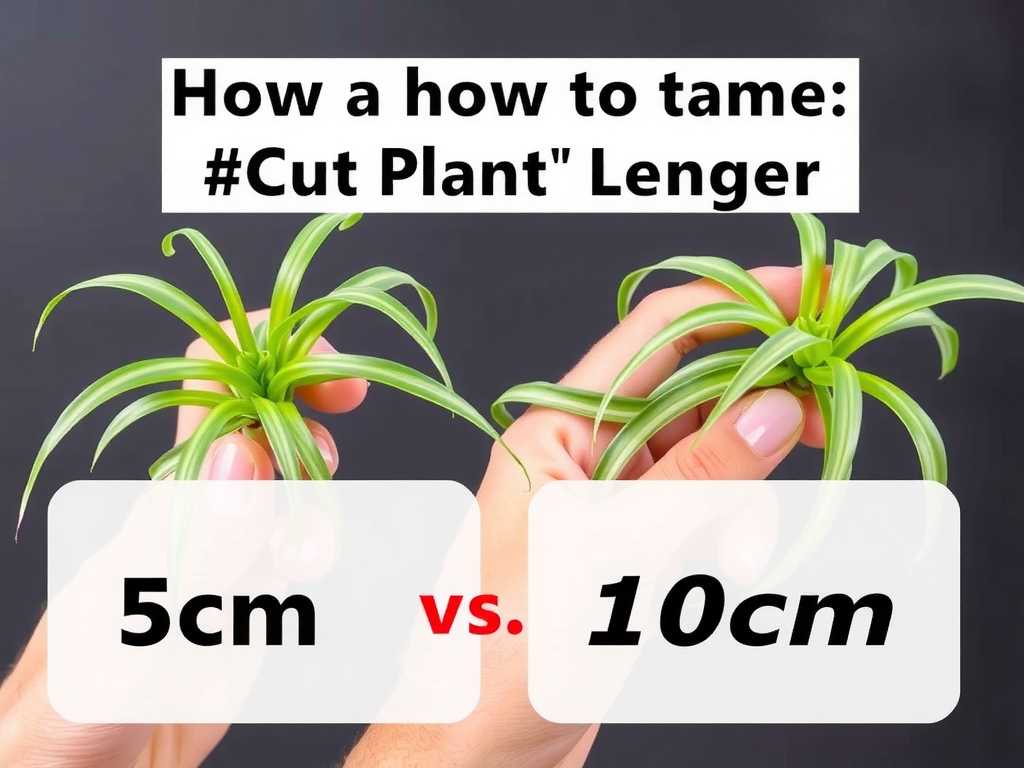
Understanding the Spider Plant Cutting: More Than Just Length
Before we dive into the 5cm vs. 10cm debate, it’s crucial to understand what we’re actually working with. The spiderette itself is a complete miniature plant. The key factor in propagation isn’t the baby plant’s leaves, but the nub or node at its base where it connects to the stolon. This node is the epicenter of new root growth.
When we talk about “cutting length,” we are specifically referring to the amount of the stolon—the long, leafless runner—that you leave attached to the spiderette. This stolon segment is a reservoir of energy and moisture, and its length directly influences the early stages of your new plant’s life.
The Great Debate: 5cm vs. 10cm Spider Plant Cuttings
Let’s break down the pros, cons, and best-use scenarios for each cutting length to help you make the perfect choice for your situation.
The Case for the 10cm (4-inch) Cutting
A longer stolon segment attached to your spiderette is often considered the beginner-friendly and fail-safe method, particularly for water propagation.
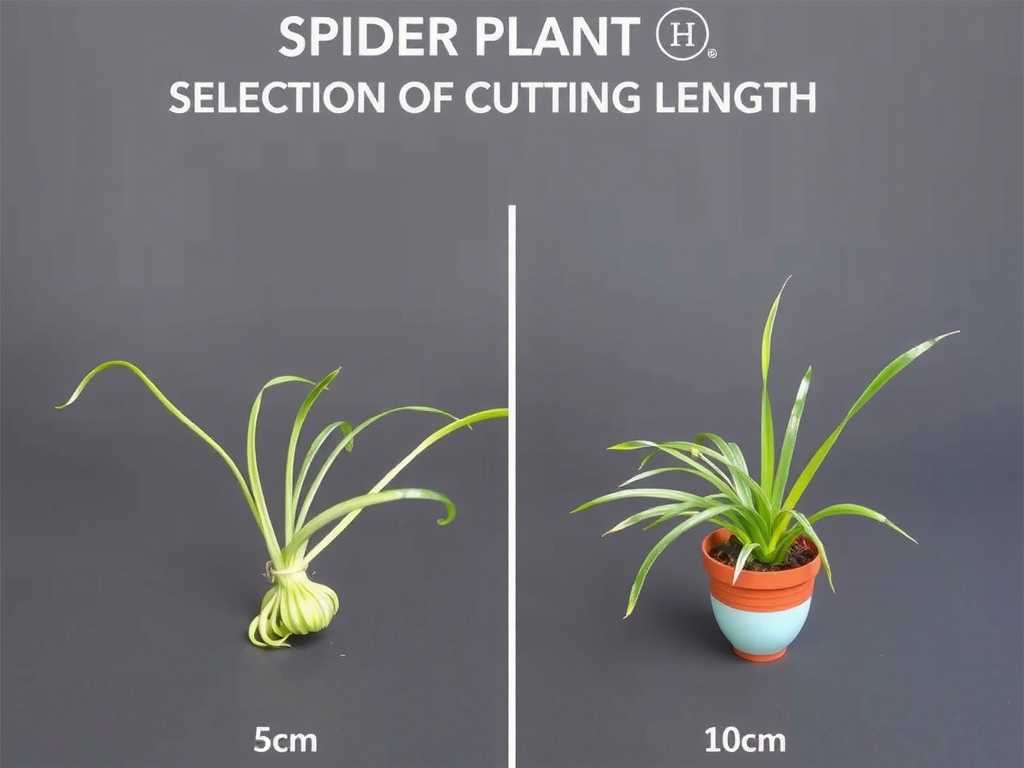
- Superior Stability and Placement: The extra length makes it much easier to position the cutting in a jar or vase. It prevents the spiderette itself from falling into the water, keeping only the node and stolon submerged. This is critical, as submerged leaves will rot.
- Larger Energy Reserve: The stolon acts like a battery pack. A 10cm piece contains more stored carbohydrates and water, providing a substantial buffer for the spiderette as it dedicates energy to producing new roots. This can be especially beneficial if your home environment is dry or if the cutting experiences any initial stress.
- Clearer Root Observation: In water propagation, roots will emerge all along the submerged stolon. A longer segment allows for a more dramatic and easily observable root system to develop, which can be satisfying and educational.
- Expert Insight: Many horticulturists, including those at the Royal Horticultural Society, recommend leaving a portion of the stolon attached for precisely these stability and energy reasons. It simplifies the process and increases the margin for error.
The Case for the 5cm (2-inch) Cutting
A shorter, more minimalist approach is not only valid but can be advantageous in certain scenarios, especially for direct soil propagation.
- Promotes Faster Transition to Soil Roots: When a cutting is placed directly into soil, a very long stolon in a small pot can be cumbersome. A 5cm segment is neater and encourages the plant to focus its energy on producing strong, adaptive roots directly from the node into its new medium, rather than relying on water roots formed along a long stolon.
- Reduces Risk of Rot: In both water and soil, organic material (like the stolon) is susceptible to decay. A shorter 5cm piece presents less material that could potentially rot, particularly in moist soil. This can lead to a cleaner, more straightforward propagation process.
- Ideal for Clustered Plantings: If you plan to plant several spiderettes together in one pot for a instantly full look, shorter stolons are much easier to manage and bury without tangling or requiring excessively deep planting.
- Efficiency and Aesthetics: For the experienced plant propagator, the 5cm cut is efficient. It recognizes that the node is the true powerhouse, and a minimal stolon is simply a convenient handle that gets the node to the right place.
Head-to-Head Comparison: Key Factors
To visualize the difference, let’s compare them side-by-side:
- Ease of Use (Water Propagation): 10cm wins. Its inherent stability in a propagation vessel is unmatched for beginners.
- Speed of Initial Rooting (Water): Generally equal. Root initiation at the node happens at a similar rate. The 10cm may show more total root mass sooner simply because roots form along its length.
- Transition to Soil: 5cm has an edge. Cuttings rooted from a short stolon often adapt to soil slightly faster, as they aren’t transitioning a large system of fragile water roots.
- Risk of Rot: 5cm is lower. Less non-essential organic material in a moist environment means a lower statistical risk of issues.
- Best For: 10cm is best for water propagation beginners and those who want to watch root development. 5cm is excellent for direct soil propagation and experienced propagators seeking a neat, efficient process.
Your Step-by-Step Propagation Guide for Both Lengths
Regardless of your chosen length, follow these steps for success.
1. Selection and Cutting: Choose a healthy, plump spiderette with visible little nubs (primordial roots) at its base. Using clean, sharp scissors or pruners, cut the stolon. You can cut 5cm below the spiderette for a short handle, or 10cm below for a longer one. The cut can be straight or angled.
2. Propagation Method:
- Water Method (Ideal for 10cm): Place the cutting in a container so that only the node and stolon are underwater. Leaves must stay dry. Change the water weekly. You’ll see roots in 7-14 days.
- Soil Method (Ideal for 5cm): Use a well-draining potting mix. Create a small hole and insert the stolon segment, ensuring the node is in contact with the soil. Gently firm the soil around it. Water thoroughly and place in bright, indirect light.
3. Aftercare and Potting: Keep the medium lightly moist but not soggy. For water-propagated cuttings with substantial roots (2-3cm long), they can be potted into soil. Handle the new water roots gently. For soil-propagated cuttings, a gentle tug meeting resistance after a few weeks indicates root establishment.
Why Your Cutting Choice Impacts Success
The science behind this is simple: plant energy allocation. A longer stolon provides more resources, reducing transplant shock—a principle supported by studies on clonal plant propagation. However, it also creates a two-stage root system. A shorter stolon forces the plant to invest directly into permanent soil roots immediately. Your choice essentially dictates the plant’s initial survival strategy.
Frequently Asked Questions
Can I propagate a spider plant cutting with no stolon at all? Yes, absolutely. If a spiderette has developed visible aerial nubs, it can often be planted directly into soil with the base of the plantlet just at the surface. The presence of a stolon is not mandatory; it simply acts as a helpful tool and energy reserve during the transition.
My 10cm stolon is getting mushy in water. What should I do? This is a sign of the beginning of rot. Immediately remove the cutting, cut away the soft, mushy portion of the stolon back to clean, firm tissue. You may now have a much shorter stolon—perhaps 5cm or less. Disinfect your jar and use fresh water. This common issue is why some prefer starting with a shorter stolon.
How long before my new spider plant cutting starts growing new leaves? Once a strong root system is established in its pot—typically 3-6 weeks after potting—you will see the center of the spiderette begin to produce fresh, new leaves. This is the definitive sign that your propagation is a complete success and the plant is actively growing in its new home.
Choosing between a 5cm and a 10cm cutting length is less about right versus wrong and more about selecting the right tool for your specific method and confidence level. For a visual, stable, and reassuring start, the 10cm cutting in water is a fantastic choice. For a direct, clean, and soil-focused approach, the 5cm cutting excels. By understanding the role of the stolon as an energy reserve and a practical handle, you can now snip with confidence, knowing that either path, executed correctly, leads to a thriving new spider plant. The key is to provide that crucial node with consistent moisture and patience, and soon you’ll be the one sharing spiderettes with friends.