bluename
 Care for Mini spider plants: Watering and Light Control During Seedling Stage
I remember the excitement of getting my first batch of mini spider plant seedlings. They were so tiny, so full of potential. But that excitement quickly turned to anxiety. How much water was too much? Where should I place them for the best light? I realized that the seedling stage is the most critical, yet delicate, phase in the life of a mini spider plant. Getting the fundamentals of watering and light control wrong here can mean the difference between a thriving plant and a disappointing failure. Over the years, through trial, error, and careful observation, I've developed a system that works. Let me walk you through my exact process, the results I saw over a focused two-week period, and the common pitfalls I've learned to avoid.
Why the Seedling Stage Demands Your Utmost Attention
Those first few weeks after germination are when your mini spider plants are building their foundational strength. Their root systems are minuscule and fragile, unable to handle the moisture fluctuations a mature plant might tolerate. Similarly, their tender leaves are highly susceptible to scorching from direct sun or stretching weakly from insufficient light. According to principles often emphasized by horticultural societies like the RHS (Royal Horticultural Society), consistent care during this establishment phase directly influences the plant's vigor, variegation, and ability to produce its iconic "spiderettes" later on. My goal was to create a stable, nurturing microclimate.
My Two-Week Seedling Care Protocol: A Daily Log
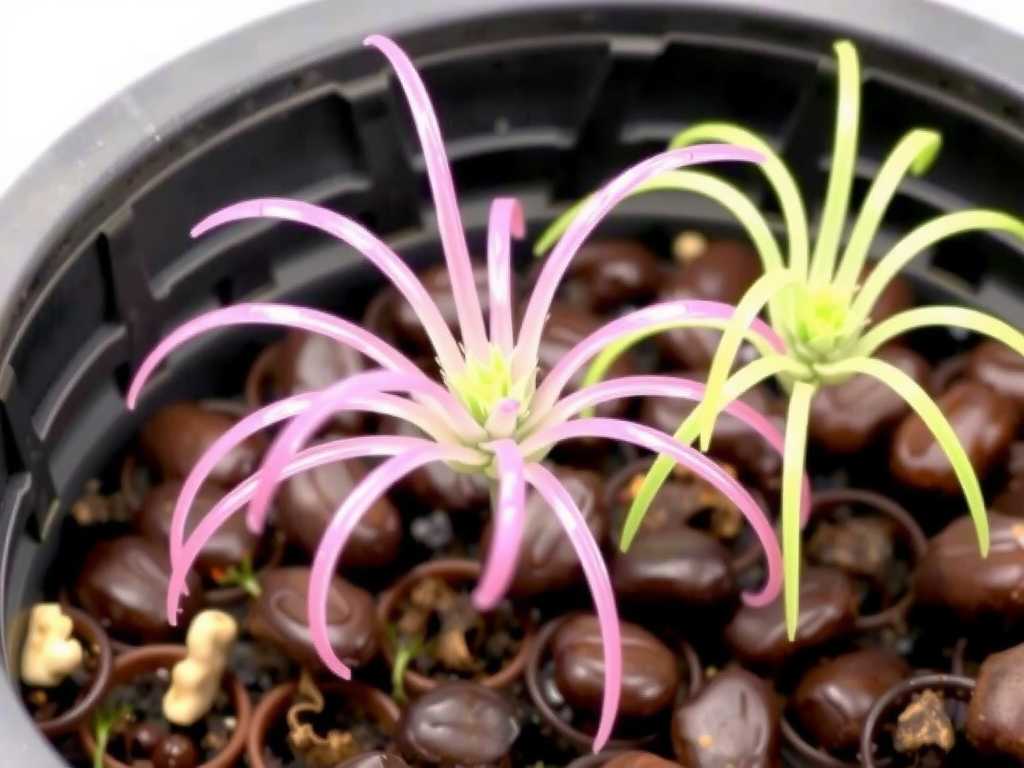
I decided to document a recent batch of Chlorophytum comosum ‘Bonnie’ seedlings meticulously. I started with six healthy, newly germinated sprouts in a shallow, well-draining seedling tray filled with a sterile, soilless seed-starting mix.
Week 1: Establishing the Routine
Days 1-3: The Gentle Start My primary tool for watering spider plant seedlings isn't a watering can. It's a small spray bottle filled with distilled water. The force from a can easily displaces the tiny seeds or seedlings. Each morning, I gently misted the surface of the growing medium until it looked evenly dark and moist, but not soggy. I placed the tray on a north-facing windowsill, which provided bright, indirect light for young spider plants all day without any harsh rays. The temperature was a steady 70°F (21°C).
- Observation: The seedlings maintained a bright green color. The growing medium surface dried slightly by evening but remained damp just beneath.
Days 4-7: Observing First Growth I continued the morning misting ritual. By day five, I noticed the first true leaves beginning to develop beyond the initial seed leaves. This signaled the start of active photosynthesis. I rotated the tray 180 degrees to prevent the seedlings from leaning toward the light. I also introduced a new step: the "knuckle test." Before misting, I would gently touch the surface. If it felt cool and slightly damp, I waited. If it felt dry and warm, I misted.
- Observation: Steady growth was visible. Stems were sturdy, not leggy. The color was vibrant. This confirmed the light level was sufficient.
Week 2: Refinement and Response
Days 8-10: The First Challenge – Overwatering Signs Here’s where I hit my first snag. Worried about underwatering, I had been a little over-enthusiastic with the misting. On day eight, I noticed one seedling looked a bit pale and its growth had stalled. Upon closer inspection, the base of its stem seemed slightly translucent. Classic early signs of too much moisture! I immediately stopped all watering for that day. I moved the tray to a slightly warmer spot (a shelf near the window, not directly on the sill) to encourage evaporation and improve air circulation around the seedlings.
- Observation: The affected seedling's condition did not worsen. The others continued to grow well. The surface of the medium dried more uniformly.
Days 11-14: Course Correction and Recovery For the next three days, I switched from a schedule-based approach to a strictly condition-based one. I only misted in the morning when the top quarter-inch of the mix passed the knuckle test as dry. I also ensured the tray had excellent drainage and was never sitting in a saucer of water. The recovering seedling slowly regained a healthier hue.
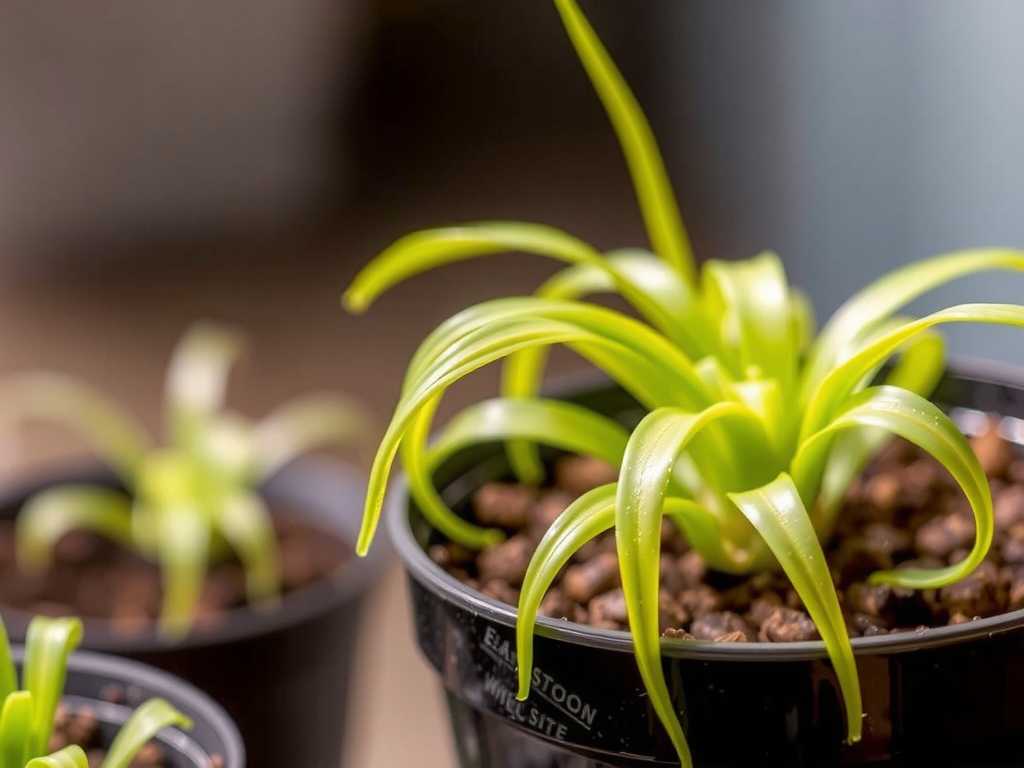
- Observation by Day 14: All six seedlings had developed 3-4 true leaves. They were compact, a deep green, and showed no signs of stretching or burning. The root systems, when I gently tipped one out, were white and healthy-looking, beginning to fill the starter cell.
The Two Pillars of Success: Watering and Light, Decoded
My two-week log highlights the non-negotiable principles. Let's break them down.
Mastering Moisture: How to Water Spider Plant Babies
The biggest killer of spider plant seedlings is overwatering. Their roots need oxygen as much as they need water.
- The Tools: Forget the watering can. Use a spray mister or, even better, a small syringe or spoon to deliver water directly to the base of the seedling, avoiding the leaves.
- The Technique: Always water from below if possible. Place your seedling pots in a shallow dish of water for 5-10 minutes, allowing the mix to wick moisture upward. Then, remove and let excess drain completely. This encourages deeper root growth and keeps stems dry.
- The Schedule Myth: Do not water on a fixed schedule. Factors like humidity, temperature, and air flow change daily. The correct way to water young spider plants is to check the soil daily. The top layer should be allowed to dry out slightly between waterings, while the root zone remains lightly moist.
Providing the Perfect Glow: Light Requirements for Seedlings
Light is their energy source, but it must be the right kind.
- Ideal Conditions: Bright, indirect light is king. An east-facing window is perfect, offering gentle morning sun. A north-facing window or a spot set back from a south/west window also works. The goal is to see strong growth without any yellowing or browning on the leaf tips.
- Signs of Trouble:
- Leggy Seedlings: Long, weak stems reaching for light mean they need more brightness.
- Faded or Scorched Leaves: Brown, crispy patches indicate too much direct sunlight.
- The Simple Fix: If natural light is insufficient, a simple LED grow light placed 6-12 inches above the seedlings for 12-14 hours a day is a fantastic, controlled solution. I've used this during gloomy winters with excellent results.
Common Pitfalls and How I Solved Them
Pitfall 1: The "Love Drowning" As I experienced in Week 2, over-attention often manifests as overwatering. The solution was to shift from emotion-based watering to evidence-based watering. My finger became my best tool. Letting the surface dry taught me to trust the process.
Pitfall 2: The Inconsistent Environment Drafty windowsills or spots over heating vents create stress. I moved my seedlings to a stable, draft-free location with consistent temperature and light. A simple indoor thermometer/hygrometer helped me monitor this.
Pitfall 3: Wrong Potting Medium Using dense, moisture-retentive garden soil is a death sentence. I now only use a light, airy mix specifically labeled for seed starting or succulents, often amended with a handful of perlite for extra drainage. The American Horticultural Society (AHS) notes that good drainage is paramount for preventing root diseases in young plants.
Your Questions, Answered
How often should I fertilize my mini spider plant seedlings? Do not fertilize at all during the initial seedling stage (the first 4-6 weeks). The seed-starting mix contains enough nutrients. Fertilizing too early can burn the delicate roots. Wait until they have several sets of true leaves and you've transplanted them once, then use a diluted, balanced liquid fertilizer at half strength.
Can I use tap water for my seedlings? Spider plants are sensitive to fluoride and chlorine, which can cause brown leaf tips. This is especially crucial for seedlings. I use distilled water, rainwater, or tap water that has been left out uncovered for 24 hours to allow chemicals to dissipate. This simple step prevents a common aesthetic issue.
When should I transplant my seedlings? The ideal time is when they have 3-4 true leaves and their roots are visibly filling the starter cell. This was exactly the stage I observed at the end of my two-week period. Transplant them gently into small individual pots with proper drainage holes, using a well-draining potting mix. This gives them room to grow stronger.
Success with mini spider plant seedlings boils down to mindful restraint. It's about providing consistent, bright indirect light and mastering the art of watering only when needed. By mimicking the stable conditions they crave and avoiding the common urge to over-care, you give these tiny plants the robust foundation they need. Watching them develop from fragile sprouts into vigorous, trailing beauties is one of the most rewarding experiences for any plant lover. Start with these core principles, observe your plants closely, and you'll be well on your way to a thriving spider plant family.