bluename
 spider plant Light Exposure in Winter: My 2-Week South-Facing Windowsill Experiment
As a dedicated plant enthusiast, I’ve always known that winter is the ultimate test for our indoor green companions. The shorter days, weaker sunlight, and dry air create a challenging environment. For my beloved spider plants, known for their resilience, I noticed a worrying trend each winter: slower growth, less vibrant variegation, and a general lack of that perky vigor they show in summer. The central question became urgent: How much direct light from a south-facing window do spider plants truly need during winter? Is more always better, or can the intense, low-angled winter sun on a south-facing windowsill actually do more harm than good? I decided to stop guessing and start a real-world, two-week experiment to find the optimal placement and duration for spider plant light exposure in winter.
My Experimental Setup: Two Plants, One Sunny Sill
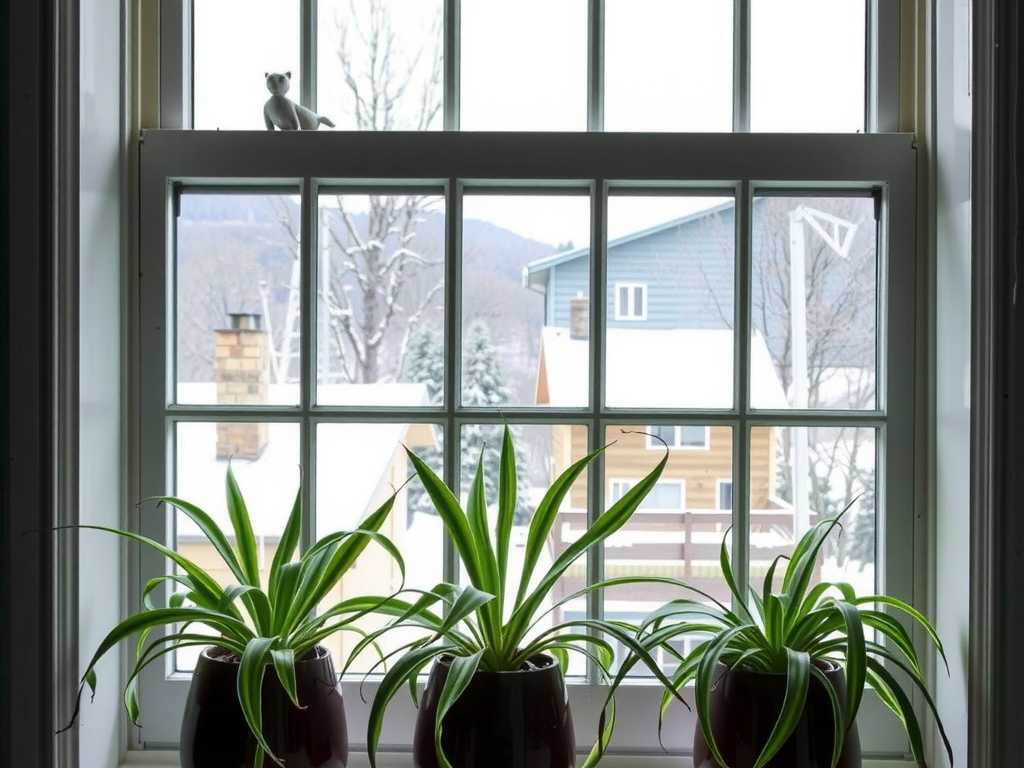
I selected two healthy, mature spider plants (Chlorophytum comosum) from my collection. Both were ‘Vittatum’ varieties with classic green and white stripes. To ensure a fair test, I repotted both into identical well-draining potting mix and gave them a thorough watering to start on equal footing.
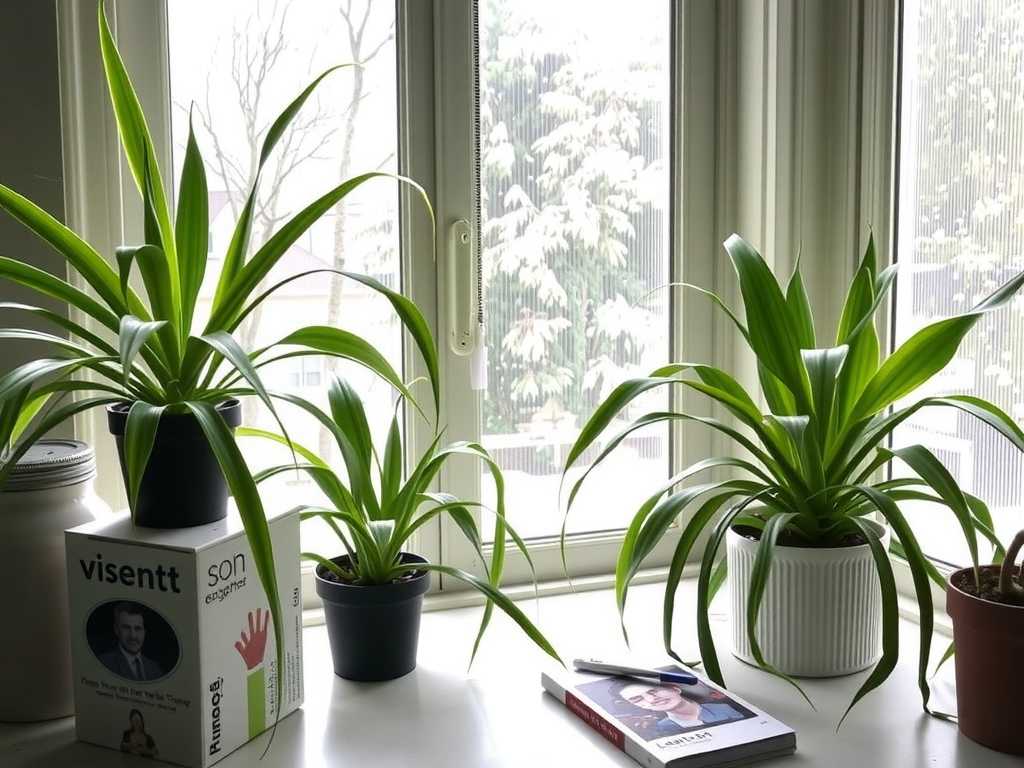
My laboratory was my brightest south-facing windowsill. This spot receives intense, direct sunlight from late morning until mid-afternoon during the winter months—roughly a 5-hour window of strong, direct exposure. Here was my plan:
- Plant A (The “Full Suntime” Test): This plant would live directly on the windowsill, soaking up every minute of available direct sun for the entire two weeks.
- Plant B (The “Filtered & Timed” Test): This plant would be placed on the same sill but with two key interventions. First, a sheer curtain was used to diffuse the strongest midday rays. Second, I would physically move it back from the direct line of fire for about 2 of the sunniest hours, simulating a spot that gets bright indirect light for part of the day.
My goal was to observe the effects of prolonged, unfiltered south-facing winter sun versus managed, filtered exposure.
Week 1 Observations: The First Signs Speak Volumes
The first few days were uneventful. Both plants seemed fine. But by Day 5, clear differences emerged, particularly regarding spider plant light exposure in winter.
Plant A, on the full sun regimen, started showing subtle stress signals. The very tips of a few older leaves began to turn pale and then a crispy brown—a classic sign of scorch. The vibrant white stripes on new leaves seemed slightly less bright, almost taking on a yellowish tinge when the sun hit them directly. The soil also dried out remarkably faster than I anticipated.
Plant B, behind the sheer curtain, showed no signs of stress. Its colors remained crisp, and I even spotted the very beginning of a tiny flower stalk (a sign of a happy, mature spider plant). The soil moisture was more stable.
This aligned with guidance from the Royal Horticultural Society (RHS), which notes that while spider plants tolerate direct sun, “strong midday sun can scorch the leaves,” especially in summer. I realized that low-angled winter sun, concentrated through a cold windowpane, can create a similar scorching effect.
Week 2 and The “Aha!” Moment: Adjusting for Perfect Winter Light
Entering the second week, the trajectory continued. Plant A’s leaf tips became noticeably browner. While it wasn’t dying, it was clearly under a low-grade, constant stress. It was conserving energy, not thriving.
For Plant B, I refined my technique. I settled on a perfect routine: from 10 AM to 2 PM, the peak intensity hours, it sat behind the sheer curtain. By 2 PM, I would remove the curtain, allowing it to bask in the gentler, late-afternoon direct sun until it faded. This provided ample bright indirect light for spider plants during the harshest period, followed by a dose of gentle direct rays.
The results were striking. Plant B’s new growth was firm, brightly variegated, and the tiny flower stalk continued to develop. It looked robust and content. I had effectively created the ideal winter care for chlorophytum by modulating, not maximizing, the south-facing exposure.
The Pitfalls I Encountered (And How I Fixed Them)
This experiment wasn’t without its hiccups. Here are the key mistakes I made and how you can avoid them:
-
The Overwatering Trap: With Plant A, seeing the soil dry quickly, I initially watered it on the same schedule as Plant B. This was a mistake. A plant under light stress (like scorching sun) uses water less efficiently. I learned to check the soil moisture an inch down, not just the surface, and to water based on need, not schedule. The American Horticultural Society (AHS) emphasizes that “overwatering is the most common cause of houseplant death,” and stress from improper light compounds this risk.
-
Ignoring the Microclimate: The windowsill was significantly colder at night than the room’s interior. I realized both plants, especially their roots, were experiencing a chill. I solved this by placing a small, insulating mat under the pots during the coldest nights and ensuring foliage wasn’t touching the icy glass.
-
Assuming “South-Facing” Means Uniform Light: Not all south-facing windows are equal. A tree outside or the roof’s overhang can create dappled light. I used a simple light meter app on my phone to compare the intensity at different times. This data helped me pinpoint the exact 2-hour window of peak intensity that required filtering.
My Verdict: The Optimal South-Facing Windowsill Strategy
After 14 days of close observation, my conclusion is clear. For thriving spider plant light exposure in winter, a south-facing windowsill is a fantastic asset, but it requires intelligent management.
The winning formula is filtered, timed exposure. Do not leave your spider plant in unfiltered, all-day direct winter sun on a south-facing sill. Instead, use a sheer curtain or move the plant 1-2 feet back from the window during the peak intensity hours (typically late morning to early afternoon). This provides the crucial bright light spider plants crave without the damaging scorch. Let it enjoy the gentler direct sun of the late afternoon.
This approach provides the energy they need for steady growth and even blooming, while avoiding the stress that leads to brown tips and faded color. It’s about quality and timing of light, not just quantity.
Your Questions, Answered
Can I just leave my spider plant in a south window all winter? You can, but you risk leaf scorch (brown tips) and stressed growth. It will likely survive, but to help it truly thrive, I strongly recommend diffusing the strongest midday rays with a sheer curtain.
My spider plant is getting long, leggy stems but small leaves. Is this a light issue? Yes, this is a classic sign of insufficient light, known as etiolation. The plant is stretching to find more. If yours is in a north-facing window or far from a south one in winter, it may need to be moved closer to the light source. The stems you’re seeing are stolons, or runners, which can become elongated and weak without enough light.
How does winter light differ from summer light for spider plants? The intensity of direct summer sun is often too strong and can quickly burn leaves, so we typically keep spider plants in bright indirect light. Winter sun is less intense but lower in the sky, shining directly into south windows for longer. While less harsh than summer sun, it can still concentrate heat and light through the glass over many hours, leading to slow scorching and dehydration, which is why my timed approach works so well.
Observing and adjusting to your plant’s specific response is the most rewarding part of plant care. My two-week journey taught me that with a simple sheer curtain and a mindful eye, a south-facing windowsill transforms from a potential hazard into the perfect winter sun haven for a happy, healthy spider plant.