bluename
 North-Facing Balcony spider plant Care: My 2-Week Grow Light Experiment
I love my spider plants, but my north-facing balcony was becoming their worst enemy. The soft, indirect light they supposedly adore just wasn't cutting it anymore. New growth was sparse, the vibrant green stripes on my ‘Vittatum’ were fading, and the whole plant lacked its usual perky vigor. I knew I needed to intervene, and supplemental lighting was the obvious answer. But the big question was: for a north-facing balcony, what is the optimal grow light usage duration for spider plants? I decided to turn my balcony into a two-week experiment to find the perfect balance.
Understanding the Light Deficit on a North-Facing Balcony
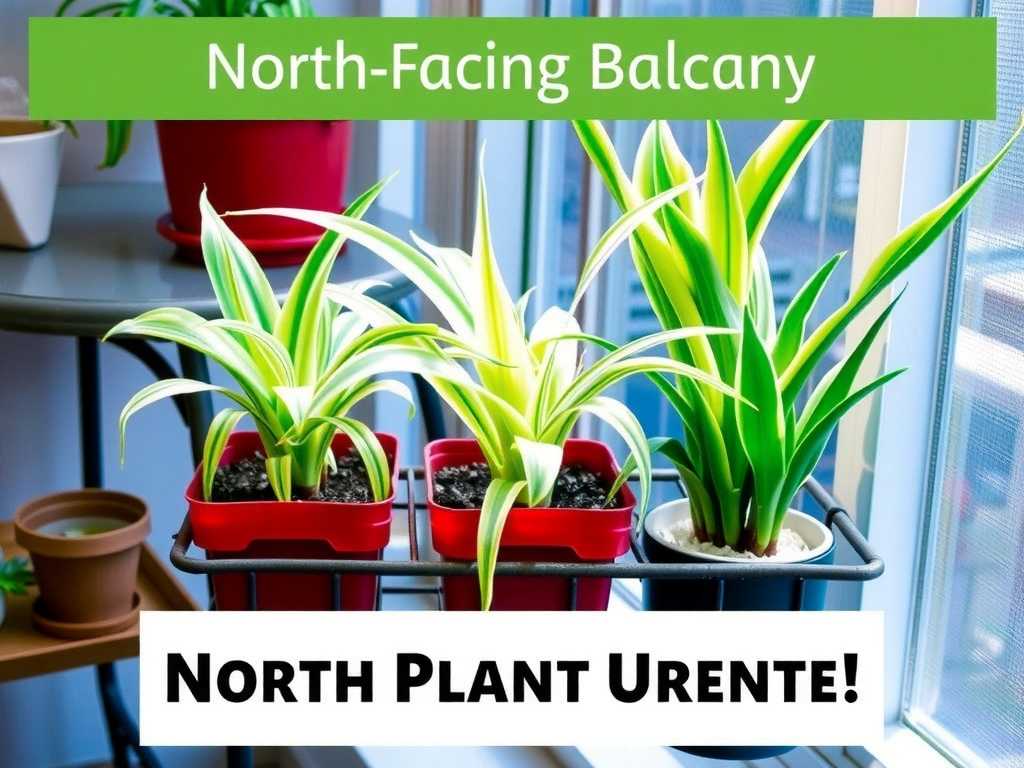
First, let’s talk about the core challenge. A north-facing balcony in the Northern Hemisphere receives no direct sunlight. The light is diffused and shaded, which is excellent for preventing leaf burn but often insufficient for robust photosynthesis over time. The Royal Horticultural Society (RHS) notes that Chlorophytum comosum (spider plant) thrives in bright, indirect light and can tolerate some shade. However, “shade” in their guidance often assumes some degree of ambient brightness that a deeply recessed north balcony might not provide.
My goal wasn’t to simulate a south-facing window but to supplement the existing low light to meet the plant’s minimum daily light integral (DLI) requirement. I wasn’t aiming for explosive growth, just healthy, steady growth with good color.
My Setup: Choosing and Positioning the Grow Lights
I selected a pair of full-spectrum LED grow light bars. They were low-profile, energy-efficient, and provided a balanced light spectrum mimicking natural sunlight. Crucially, they had a timer function—essential for testing how long to use grow lights for spider plants.
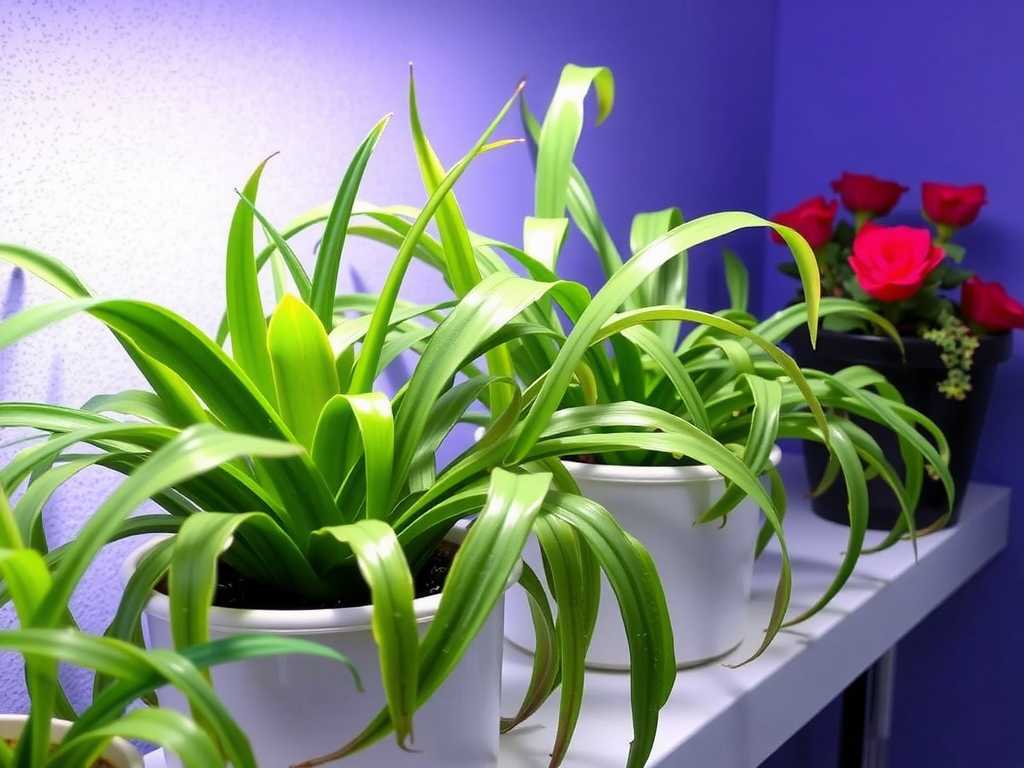
I mounted them about 12 inches above the foliage of my two test plants: one mature ‘Vittatum’ and one younger ‘Bonnie’ (curly spider plant). I used a simple light meter app to get a baseline. The ambient balcony light read a measly 50-100 foot-candles (fc) on an overcast day. With the grow lights on, at that distance, I could boost it to a consistent 250-300 fc at the leaf surface.
The Two-Week Grow Light Duration Experiment
My experiment focused on testing different photoperiods (light durations) to observe the effects.
Week 1: The 12-Hour Marathon For the first week, I set the timer for a long spider plant grow light schedule of 12 hours on, 12 hours off (7 AM to 7 PM). I wanted to see if a long, consistent “day” would trigger a quick response.
- Daily Routine: I maintained my normal care—watering only when the top inch of soil was dry and checking daily for any stress signs.
- Observations (Day 1-3): No visible change. The plants looked the same.
- Observations (Day 4-7): By day five, I noticed a subtle change. The newest central leaves on both plants seemed a slightly brighter, more vibrant green. However, I also spotted a potential issue: the very tip of one leaf on the ‘Vittatum’ showed the slightest hint of browning. It was minor, but it made me pause. Was it the light? Or my watering? I double-checked the soil moisture and realized the grow lights were causing the soil to dry out a little faster than I was used to. This was my first “gotcha.”
Week 2: Refining to a 8-Hour Supplement Concerned about potential light stress or excessive drying, I adjusted the duration of artificial light for indoor plants on my north-facing balcony. I reduced the cycle to 8 hours on, from 10 AM to 6 PM. This aimed to supplement the brightest part of the natural day without extending it excessively.
- Daily Routine: I became more vigilant about checking soil moisture every other day. I also gently wiped the leaves to ensure maximum light absorption.
- Observations (Day 8-14): The slight leaf tip browning did not progress. More importantly, the positive effects became clearer. The brighter green color in the new growth stabilized. On the ‘Bonnie’, I could see a tiny new leaf spear emerging from the center—the first new growth I’d seen in weeks! The plant wasn’t stretching or leaning, indicating the light intensity and distance were good. The 8-hour supplement seemed to provide the “missing piece” without overwhelming them.
The Pitfalls I Encountered and How I Fixed Them
This wasn’t a flawless process. I hit a few snags that are crucial for anyone trying this.
- The Dehydration Trap: As mentioned, the grow lights increased evaporation. My fix was simple but critical: I established a new watering check routine. Instead of a weekly schedule, I used the finger-test method twice a week. This prevented both underwatering stress and overwatering, which is still a risk in lower-light conditions.
- Light Placement Anxiety: Initially, I worried 12 inches was too far or too close. I followed the AHSA (American Horticultural Society Alliance) general advice for low-light plants, which suggests starting with lights 12-24 inches away and observing. I kept a log. No bleaching or curling meant the distance was safe. If your plant starts to stretch, bring the light closer.
- Ignoring the Natural Cycle: My first 12-hour schedule ignored the plant’s natural circadian rhythm. By aligning the 8-hour supplement with the middle of the day, I worked with the existing natural light cycle, which felt more harmonious and likely less stressful for the plant.
My Results and Recommended Grow Light Schedule
After 14 days of careful observation, the results were clear. The 8-hour supplemental photoperiod was the winner for my specific north-facing balcony conditions.
The 12-hour schedule showed early promise but carried a higher risk of stressing the plant and altering the soil moisture dynamics too drastically. The 8-hour schedule provided the perfect supplemental lighting for low-light balcony plants. It corrected the pale color, encouraged new growth, and did so without any adverse effects.
My recommended grow light usage duration for spider plants on a north-facing balcony is 6 to 8 hours per day. Use a timer to provide this light consistently during the daytime hours. This duration effectively boosts the light levels into the “bright, indirect” range that spider plants crave, compensating for the deficit without mimicking a tropical sun.
Your Questions, Answered
Can I leave a grow light on 24/7 for my spider plant? Absolutely not. Plants need a dark period for respiration, just like we need sleep. Continuous light will stress the plant, disrupt its growth cycles, and can lead to leaf burn and overall decline. Always use a timer.
Will any blue or red LED light work? While spider plants can grow under various spectrums, a balanced full-spectrum (white) LED is best. It closely mimics sunlight, promotes overall healthy growth (not just leafy or flowering growth), and is more pleasant to look at on your balcony. The RHS emphasizes the importance of light quality for overall plant health.
How do I know if my spider plant is getting too much grow light? Watch for warning signs: leaves turning pale yellow or white (bleaching), brown crispy tips or patches (scorching), or leaves curling inward to reduce exposure. If you see these, immediately increase the distance between the light and the plant or reduce the duration by a few hours.
Caring for plants in less-than-ideal spaces requires a bit of ingenuity. For my north-facing balcony, the strategic use of a grow light for 6-8 hours a day transformed my spider plants from merely surviving to actively thriving. It’s a simple intervention that bridges the gap between the dim balcony light and what these resilient but light-loving plants truly need. Start with a moderate schedule, observe your plant’s language closely, and adjust—you’ll find that perfect balance for your own green oasis.