bluename
 Tips for spider plant Leaf Expansion: Environmental Adjustments to Avoid Curling
There's nothing more frustrating than watching your beloved spider plant, a champion of resilience, start to send up distress signals. You notice the leaves aren't as broad and flat as they should be. Instead, they begin to curl inward, sometimes turning brown at the tips, looking more like green straws than lush, arching ribbons. I've been there, staring at my Chlorophytum comosum, wondering what I'd done wrong. The quest for perfect spider plant leaf expansion often hits this exact snag: curling leaves. Through trial, error, and a lot of patient observation, I've learned that leaf curling is almost never a disease, but a precise environmental critique from the plant itself. It's telling us that one or more key factors in its care are out of balance. Over the next sections, I'll walk you through the exact environmental adjustments I made to transform my curling spider plant into a picture of vigorous, flat-leaved health.
Understanding the "Why" Behind the Curl
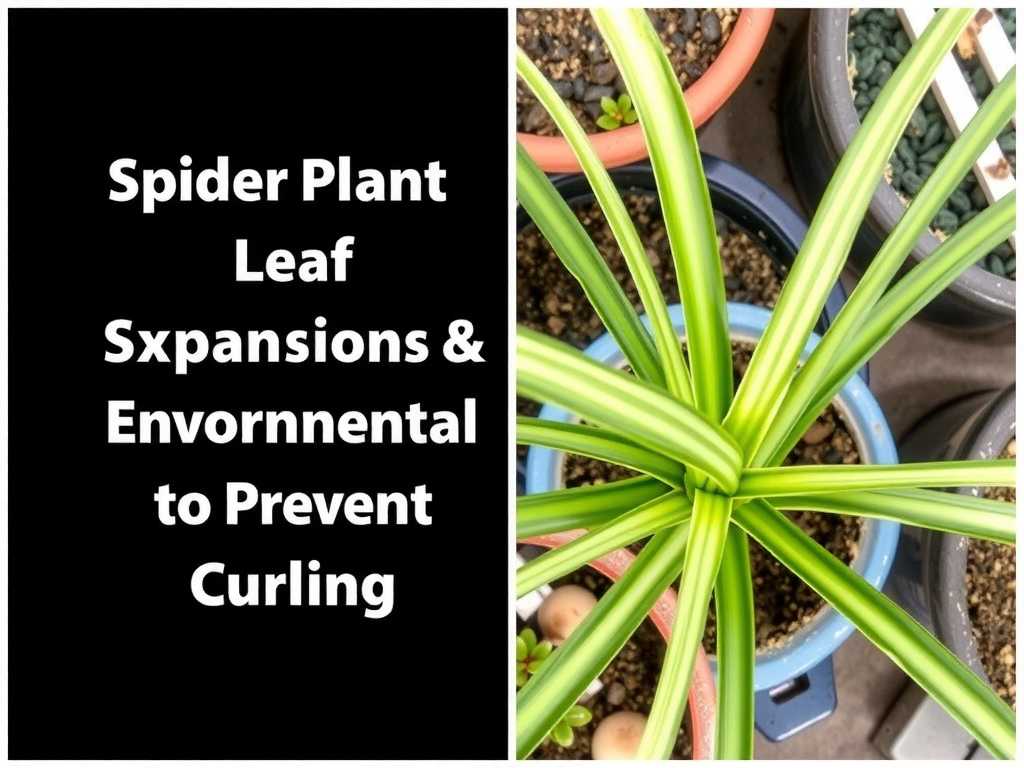
Before we can fix the problem, we need to listen to what the plant is saying. Spider plant leaves curl primarily as a defense mechanism to conserve moisture. When conditions are too dry—whether in the air or the soil—the leaves reduce their surface area to minimize water loss. Conversely, sometimes the issue is related to light stress or even root health. My journey to fix my own plant involved systematically testing each of these environmental variables. I decided to conduct a two-week rescue mission, documenting every change and its effect. The core long-tail keywords guiding my process were "how to prevent spider plant leaves from curling" and "causes of spider plant leaf curl." I also kept in mind related terms like "spider plant leaf health" and "fixing curling foliage."
My Two-Week Rescue Protocol: A Step-by-Step Diary
I chose a spider plant in my collection that was showing moderate curling, pale new growth, and some brown tips. I cleared its schedule for the next 14 days.
Week 1: The Foundation – Water and Light
The first adjustments I made were to the most common culprits: hydration and sunlight.
Day 1-3: The Moisture Audit and Correction My initial suspicion was improper watering. I was following a weekly schedule, but that's a recipe for trouble. The Royal Horticultural Society (RHS) advises that spider plants prefer to dry out slightly between waterings, but not become bone-dry. I performed the finger test and realized the top two inches were parched, while the bottom felt oddly damp. This pointed to inconsistent watering and possible poor drainage.
My action steps:
- I gently removed the plant from its pot. The roots were healthy (white and firm) but circling densely.
- I moved it to a pot only one inch larger in diameter, ensuring it had multiple drainage holes. I used a fresh, well-draining potting mix blended with a handful of perlite.
- I watered it thoroughly until water ran freely from the bottom, allowing all excess to drain away. This was my new baseline "deep watering" method.
- I placed a small moisture meter in the soil to move beyond guesswork. My goal was to water only when the meter read "dry" at the mid-root level.
Day 4-7: The Light Reassessment The plant was in a north-facing room about 8 feet from a window. While spider plants tolerate low light, the American Horticultural Society (AHS) notes that for robust growth and maximum leaf expansion, bright, indirect light is ideal. I suspected it was simply too dim, causing weak, curled growth as it strained for energy.
My action steps:
- I relocated the plant to a spot about 3 feet from an east-facing window. Here, it would receive several hours of gentle morning sun but be shielded from harsh afternoon rays.
- I rotated the pot a quarter turn every other day to ensure even light exposure on all sides.
End of Week 1 Observations: The existing curled leaves showed no dramatic change—and I didn't expect them to. The real test would be in new growth. However, the plant's overall color looked slightly more vibrant. The soil moisture was maintaining a better cycle, drying evenly over 4-5 days.
Week 2: Dialing in Humidity and Nutrition
With water and light addressed, I turned to the subtler factors: atmospheric moisture and nutrients.
Day 8-10: Boosting Ambient Humidity My home's humidity, especially with air conditioning, often hovered around 35%. Spider plants thrive in 40-60% humidity. Dry air was likely contributing to the leaf tips browning and the leaves curling to conserve what little moisture they could absorb from the air.
My action steps:
- I didn't buy a humidifier for this single plant. Instead, I created a simple pebble tray. I filled a shallow tray with pebbles, added water just below the top of the stones, and set the plant pot on top. As the water evaporates, it creates a localized humid microclimate.
- I also began grouping this spider plant with a few other humidity-loving plants (like a peace lily), a practice known as "companion clustering" which collectively raises humidity through transpiration.
Day 11-14: A Gentle Nutritional Support I had not fertilized in over 3 months. While spider plants aren't heavy feeders, a complete lack of nutrients during active growth periods can limit leaf development and size. The RHS recommends a balanced, liquid fertilizer applied at half-strength during the growing season.
My action steps:
- I applied a diluted, balanced (10-10-10) liquid fertilizer during my next watering session on Day 11. I used only half the recommended dose to avoid shocking the roots or causing fertilizer burn, which ironically can also cause curling and browning.
- I committed to this "half-strength feed" schedule only once per month during spring and summer.
The Two-Week Verdict and Lessons Learned
By Day 14, the transformation was becoming clear. The existing, severely curled older leaves remained curled—once they curl, they rarely flatten back out completely. The magic was in the new growth. Two fresh shoots had emerged from the center, and their leaves were unfurling perfectly flat, wide, and a deep, glossy green. The brown tips on older leaves had stopped progressing. The plant just looked happier and more turgid.
The Pitfalls I Encountered and How I Solved Them:
- The Overwatering Panic: Early on, when I saw curling, my instinct was to water more. This is the most common mistake. It nearly led to root rot. The solution was the moisture meter and the "dry touch" test. Understanding that curling from underwatering and overwatering can look similar was crucial. Overwatered roots are brown/mushy; underwatered are dry and brittle.
- The "More Light is Better" Fallacy: In week one, I briefly tried a south-facing sill. Within two days, the leaves developed a slight yellowish tinge and the curling seemed worse—a sign of light stress. I quickly moved it back to the gentler east-facing light, which proved to be the ideal light conditions for spider plants.
- Neglecting the Invisible Factor (Humidity): I used to think humidity was only for tropical ferns. Ignoring it was stunting my plant's potential. The simple, low-tech pebble tray provided a consistent boost without the cost or maintenance of a humidifier.
Your Questions, Answered
Can curled spider plant leaves ever uncurl? Realistically, no. Mature leaves that have curled will likely remain that way. The focus should be on correcting the environment so that all new growth emerges flat and healthy. You can snip off the most unsightly curled leaves at the base with clean shears to encourage new shoots.
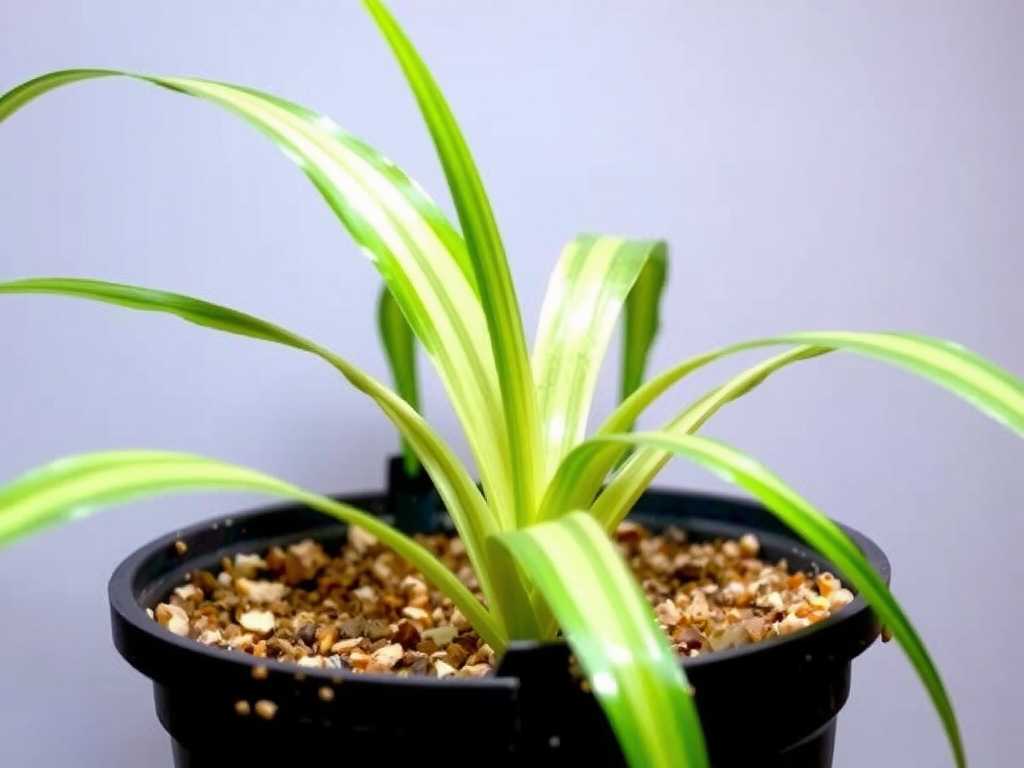
Is it normal for spider plant leaves to curl slightly at the tips? A very minor, uniform curve at the very tips of long, mature leaves can be part of their natural arching habit. However, pronounced curling along the length of the leaf, especially when combined with color changes (pale green, yellow, or brown), is a definite sign of environmental stress that needs addressing.
How often should I really water my spider plant? Throw away the calendar. The frequency depends entirely on your home's light, temperature, humidity, and pot size. The only reliable method is to check the soil. Water deeply when the top 1-2 inches feel dry to the touch, and always let excess water drain completely. In my optimized setup, this ended up being every 5-7 days.
Watching a spider plant thrive is about becoming a detective of its environment. Curling leaves are its most straightforward clue. By methodically adjusting light to bright and indirect, mastering a soak-and-dry watering rhythm, boosting ambient humidity, and providing modest nutritional support, you directly enable the robust, flat leaf expansion every spider plant owner desires. It’s not about having a green thumb; it’s about attentive, informed adjustments. Start with one factor, observe for a few days, then tweak another. Your plant will respond with a flourish of healthy, uncurled growth that proves you’ve cracked its code.