bluename
 spider plant Watering Tools: My 2-Week Experiment with Spray Bottle vs. Watering Can
I’ve killed my fair share of spider plants. It’s a humbling confession for any plant enthusiast. More often than not, the culprit wasn't neglect, but the wrong watering technique. The debate between using a spray bottle or a traditional watering can for spider plants is a quiet one, but it’s crucial. I realized my method was guesswork. So, I decided to settle the argument for myself with a real-world test. For two weeks, I meticulously compared these two spider plant watering tools on identical plants, documenting every step and result. Here’s what I learned, the mistakes I made, and the clear winner that emerged from my little home laboratory.
Why Getting Spider Plant Watering Right Is Crucial
Spider plants (Chlorophytum comosum) are famously resilient, but their roots tell a different story. They have thick, tuberous roots designed to store water. This makes them susceptible to root rot if left sitting in soggy soil. Conversely, letting them dry out completely stresses the plant, causing those iconic leaf tips to turn brown and crispy. The goal is consistent, moderate moisture. The tool you choose directly impacts your ability to hit that sweet spot. It’s not just about pouring water; it’s about how that water is delivered to the soil and the plant.
Meet the Contenders: My Testing Setup
I selected two healthy, mature spider plant pups from the same mother plant, ensuring they started from an identical genetic and health baseline. Both were repotted into the same well-draining potting mix and identical 6-inch pots with drainage holes. They were placed side-by-side on a bright, indirect windowsill.
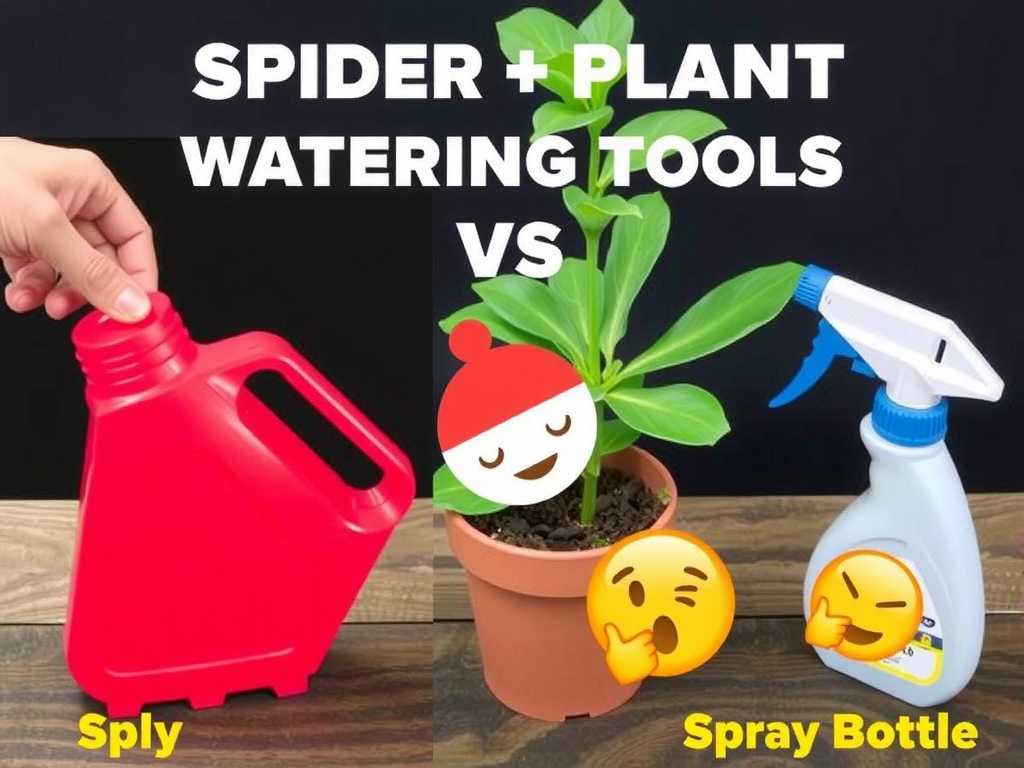
- Contender 1: The Classic Watering Can. My tool was a long-spouted, 1-liter metal can. Its precision spout allows for targeted watering directly at the soil base.
- Contender 2: The Misting Spray Bottle. I used a standard 500ml fine-mist bottle, the kind often marketed for houseplants.
My core long-tail keyword focus for this experiment was “how to properly water a spider plant without overwatering.” A related variant I kept in mind was “best method for watering spider plant soil.”
The Two-Week Watering Experiment: A Daily Log
I followed a strict schedule, watering only when the top inch of soil felt dry to the touch.
Week 1: Initial Observations and The First Hurdle
Days 1-3: The initial watering was revealing. With the watering can, I slowly poured water around the base of the plant until I saw a slight trickle escape the drainage hole. I immediately emptied the saucer. The soil absorbed the moisture evenly. With the spray bottle, I gave the soil surface a thorough spray until it looked damp. This took nearly 5 minutes of continuous spraying.
Days 4-5: The “spray bottle plant” soil surface was already dry, while the “watering can plant” soil still felt cool and slightly moist an inch down. I had to mist the spray bottle plant again on Day 5. The watering can plant didn’t need it.
Day 7 – The First “Aha!” Moment: The spray bottle plant’s leaves looked slightly less perky. Upon investigation, I discovered a critical flaw: the soil was bone dry just half an inch below the surface. My misting had only dampened the top layer, failing to encourage deep root growth. This was my first major “pitfall.” I had essentially created a drought condition for the lower roots. The watering can plant was thriving, with firm, vibrant leaves.
Week 2: Adjustments and Clear Results
Days 8-10: For the spray bottle plant, I attempted a “fix.” I decided to mimic deep watering by spraying the soil relentlessly in one spot for over 10 minutes, trying to penetrate deeper. It was tedious and inefficient. While the soil finally got moderately moist deeper down, the water began to pool and run off the compacted top layer before fully saturating the root ball.
Days 11-14: The differences became undeniable. The spider plant watered with a can showed robust growth, with a new shoot beginning to emerge. Its leaves were uniformly green and strong. The spider plant watered with a spray bottle had developed several brown tips, a classic sign of inconsistent moisture and salt buildup in the dry soil. Growth had stalled. The experiment was speaking loudly.
The Verdict: Watering Can is the Undisputed Champion
For maintaining healthy spider plant soil moisture, the watering can is the superior tool. Here’s why, based on my experience:
- Deep Root Hydration: The long spout delivers water directly to the soil, where it percolates down, hydrating the entire root ball and encouraging strong, deep roots. This is the gold standard for preventing spider plant root rot.
- Efficiency & Measurement: It’s faster and you can control the volume. Watering until it drains from the bottom is a clear, foolproof indicator of thorough saturation.
- Leaf Health: By keeping water off the leaves and focused on the soil, you minimize the risk of fungal issues and those frustrating brown tips caused by fluoride/chlorine in tap water sitting on leaf tissue.
Where the Spray Bottle Actually Shines (And My Revised Use)
I was ready to banish the spray bottle forever. But then I consulted an article by the Royal Horticultural Society (RHS), which clarified its proper role. The RHS notes that misting is generally ineffective for raising humidity for plants and can promote leaf diseases if overdone. However, they and other experts like those at the American Horticultural Society (AHS) acknowledge its utility for propagation and cleaning.
This was a perspective shift. My spray bottle isn’t a watering tool; it’s a plant care accessory. Here’s how I use it now:
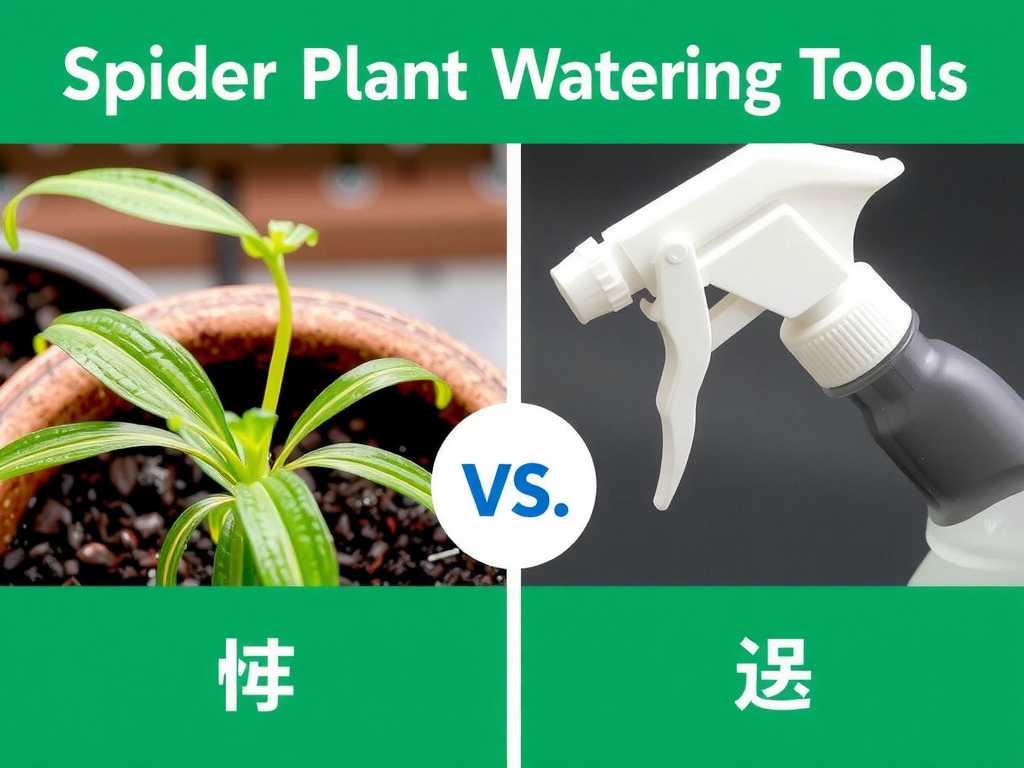
- For Propagating Spider Plant Babies: I use it to lightly moisten the soil of my propagating pups without disturbing them. Their root systems are tiny and shallow, so gentle surface moisture is perfect.
- For Dusting Leaves: A fine mist on the leaves followed by a gentle wipe keeps the foliage clean for better photosynthesis.
- Not for Humidity: I’ve switched to a pebble tray to provide ambient humidity, a more effective and consistent method.
Your Spider Plant Watering Toolkit: A Practical Guide
Based on my two-week deep dive, here is my actionable guide:
- Get the Right Can: Choose one with a long, narrow spout for precision.
- The Finger Test is Law: Always check the top 1-2 inches of soil. If dry, it’s time.
- Water Deeply and Slowly: Place the spout at the soil base and water evenly until excess flows from the drainage hole.
- Empty the Saucer: This is non-negotiable. Never let the pot sit in water.
- Use Tepid Water: Cold water can shock the roots. Let tap water sit out overnight to dissipate chlorine.
- Seasonal Adjustment: Water less frequently in winter when growth slows.
Common Questions from Fellow Plant Lovers
Can I use a spray bottle if I’m really careful and do it for a long time? Technically, yes, but it’s highly inefficient and risky. You’re far more likely to end up with uneven soil moisture—soggy on top, dry below—which stresses the roots. The time and effort required to truly saturate the root ball with a spray bottle are impractical compared to a quick pour from a can.
My spider plant has brown tips even though I use a watering can. Why? Brown tips are often a sign of chemicals in tap water (fluoride, chlorine) or soluble salt buildup from fertilizer. Try using filtered, distilled, or rainwater for a few waterings. Also, ensure you’re not accidentally splashing the leaves with tap water during watering, which can cause tip burn.
How often should I really be watering? Throw away the calendar. Frequency depends on pot size, soil type, light, temperature, and humidity. The only reliable schedule is the “finger test.” In my bright indoor setting, my spider plants typically need water every 7-10 days, but I always check first.
Choosing the right tool transforms spider plant care from a chore into a simple, successful routine. My experiment proved that while the spray bottle has its niche uses, for the fundamental task of watering, the humble watering can is what your spider plant truly craves. It delivers the deep, consistent moisture that leads to lush, healthy growth and a happy plant parent. Invest in a good can, learn to read your plant’s soil, and you’ll be rewarded with a thriving, cascading spider plant for years to come.