bluename
 Trailing spider plant Runners: My Hands-On Guide to Tying & Training with Guide Strings
If you’ve ever looked at your spider plant’s long, elegant runners—those stems cascading down with little plantlets—and wondered how to style them without a tangled mess, you’re not alone. I love the wild, natural look, but I also wanted to showcase those runners as intentional, beautiful trails. Letting them grow freely often led to a knotted jungle, broken stems, and plantlets struggling to root. That’s when I decided to master the art of trailing spider plant runners with guide strings. This method isn't about restricting growth; it's about gently directing it to create stunning, healthy displays. Over two weeks, I transformed my spider plant from a chaotic grower into a gracefully trailing centerpiece, and I’m here to share every step, observation, and lesson learned.
Why Guide Strings Are a Game-Changer for Spider Plant Runners
Before we dive into the how, let's talk about the why. Spider plants (Chlorophytum comosum) are prolific producers of stolons, commonly called runners or spider plant vines. In their natural habitat, these runners allow the plant to colonize new ground. In our homes, they can become unruly. According to principles often cited by the Royal Horticultural Society (RHS), providing gentle support for climbing or trailing plants reduces physical stress on stems, minimizes breakage, and can improve air circulation around the foliage, reducing disease risk.
Using guide strings for training spider plant vines offers clear benefits. It prevents tangling, makes watering and care easier, and allows you to design the plant’s shape—whether you want a dramatic vertical climb on a moss pole or elegant horizontal trails from a hanging basket. It directly addresses the pain point of managing long, delicate runners without stifling the plant's natural propagation instinct.
My Toolkit: What You’ll Need to Get Started
You don’t need fancy equipment. I gathered simple, plant-friendly materials:
- Soft Ties: This is crucial. Avoid wire or rough string that can cut into tender stems. I used biodegradable jute twine and soft, green plant ties. The American Horticultural Society (AHA) emphasizes using wide, flexible ties to avoid girdling stems.
- Support Structure: This depends on your vision. For a hanging basket, I used the basket’s rim and a small, discreet hook in the ceiling. For a tabletop pot, I prepared a small, decorative trellis.
- Scissors: For cutting ties.
- Healthy Spider Plant: Mine had several runners, each with 2-3 mature plantlets (“spiderettes”).
The Step-by-Step Process: Tying and Training Day
I chose my largest hanging spider plant for this experiment. My goal was to create separate, cascading trails that wouldn’t intertwine.
Step 1: Assessment and Planning I gently lifted each runner and observed its natural direction of growth. I didn’t force a runner to go left if it naturally wanted to go right. I identified four primary runners to train initially.
Step 2: Attaching the Guide Strings I cut lengths of jute twine, each about 20% longer than the runner itself. I securely tied one end of a string to the rim of my hanging basket, right at the base of the mother plant where the runner emerged. I then loosely extended the string down in the direction I wanted the runner to trail, tying the other end to a small, clear adhesive hook I placed on the wall nearby. The key was to keep the string taut enough for guidance but with plenty of slack.
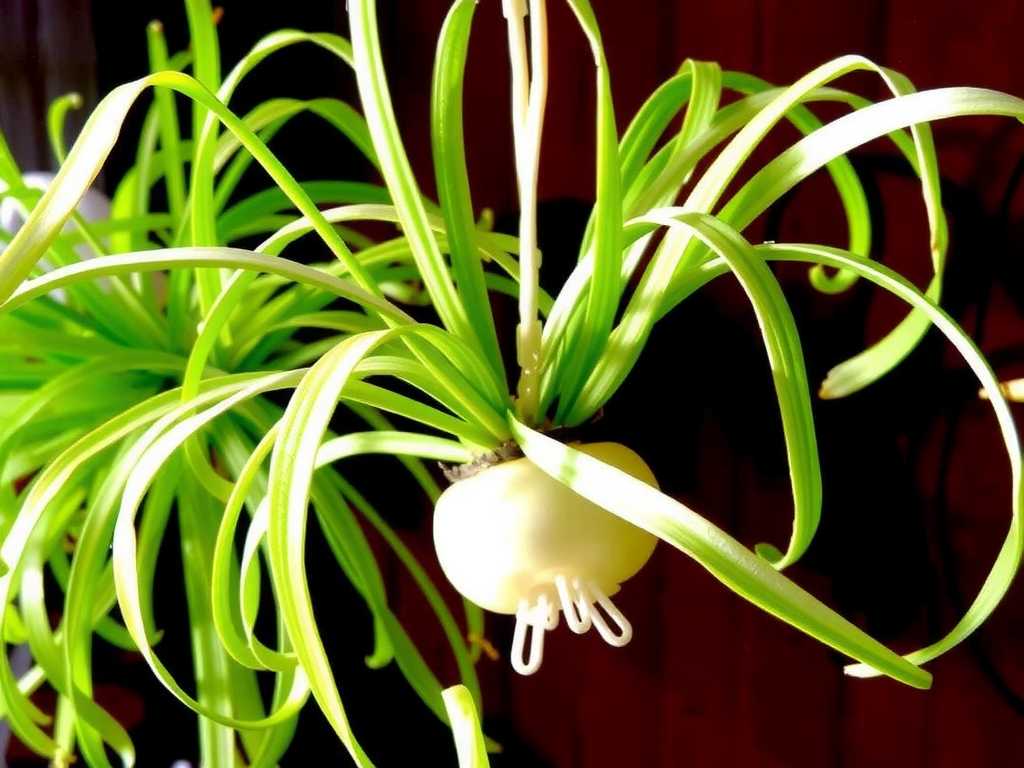
Step 3: The Gentle Tie-In Here’s where patience is vital. I didn’t tie the runner tightly to the string. Instead, I used the soft plant ties to create loose loops—figure-eights that connected the runner to the guide string at 2-3 points along its length. I focused on tying near the junctions where the plantlets formed, as these are heavier points that need support. I made sure the ties were snug but not tight, allowing room for the stem to thicken.
Step 4: Positioning the Plantlets The baby spider plants on the runners can get heavy. I gently oriented them so they had space and weren’t buried under leaves. Some I left hanging freely; others I rested on the guide string for support.
The Two-Week Observation: Growth and Adjustments
This wasn’t a set-it-and-forget-it project. Daily checks were essential.
Days 1-3: The plant seemed to experience a slight “transplant shock” from being handled. Some leaves on the runners looked a bit weary. I ensured consistent, moderate watering and bright, indirect light. No new growth was visible yet.
Days 4-7: The plant acclimated. The weary leaves perked up. I noticed the first sign of success: the runners were beginning to grow along the guide strings without me adding new ties. The tips of the runners were visibly elongating in the direction I had planned. One plantlet started developing tiny aerial root nubs, a sign it was ready to propagate.
Days 8-14: Active growth phase! Two of the four trained runners added 3-4 inches of new length, neatly following the string’s path. The plantlets grew larger. However, I encountered my first “spider plant runner training” challenge.
The Pitfalls I Encountered (And How I Fixed Them)
Pitfall 1: The Overly Tight Tie. Around Day 10, I noticed a slight indentation on one runner where a soft tie was. I had tied it just a bit too snugly, and as the stem grew, it began to constrict. Solution: I immediately replaced all the soft ties with even looser loops. I learned to check the ties every few days, like loosening a child’s shoe as they grow.
Pitfall 2: Ignoring the New Runner. A brand new, fifth runner emerged from the center of the plant halfway through the second week. I left it alone, thinking I’d deal with it later. Within days, it grew rapidly and started weaving itself through my carefully arranged trails. Solution: I added a new guide string for this newcomer immediately. It’s much easier to guide a young runner than to untangle a mature one.
Pitfall 3: Incorrect Moisture Judgment. The trained plant, now more spread out, seemed to dry out faster than my untrained ones. I initially missed a watering, causing the tips of two plantlets to brown. Solution: I adjusted my watering schedule. Feeling the soil 1-2 inches down became my routine. The improved air flow was good, but it increased transpiration.
The Results After 14 Days of Directed Growth
By the end of the two weeks, the difference was remarkable. The plant looked intentionally designed, not accidentally wild. The runners formed four distinct, lush cascades. There were no tangles. The plantlets were robust, and the mother plant even seemed to push out healthier new foliage from its center, likely because energy wasn’t being wasted on supporting tangled, stressed runners. The method for staking spider plant offshoots using soft guide strings proved to be a resounding success for health and aesthetics.
Propagating from Your Trained Runners
One of the joys of this spider plant trailing technique is how easy it makes propagation. With the plantlets neatly arranged and accessible, I could easily snip one off with clean scissors, place it in a water glass (without submerging the leaves), and watch it root—all without disturbing the main display. It’s the perfect reward for your efforts.
How tight should the ties be? You should be able to easily slip a pencil between the tie and the runner. The connection should be supportive, not restrictive. Always err on the side of too loose.
Can I use this method on a spider plant in a pot on a shelf? Absolutely. You can attach guide strings to small stakes in the pot and direct runners upwards or outwards over the edge. For a spider plant with long runners, a small, fan-shaped trellis works beautifully to create a living wall effect.
Will training the runners hurt my plant or stop it from making babies? Not at all. If done gently, it reduces stress. My plant actually produced a new runner during the training period. The process doesn’t affect the plant’s physiology; it simply manages the geometry of its growth.
Guiding your spider plant’s runners with strings is a simple, satisfying practice that bridges the gap between wild nature and curated beauty. It requires a gentle touch and a little ongoing attention, but the payoff is a healthier, more photogenic plant that showcases its unique reproductive magic in the most elegant way. Start with one runner, be patient, and enjoy the process of shaping your plant’s journey.