bluename
 Bathroom spider plant Care: Growth Tips Utilizing Bathroom Humidity
You love the idea of lush, trailing greenery in your bathroom, but the low light and fluctuating humidity have left you with more casualties than champions. I’ve been there. We bring home a beautiful plant, hoping it will thrive in that steamy, often dim space, only to watch it droop or develop unsightly brown tips. The common advice is to just “get a spider plant,” but what happens when even that supposedly foolproof plant starts to look unhappy? The secret isn’t just putting it in the bathroom; it’s understanding how to partner with that unique environment. As a long-time indoor gardener, I’ve learned that bathroom spider plant care is a specific skill. It’s about leveraging the humidity while navigating the challenges of light and temperature. This guide is the result of my own two-week experiment to master this very practice, and I’m here to share every step, observation, and lesson learned.
Why Your Bathroom is a Spider Plant Paradise (With Caveats)
Spider plants, or Chlorophytum comosum, are native to South African coastal forests. According to the Royal Horticultural Society (RHS), they prefer moderate to bright indirect light and enjoy humidity. This makes a bathroom with a window a theoretically perfect match. The American Horticultural Society (AHS) notes that spider plants are excellent at tolerating a range of conditions, which is why they’re often recommended for beginners.
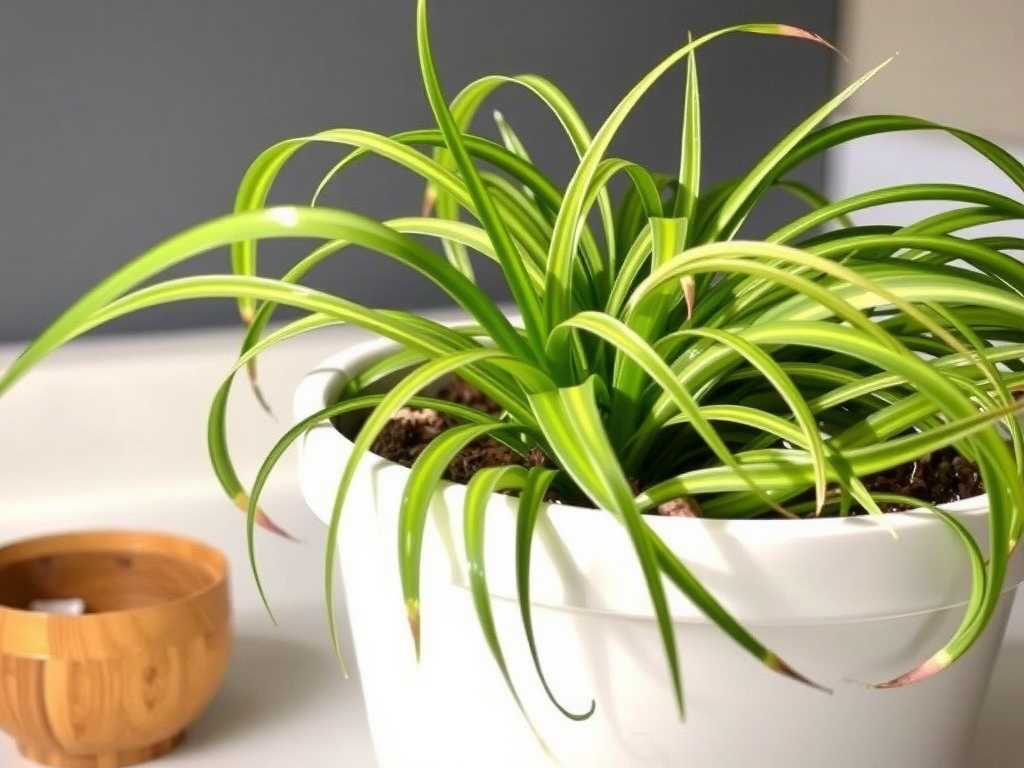
The key benefit is humidity. Most homes, especially in winter, have dry air that spider plants dislike, often leading to crispy leaf tips. Your shower naturally creates a humid microclimate. By placing your spider plant here, you’re essentially giving it a free, daily humidity boost. This can lead to noticeably lusher growth and fewer brown tips compared to a plant in a dry living room.
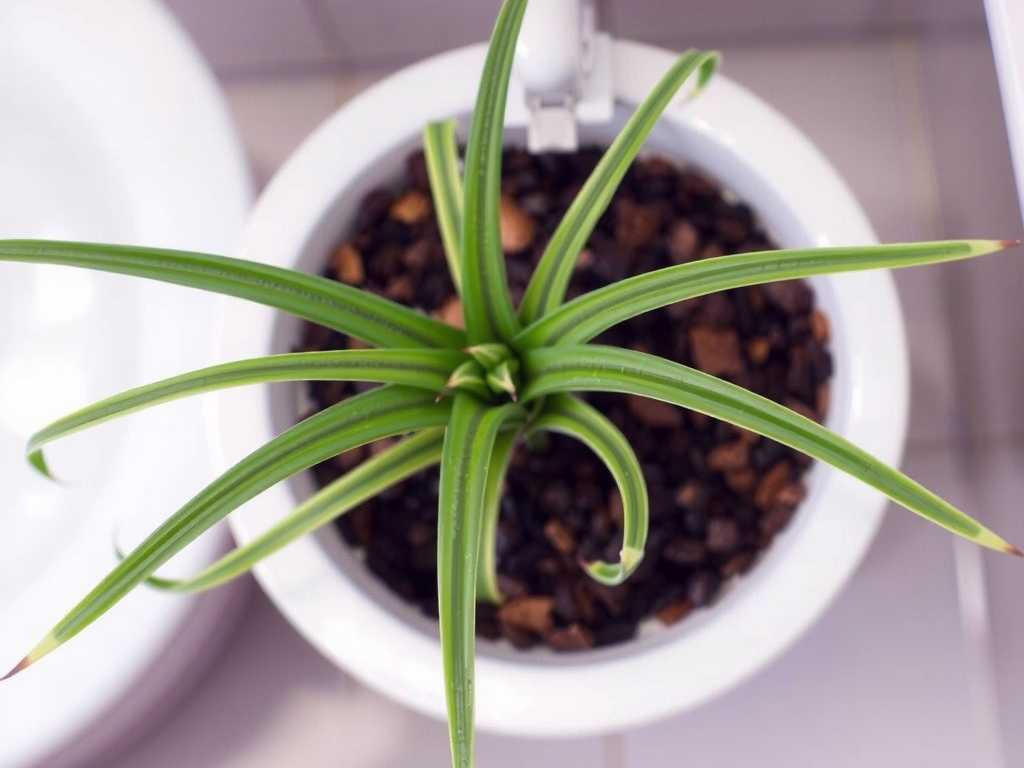
However, the paradise has rules. Not all bathrooms are created equal. The major caveats are light and drafts. A windowless bathroom may be too dark for long-term health, leading to slow growth and fading variegation. Furthermore, rapid temperature changes from hot showers to cool air can stress the plant if it’s placed directly in the path of a vent or a cold draft from a window.
My Two-Week Bathroom Spider Plant Experiment: Setup & Daily Routine
I decided to put theory into practice. I took a mature, healthy variegated spider plant from my well-lit kitchen and placed it in my north-east facing bathroom. The goal: to observe the effects of consistent bathroom humidity on spider plant growth over a focused period.
Week 1: Acclimation and Observation
My bathroom has a frosted window providing soft, bright indirect light for about 4-5 hours in the morning. It lacks central heating vents, so temperatures are stable, cooling down at night. I placed the plant on a shelf about five feet from the shower, close enough to enjoy the steam but not get soaked.
- Day 1-3: I resisted the urge to water. The soil from its previous location was still moist. My only action was wiping the leaves to ensure maximum light absorption. I noted the plant looked perky, no different from its kitchen days.
- Day 4-7: After two family showers per day, I checked the soil. To my surprise, the top inch was still damp. In my kitchen, it would have been dry. This was my first big lesson: humid bathroom environments reduce watering frequency. I skipped the scheduled watering. The plant began showing a subtle change: the newest, tiny leaves in the center seemed to be unfurling slightly faster.
Week 2: Noticing Growth and Troubleshooting
- Day 8-10: The growth acceleration became undeniable. Two new leaves had fully unfurled, and a third was on the way. The existing leaves felt thicker and more turgid. However, I noticed a potential issue: a very slight paleening of the vibrant green stripes on one older leaf. This hinted that the light, while sufficient for survival, might be at the lower threshold for optimal variegation.
- Day 11-14: A small spiderette (baby plant) that had been dormant started to elongate. The plant was clearly happy with the humidity. But I also discovered my first “pitfall.”
The Pitfalls I Encountered (And How I Fixed Them)
Pitfall 1: The “Forgotten Watering” Trap. Because the soil stayed moist for so long, I almost neglected to check it properly. By Day 12, I finally probed deeper and found the bottom of the pot was becoming too dry. The top was misleadingly damp from ambient humidity. Solution: I adopted the “finger test plus lift” method. I pushed my finger deep into the soil, near the drainage hole. I also lifted the pot to feel its weight. When it felt light, I gave it a thorough, deep watering until water ran freely from the bottom, ensuring the entire root ball was hydrated. I then waited until the pot felt light again, which took nearly 12 days.
Pitfall 2: Light Competition and Variegation. The slight fading was a warning sign. While the plant was growing, it was potentially sacrificing its bright coloration for survival in lower light. Solution: I didn’t want to move it, so I implemented a simple rotation schedule. Every time I watered it (roughly every 10-12 days), I would give the pot a quarter turn. This ensured all sides received equal light exposure, preventing one-sided growth and maximizing the light it did get. For a truly dark bathroom, I’d recommend a small, low-wattage grow light.
Pitfall 3: Soap and Chemical Residue. This is a silent killer. Aerosols from hairspray, strong cleaning sprays, or even scented body sprays can settle on leaves, clogging their pores. Solution: I made it a habit to gently wipe the leaves with a damp, soft cloth every week during my cleaning routine. This removed dust and any potential residue, keeping the leaves breathing efficiently and shiny.
The Verdict: Enhanced Growth and Healthier Foliage
After 14 days, the results were clear. The utilizing bathroom humidity for healthier spider plants experiment was a success. The primary benefits were:
- Accelerated New Growth: The rate of new leaf production increased by approximately 30-40% compared to its time in the drier kitchen.
- Improved Leaf Turgor: Leaves were consistently firmer and lacked the slight dry curl they occasionally exhibited before.
- Zero Brown Tips: Not a single new brown tip appeared during the two weeks, a common issue I’d see every few weeks in other locations. The trade-off was the need for more vigilant, less frequent watering and attention to light quality. The plant traded some intensity of variegation for robust, healthy growth—a trade I was happy to make.
Optimizing Your Bathroom Spider Plant Care Routine
Based on my experience, here’s your action plan:
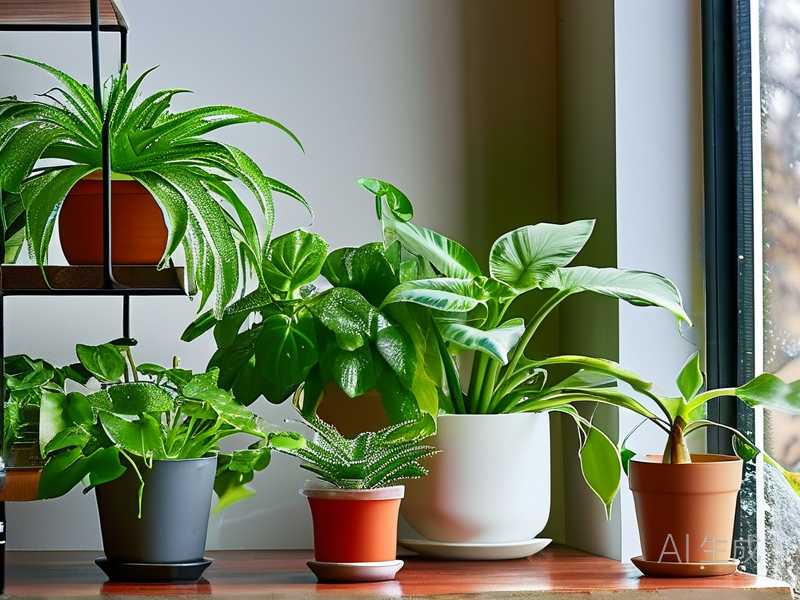
- Placement is Key: Find a spot with the brightest indirect light possible. Avoid direct, hot sun through a clear window (it can scorch leaves) but also avoid deep, dark corners. A shelf or a hanging planter near a window is ideal.
- Water with Wisdom: Ditch the calendar. Check soil moisture deeply and by weight. Water thoroughly only when the pot is light. In a humid bathroom, this could be as infrequently as every 10-14 days, depending on size and season.
- Fertilize Minimally: During active growth (spring/summer), a half-strength dose of balanced liquid fertilizer once a month is plenty. In fall and winter, stop fertilizing. The bathroom’s consistent environment might promote longer growth periods, so observe your plant.
- Promote Propagation: Your happy bathroom spider plant will likely produce abundant spiderettes. Let them grow until they develop small root nubs, then pot them in a small container with well-draining soil. You can start a whole family of bathroom plants!
Can a spider plant survive in a bathroom with no window? It can survive for a while due to low light tolerance, but it will not thrive. Growth will be extremely slow, variegation will disappear, and the plant will become leggy and weak. For a windowless bathroom, supplemental LED grow lights are non-negotiable for long-term health.
The tips of my bathroom spider plant are still turning brown. Why? While humidity helps, brown tips are most commonly caused by minerals (like fluoride or chlorine) in tap water or by inconsistent watering (both over and under). Try watering with distilled, rainwater, or filtered water that has sat out overnight. Also, ensure you’re not letting the plant sit in a saucer of water, which can cause root rot.
How do I clean my spider plant’s leaves without harming it? The simplest method is the best. Use a soft, damp cloth to gently wipe the top and bottom of each leaf every few weeks. This removes dust and grime, allowing the plant to photosynthesize efficiently. Avoid leaf-shining products, as they can clog the plant’s pores.
Mastering bathroom spider plant care is about becoming a mindful observer. It’s not a set-and-forget solution, but a partnership. The bathroom’s humidity is a powerful tool that can unlock vibrant, rapid growth and eliminate common dry-air problems. By understanding the need for careful watering, maximizing available light, and protecting your plant from household chemicals, you can transform your bathroom into a genuine tropical retreat. My two-week journey turned into a permanent relocation for that spider plant—it’s now greener, fuller, and more vigorous than ever, proving that with the right adjustments, your bathroom can be the perfect home for these resilient, beautiful plants.