bluename
 Faded Leaf Variegation on spider plants: My Coordinated Adjustment of Light Supplement & Fertilization
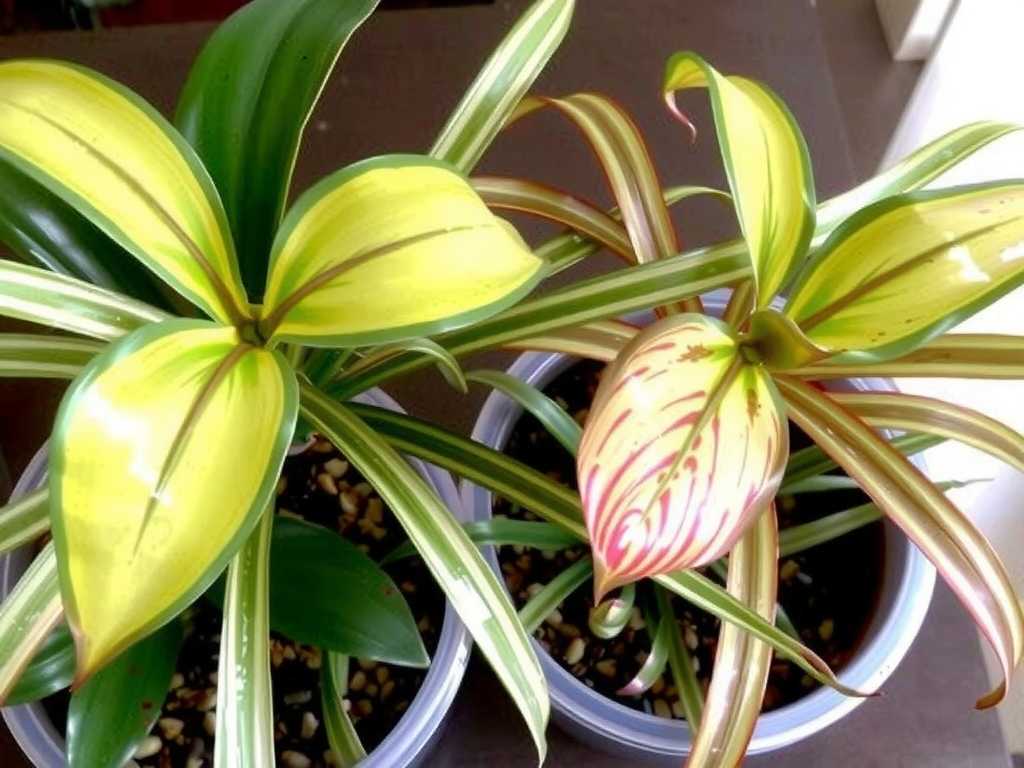
There's nothing more disheartening for a houseplant enthusiast than watching a once-vibrant spider plant lose its signature stripes. I've been there. You bring home a gorgeous, variegated Chlorophytum comosum, its leaves a bold contrast of creamy white and lush green, only to see those brilliant white streaks slowly fade to a dull, pale yellow or even revert entirely to solid green. This faded leaf variegation on spider plants is a common cry for help, and for years, I treated it as a simple light issue. Just give it more sun, right? Not exactly. Through trial, error, and a lot of patient observation, I learned that the solution isn't a single fix—it's a delicate, coordinated dance between light and nutrients.
My journey to understand this started with a 'Vittatum' spider plant that was becoming increasingly washed-out. The new growth was especially lackluster. I knew variegation was light-dependent, but simply shoving it into a south-facing window led to scorched, brown tips. The plant was stressed, and the variegation didn't improve. That's when I dug deeper. I consulted resources from the Royal Horticultural Society (RHS), which clearly states that while bright, indirect light is crucial for maintaining variegation, the balance of nutrients, particularly nitrogen, plays an equally vital role. An overabundance of nitrogen can fuel rapid green growth at the expense of those beautiful white sectors. The problem, I realized, was never just light or just food. It was the coordinated adjustment of light and fertilizer that held the key.
This article is the story of my two-week experiment to reclaim my spider plant's stripes. I'll walk you through my exact steps, what I observed day by day, the mistakes I made along the way, and how a synchronized approach finally brought back the brilliance.
Understanding the "Why" Behind the Fade
Before making any changes, you need to diagnose correctly. Faded variegation typically points to two intertwined issues:
- Insufficient Light: The white parts of the leaf lack chlorophyll, the pigment plants use to convert light into energy. In low light, the plant compensates by producing more chlorophyll (green pigment) to survive, effectively "greening over" the white areas.
- Imbalanced Fertilization: Using a standard, high-nitrogen fertilizer promotes lush, green foliage growth. For a variegated plant, this means encouraging the very chlorophyll production that drowns out the variegation. The American Horticultural Society (AHS) notes that improper feeding can diminish leaf patterns in variegated cultivars.
The goal, therefore, is to provide enough light to satisfy the plant's energy needs without triggering stress, while supplying targeted nutrition that supports overall health without overstimulating green growth.
My Two-Week Revival Protocol: A Step-by-Step Log
I moved my struggling spider plant to a dedicated spot for this experiment. Here is my coordinated adjustment plan.
Week 1: The Foundational Reset
Day 1-3: Light Assessment and Repositioning First, I stopped all fertilization to reset the nutrient baseline. I then audited my light situation. A south-facing window was too harsh, a north-facing one too dim. I chose an east-facing window sill where it would receive bright, but gentle, morning sun for about 3-4 hours, followed by consistent, strong indirect light for the rest of the day. I used a simple light meter app on my phone to compare locations; the new spot read about 50% brighter than its old home without any direct, scorching afternoon rays. This step is critical for maintaining variegation in spider plants.
Day 4: The First Coordinated Input After a few days to acclimate to the new light, I implemented the "coordination" part. I prepared a half-strength dose of a balanced, water-soluble fertilizer. But here's the key: I sought out one with a slightly lower first number (Nitrogen). Instead of a common 20-20-20 blend, I used a 10-15-10 formula. I watered thoroughly with this solution, ensuring it drained completely. The philosophy was to provide a modest nutrient boost that supported root and potential bloom development (the higher phosphorus) without a nitrogen surge.
Day 5-7: Observation and Adjustment I monitored closely for stress signs. The brown tips had stabilized. No new burning occurred. The existing leaves still looked pale, but I noticed the newest, very small center leaves seemed a tad crisper in their color division. It was subtle, but promising. The soil dried out a bit faster in the brighter location, so I adjusted my watering schedule to check moisture every 4 days instead of 5.
Week 2: Refinement and Response
Day 8-10: The Pitfall and Recovery Here's where I hit a snag. Encouraged by the slight progress, I thought, "Maybe a little direct morning sun would supercharge the variegation." I moved the plant a few inches closer to the window. By Day 10, I saw the beginnings of a pale, bleached-out patch on one leaf—a sign of too much direct light. I had disrupted the coordination by overcorrecting light without considering the plant's acclimation period. I immediately moved it back to its original east-sill position. The lesson: changes must be gradual and measured. Correcting faded spider plant leaves requires patience, not aggressive shocks.
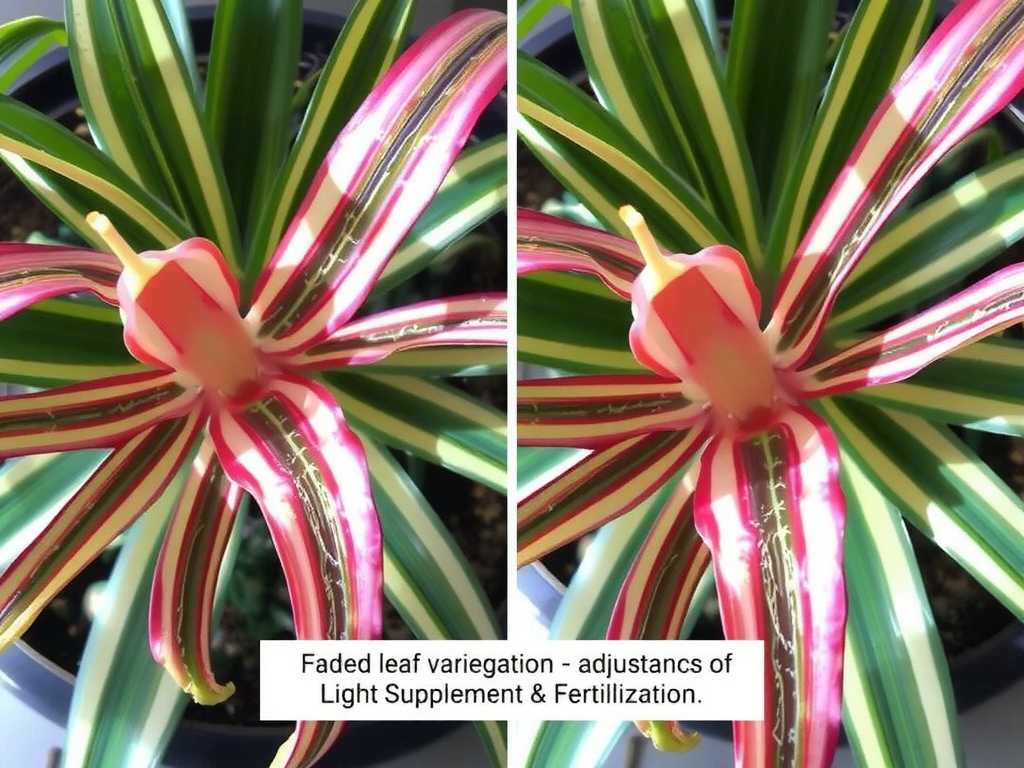
Day 11-14: Stabilization and Visible Progress After correcting the light misstep, the plant settled. By the end of the second week, the real evidence emerged. The new growth emerging from the center was undeniably different. The white stripes were brighter, more defined, and the green was a deeper, richer shade. The older leaves remained faded (they rarely reverse), but they served as a "before" picture against the vibrant "after" of the new foliage. The plant overall looked perkier, with no signs of nutrient burn or light stress.
Key Takeaways for Your Coordinated Adjustment
- Light First, But Gently: Increase brightness gradually. Aim for bright, indirect light. Morning direct sun can be tolerated, but introduce it slowly and watch for bleaching. A sheer curtain is your best friend.
- Fertilize Strategically, Not Generously: After a reset period, use a balanced fertilizer at half strength. Consider a blend with a slightly lower nitrogen ratio. Fertilize only during the active growing season (spring and summer), and never on dry soil.
- The Synergy is Everything: The light tells the plant to express variegation. The right fertilizer supports the plant's health without giving it the biochemical signal to prioritize green chlorophyll production over that expression. They must be adjusted in tandem.
- Patience is Non-Negotiable: You are redirecting the plant's growth patterns. This takes time. Focus on new growth for signs of success.
Frequently Asked Questions
Can a completely reverted green leaf ever turn variegated again? No, unfortunately. Once a leaf cell layer has reverted to full green, it will remain green. The success of your adjustments will be visible in all new leaves that emerge after you implement the correct light and fertilizer balance. Pruning out some fully reverted stems can encourage the plant to put energy into new, variegated growth.
What is the absolute best fertilizer for variegated spider plants? There's no single "best" product, but the principle is clear. Look for a balanced, water-soluble fertilizer (like a 10-10-10 or 5-5-5) and always dilute it to half the recommended strength. Some growers have success with fertilizers formulated for "folage plants" or even those for blooming, as they often have a more balanced N-P-K ratio. The goal is moderate, complete nutrition.
My spider plant gets enough light but is still fading. What could it be? If light is sufficient, the culprit is almost certainly fertilization. Are you using a standard-strength, high-nitrogen plant food? Switch to a half-strength, balanced feed. Also, consider the potting mix. Is it old and depleted? A refresh with a well-draining potting mix can provide a better foundation. Finally, ensure the plant isn't pot-bound, as stressed roots can't support healthy foliage, variegated or otherwise.
Seeing those crisp white stripes return to my spider plant was immensely satisfying. It confirmed that plants communicate their needs clearly—we just have to learn to interpret the signs. Faded variegation isn't a death sentence; it's a specific request. The plant is asking for a change in its care regimen, not just one element, but in the careful, coordinated adjustment of light supplementation and fertilization. By listening and responding with this synchronized approach, you can restore the stunning contrast that makes variegated spider plants so captivating. Start with light, support with smart feeding, be patient, and let the new growth tell the story of your success.