bluename
 Post-Propagation Care for Variegated Silver-Edge spider plants: Tips to Avoid Variegation Degeneration
You’ve just successfully propagated a beautiful variegated silver-edge spider plant. The new pups are potted, and you’re filled with pride. But a nagging worry creeps in: what if the stunning white and green stripes start to fade? What if your new plant reverts to plain green, losing the very characteristic that made it special? I’ve been there. The fear of variegation degeneration is real for any spider plant enthusiast. After years of trial, error, and meticulous observation, I’ve refined a post-propagation care routine that actively preserves and even enhances that gorgeous silver-edge variegation. Let me walk you through the exact steps I take, the two-week critical window I monitor, and the common pitfalls I’ve learned to avoid.
Understanding Variegation: It’s All About the Light
First, let’s understand our goal. Variegation in plants like the Chlorophytum comosum ‘Variegatum’ is often a genetic mutation that reduces chlorophyll in certain leaf sections. Those stunning silver or white edges have less green pigment. This means they contribute less to photosynthesis. If the plant feels it’s not getting enough energy, it might try to compensate by producing more green leaves—a process called reversion.
The Royal Horticultural Society (RHS) notes that insufficient light is a primary driver of reversion in variegated plants. The plant, in its survival instinct, “greens up” to capture more photons. So, our entire care strategy post-propagation orbits around providing optimal—not minimal, not maximal—light energy.
My Two-Week Post-Propagation Protocol for Vibrant Variegation
Propagation shock is a vulnerable time. The pup is establishing roots and adapting to solo life. My focus for the first 14 days is on stabilization, setting the stage for long-term variegation health.
Week 1: The Acclimation Phase
My number one rule: Do not over-love with water. A freshly potted pup in moist potting mix needs time to settle. My steps are precise:
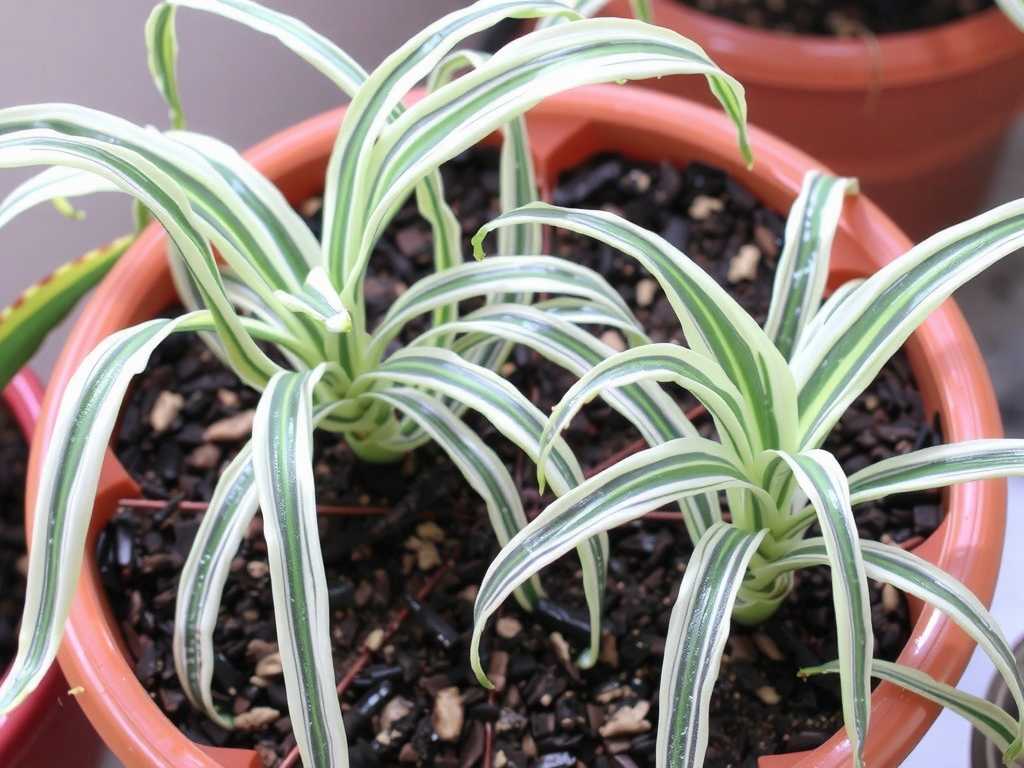
- Potting Mix: I use a well-draining, airy mix. My recipe is 60% high-quality potting soil, 30% perlite, and 10% orchid bark. This prevents soggy roots, which is a death sentence far quicker than fading variegation.
- Initial Placement: I place the new pot in a location with bright, indirect light. My east-facing windowsill is perfect. It gets gentle morning sun but is shielded from harsh afternoon rays. Direct sun at this stage can scorch the tender leaves and stress the plant, triggering undesirable responses.
- The First Water: I water thoroughly once after potting, allowing excess to drain. Then, I wait. I insert my finger into the soil up to the first knuckle. Only when it feels dry do I consider watering again. This first week, it’s usually just that one initial watering.
By Day 7 Observation: The plant should look perky, not wilted. The variegated stripes remain crisp. No new growth is expected yet, but the existing foliage holds firm. This is a win.
Week 2: Encouraging Growth in the Right Direction
Now, I start to coax growth under the conditions that favor variegation.
- Light Adjustment: If the plant has responded well, I might move it slightly closer to the light source or to a spot that gets an extra hour of gentle direct light (still morning sun). The goal is to signal: “You have plenty of light energy; no need to produce extra chlorophyll.”
- First Check for Roots: Gently, I tug on the base of the plant. If I feel slight resistance, roots are establishing! This is the green light to begin a very diluted feeding regimen.
- The First Feed: I use a balanced, water-soluble fertilizer (like a 10-10-10) diluted to half-strength. A full dose can burn new roots and force rapid, often less variegated, growth. According to the American Horticultural Society (AHS), “weakly, weekly” feeding is better than infrequent strong doses for young plants. I follow this mantra.
By Day 14 Observation: This is the critical checkpoint. I look for the first signs of new growth from the center. What color is the emerging leaf spike? With ideal care, the tiny tip should show a promising sliver of white or pale green. The older leaves maintain their contrast. The plant looks compact and begins to show vigor.
The Pitfalls I’ve Fallen Into (And How to Climb Out)
My journey wasn’t all crisp stripes. I’ve made mistakes that led to fading, and here’s how I corrected them.
Pitfall 1: The “Low-Light Is Safe” Myth Early on, I kept a propagated pup in my bathroom for humidity. It survived but grew painfully slow. The new leaves were noticeably darker green, and the white edges became thinner. The plant was reverting!
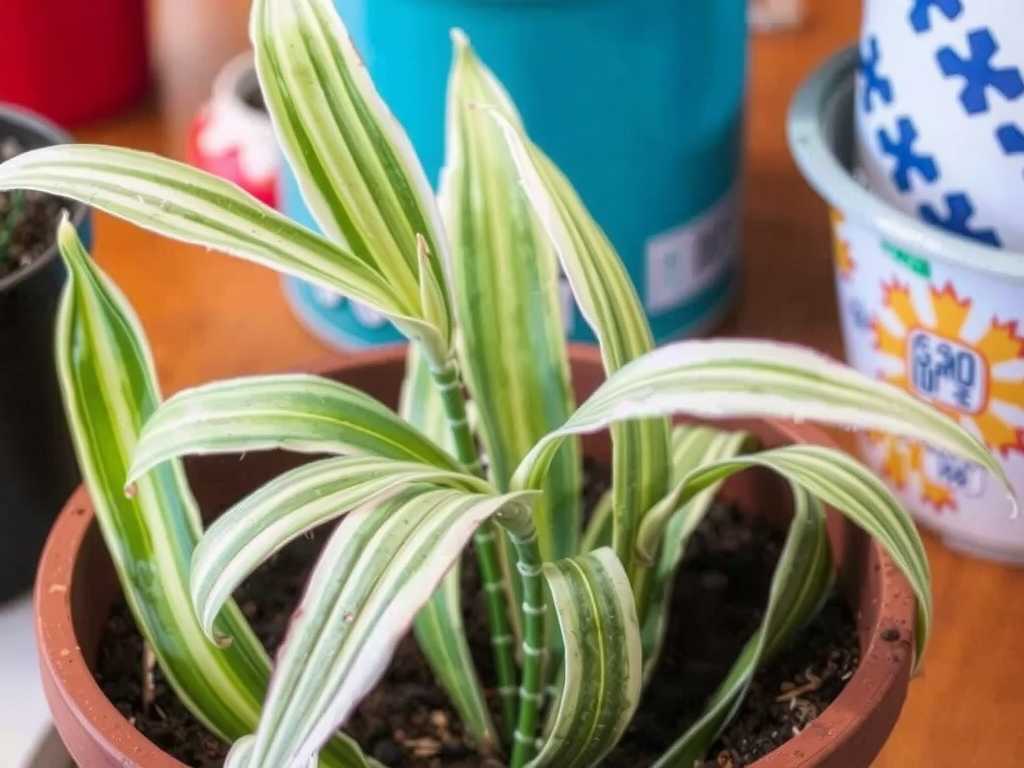
- Solution: I moved it immediately to my bright indirect light zone. Within a few weeks, the subsequent new leaves emerged with much wider, brighter white margins. The old, greener leaves won’t change back, but new growth can be corrected.
Pitfall 2: Overzealous Fertilizing In an attempt to boost growth, I once used a high-nitrogen fertilizer at full strength. The plant exploded with growth, but the leaves were large, floppy, and predominantly green. The variegation was diluted.
- Solution: I flushed the soil with water to dilute excess fertilizer and switched back to a balanced, half-strength feed. The next generation of leaves returned to a more balanced variegated pattern.
Pitfall 3: Ignoring the “All-Green” Offshoot Sometimes, a pup itself might revert. I had a beautifully variegated mother plant send out a pup that was entirely green. If left attached, this green pup can actually drain energy and influence the parent.
- Solution: I snipped off the fully green pup at the stolon (runner) as soon as I identified it. This directs the plant’s energy back into producing variegated growth. It’s a tough but necessary call.
Long-Term Care for Lasting Silver-Edges
After the two-week foundation, the care shifts to maintenance.
- Light is Forever Key: Maintain bright, indirect light year-round. A few hours of direct morning sun is excellent. In winter, I use a simple grow light to supplement.
- Feed Smart: During the growing season (spring-fall), I fertilize every 4 weeks at half-strength. I stop entirely in winter.
- Water Wisely: I stick to the “finger test.” Spider plants are drought-tolerant but appreciate consistent moisture. I let the top inch of soil dry out between waterings.
- Pot Bound for Blooms: Spider plants often produce more pups (and thus, more variegated plants!) when slightly root-bound. Don’t rush to repot.
Will cutting off green leaves help? No, don’t cut off partially reverted leaves. They still contribute to photosynthesis. Focus on correcting the care conditions (especially light) for the new growth. The old leaves will eventually age out naturally.
Can a fully reverted spider plant become variegated again? Once a stem’s growth point (meristem) has reverted to producing only green cells, it cannot turn back. The only solution is to prune back to a point on the plant where growth is still variegated, or to propagate from a pup that still shows strong variegation.
Is more variegation always better? Not necessarily. Highly variegated leaves with very little green can be slower growing and more fragile. The ideal is a stable, balanced variegation. A plant with mostly white leaves may struggle and require even more meticulous light care to sustain itself.
Preserving the silver-edge variegation in your spider plant is a rewarding exercise in attentive care. It teaches you to read your plant’s signals—not just for survival, but for thriving in its most beautiful form. By providing consistent bright indirect light, practicing restrained watering and feeding, and vigilantly removing reverted growth, you can enjoy those stunning striped leaves for years to come. Your propagated pup isn’t just a new plant; it’s a testament to your skill as a grower.