bluename
 spider plant Runner Lodging: My Hands-On Guide to Selecting and Fixing the Right Supports
If you've ever felt that pang of disappointment seeing your spider plant's once-proud runners drooping sadly over the pot's edge, tangling into a messy heap, or even snapping under their own weight, you're not alone. Spider plant runner lodging is a common frustration for enthusiasts like us. It's not just an aesthetic issue; lodged runners can hinder the development of those precious plantlets, restrict air circulation, and create hiding spots for pests. After wrestling with this problem across several of my Chlorophytum comosum varieties, I embarked on a mission to find the best supports. This guide details my two-week experiment with different methods of fixing supports, sharing what truly works to keep those arching stolons elegant and healthy.
Understanding Why Supports Are Non-Negotiable
Before diving into solutions, it's crucial to understand the "why." A spider plant's runners, or stolons, are its reproductive lifelines. In their natural habitat, they arch gracefully, allowing plantlets to touch down and root at a distance from the mother plant. In our homes, the limited space of a pot disrupts this process. Without intervention, gravity takes over, leading to lodging.
The Royal Horticultural Society (RHS) notes that providing support for trailing plants prevents physical damage and promotes better overall plant architecture. For spider plants, this directly translates to sturdier plantlets with better access to light and air. My goal was to find supports that were functional, discreet, and adaptable to different pot sizes and plant habits.
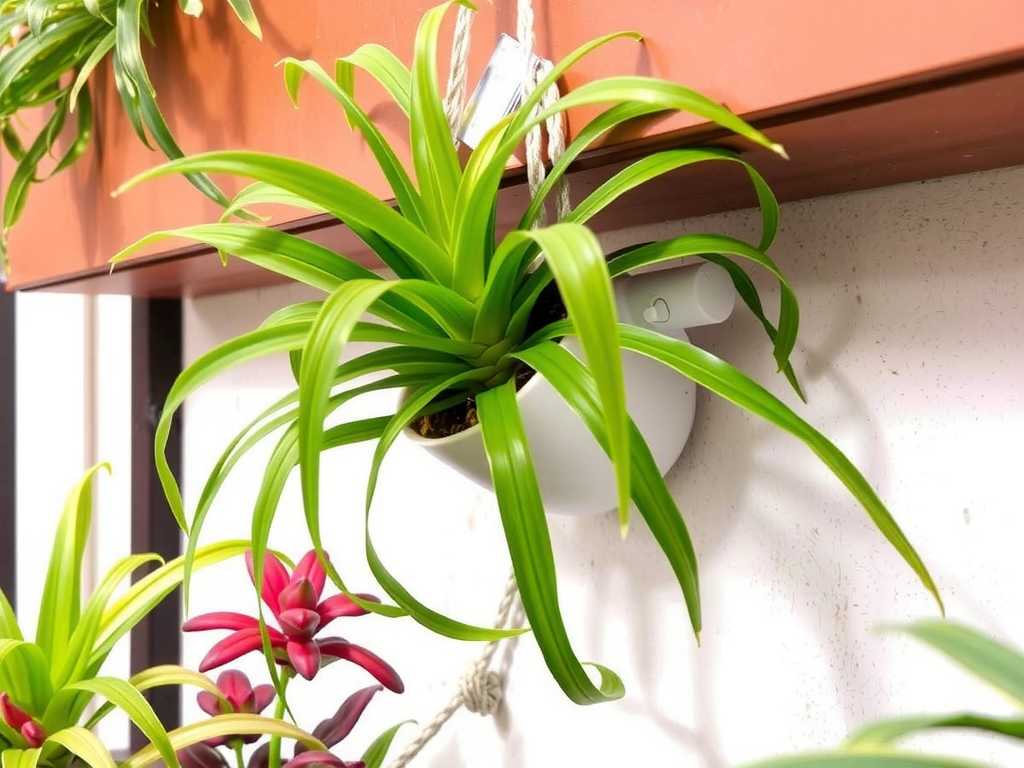
My Toolkit: Evaluating Different Types of Spider Plant Supports
I selected three popular support types for a side-by-side, two-week trial on mature spider plants producing multiple runners. I monitored for stability, plant response, and ease of use.
1. The Classic Moss Pole: A Naturalist's Approach
I started with a slender, 24-inch coco coir moss pole. The idea was to mimic a tree trunk for the runners to cascade against.
- My Application Steps: I inserted the pole deep into the potting mix, close to the plant's center. I then gently gathered 3-4 of the longest runners and used soft, green garden twine to make loose, figure-eight ties around the runner stems and the pole. I misted the pole to encourage any aerial roots to attach.
- The Two-Week Observation: The plant adapted surprisingly well. The runners leaned against the pole, creating a pleasant, tiered effect. However, by day 10, I noticed a drawback: the plantlets on the supported side of the pole were slightly smaller than those hanging freely. The pole was shading them. Furthermore, new runners began growing away from the pole, requiring constant re-training.
- The Pitfall and Fix: The main issue was light blockage and the need for ongoing maintenance. The fix was to use a thinner pole and only secure the main runner stem, allowing the plantlets to dangle freely outside the pole's shadow. This required weekly check-ins to adjust ties.
2. Circular Hoop Supports: The Contained Cascade
Next, I tried adjustable metal hoop supports, often used for peonies or floppy perennials. These are my top recommendation for managing lodging in mature spider plants.
- My Application Steps: I chose a 12-inch diameter hoop with three legs. I carefully positioned the legs around the inner rim of the pot, lowering the circular hoop until it sat about two-thirds of the way down the plant's foliage. The runners naturally fell through the open center. I gently lifted any lodged runners and rested them on top of the hoop's circumference.
- The Two-Week Observation: This was a revelation. The hoop acted as a lifting skirt, instantly solving the lodging problem. All plantlets received uniform light. Airflow around the base improved dramatically. There was zero risk of stem damage from tying. The plant maintained a perfectly full, rounded shape. It required no further adjustment.
- The Pitfall and Fix: The only initial challenge was choosing the right hoop height. My first attempt placed the hoop too high, barely lifting the runners. I fixed this by testing a few heights before settling the legs firmly in the soil. The hoop needs to be low enough to provide significant lift but high enough not to crush lower leaves.
3. DIY Bamboo Teepee: The Simple Framework
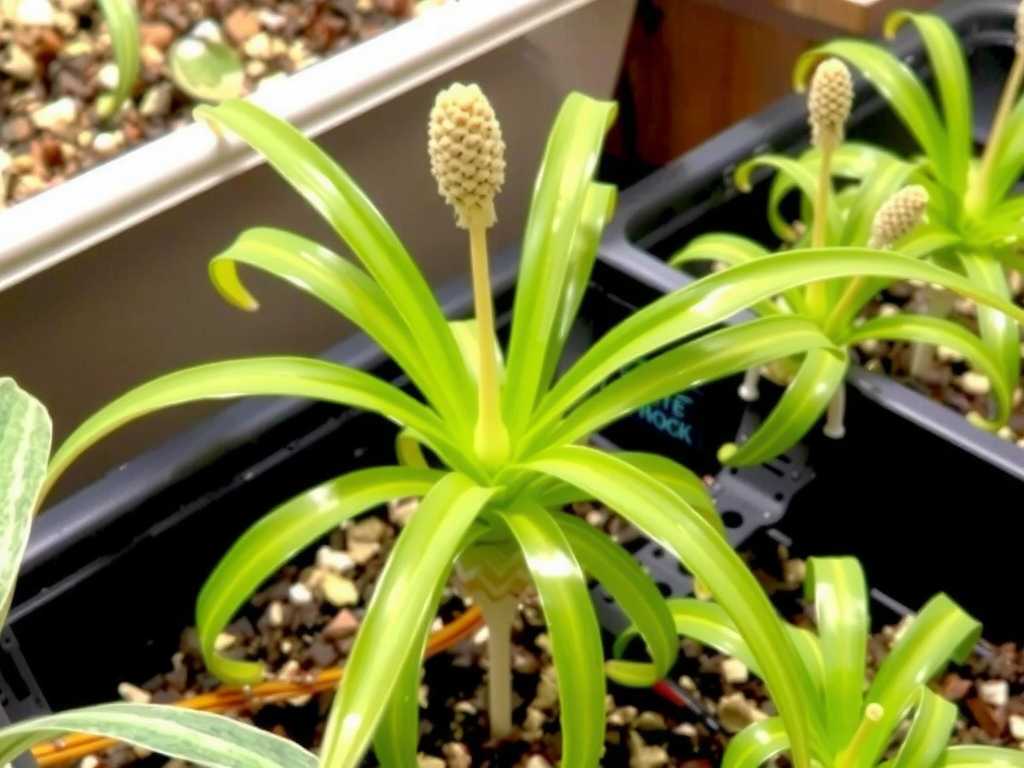
For a spider plant with fewer, very long runners, I built a simple teepee from three 36-inch bamboo stakes.
- My Application Steps: I pushed the stakes into the pot at a steep angle, tying them together at the top with twine. I then wound the longest runner spirally around the structure, using soft plant clips at a few key points.
- The Two-Week Observation: This created a stunning, vertical "spider plant vine" effect. It was excellent for saving space and showcasing a single, spectacular runner. However, it was highly manipulative of the plant's natural form. The plantlets struggled to orient themselves.
- The Pitfall and Fix: The main pitfall was over-complication and stress on the runner at bending points. The fix was to be less ambitious. I dismantled it and used just two stakes in an "X" shape at the pot's back, creating a simple fan for the runners to lean against—a far more forgiving support for spider plant stolons.
The Verdict: How to Choose and Fix Your Support
After 14 days of close observation, my conclusions are clear.
- For a Full, Mature Plant: The circular hoop support is unmatched. It's a passive, non-invasive fix for drooping runners that promotes health and aesthetics with zero daily maintenance. It's the ultimate "set it and forget it" solution.
- For a Training or Vertical Effect: A thin moss pole or a simple bamboo fan works well if you are committed to periodic training and adjustments. Always use soft ties and check weekly for tightness.
- The Golden Rule of Fixing: Whatever support you choose, the method of attachment is critical. Never tie the delicate runner tightly. Use a loose loop or a clip that doesn't constrict growth. The support should guide, not grip.
According to the American Horticultural Society's (AHA) principles of plant care, the least intrusive method that solves the problem is often the best. The hoop support aligns perfectly with this ethos, providing structure without stress.
Your Questions, Answered
Will staking hurt my spider plant? No, when done correctly. The danger comes from tight ties that cut into stems or abrasive materials. Always use soft ties, velcro plant tape, or flexible clips, and leave room for the stem to thicken.
Can I just let the runners hang without support? Absolutely. This is their natural state and is often perfectly healthy. Support becomes necessary primarily when lodging causes tangling, breakage, poor plantlet development, or when the aesthetic of a tidy plant is desired.
How do I support runners in a hanging basket? Lodging is less common here, as runners can dangle freely. The issue is often overcrowding. If needed, a small, horizontal hoop placed within the basket can gently separate runners, or you can selectively guide some runners through the basket's chains or macrame for a curated look.
Choosing the right support transforms your spider plant from a messy tangle into an architectural feature. It’s about working with the plant's nature, not against it. My two-week journey proved that a simple, well-chosen support like a circular hoop doesn't just fix lodging—it celebrates the graceful, prolific beauty of the spider plant’s unique growth habit. Start by assessing your plant's size and your own willingness for upkeep, and you'll find a method that keeps both you and your spider plant thriving.