bluename
 Blackened Roots of spider plants: First Aid for Fungal Rot
There’s a special kind of heartbreak for a plant lover. It’s not the occasional yellow leaf or the slow grower. It’s the moment you unpot a cherished spider plant, expecting a tangle of healthy white roots, and are instead met with a foul smell and roots that are blackened, mushy, and hopeless. I’ve been there. My favorite variegated Chlorophytum comosum, a thriving specimen I’d propagated myself, suddenly began to wilt. The leaves turned pale and limp, despite my careful watering. The problem was clear: the blackened roots of spider plants, a classic sign of fungal rot, had taken hold. This guide is the first-aid protocol I developed through trial, error, and success, documented over a critical two-week rescue mission.
Understanding the Enemy: What is Fungal Rot?
Before you can fight it, you need to know what you’re dealing with. Root rot is primarily caused by overwatering, which creates an oxygen-deprived environment perfect for soil-borne fungi like Pythium and Rhizoctonia to thrive. These pathogens attack the root system, breaking down the tissues. The roots turn black or dark brown, become soft and slimy, and lose their ability to absorb water and nutrients. Ironically, this causes the plant to show signs of drought (wilting, browning tips) while its roots are drowning. According to the American Horticultural Society (AHS), overwatering is the single most common cause of houseplant demise, and spider plants, while tolerant, are not immune.
My Step-by-Step Rescue Operation
The moment I discovered the rot, I knew immediate action was needed. Here is the exact process I followed.
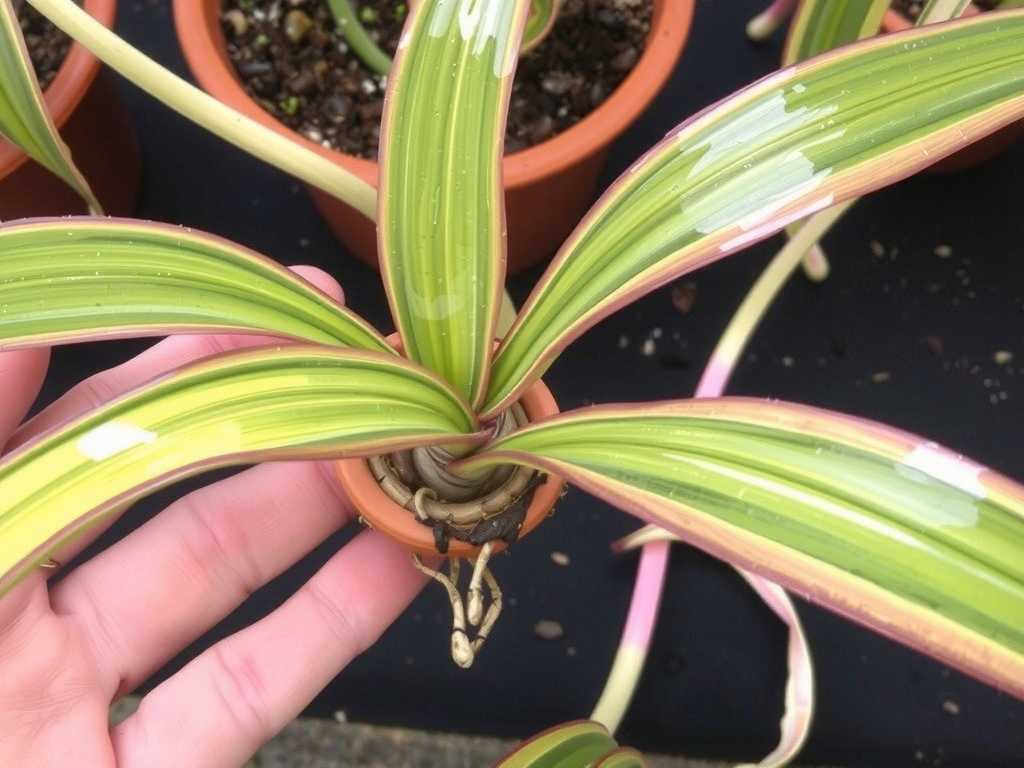
Step 1: The Unpotting and Diagnosis Gently, I removed the spider plant from its pot. I cradled the base and tapped the pot’s sides to loosen the root ball. The smell confirmed my fears—a sour, swampy odor. I carefully washed the roots under a gentle stream of lukewarm water to remove all the old, soggy soil. This revealed the full extent of the damage: about 60% of the root system was blackened and mushy. The healthy roots were firm and white, a stark contrast.
Step 2: The Surgical Removal This is the most critical step. Using a pair of pruning shears sterilized with isopropyl alcohol (to prevent spreading pathogens), I began cutting. I removed every single root that was soft, dark, or slimy. I cut back until I saw only clean, white or cream-colored interior tissue. I also trimmed any leaves that were more than halfway yellow or brown to help the plant focus its energy. It felt drastic—I was left with a much smaller root ball and a rather bare plant—but half-measures won’t save a plant from severe root rot.
Step 3: The Fungicide Bath After pruning, I didn’t just repot. To address any remaining fungal spores, I gave the remaining healthy roots a 15-minute soak in a solution of hydrogen peroxide and water (1 part 3% peroxide to 3 parts water). This solution oxygenates the roots and acts as a mild antifungal. Alternatively, a copper-based fungicide recommended by the Royal Horticultural Society (RHS) for soft rot can be used as a dip.
Step 4: The Fresh Start in New Soil I selected a new, clean pot with excellent drainage holes—slightly smaller than the old one to match the reduced root mass and prevent excess soil from staying wet. I filled it with a fresh, well-draining potting mix. I used a cactus/succulent blend amended with extra perlite for my spider plant, ensuring it would be nearly impossible to overwater. I made a small mound of soil, placed the plant on top, and gently filled around the roots, tapping the pot to settle it without compacting.
Step 5: The Critical Aftercare I did not water the plant immediately. The roots were wounded and needed time to callous. I placed the pot in a location with bright, indirect light (no direct sun, which would add stress) and waited. After three full days, I gave it a thorough but careful watering until it drained from the bottom, ensuring the new soil was fully moistened. Then, I began the watch.
The Two-Week Observation: A Diary of Recovery
This period was filled with anxiety and close observation. Here’s how my spider plant fared.
- Days 1-3: The plant looked sad and droopy. Some of the remaining outer leaves continued to yellow. This was expected—transplant shock and the plant adjusting to its reduced root system.
- Days 4-7: The wilting stopped. The central leaves, the newest growth, began to feel firmer to the touch. This was the first sign of hope. I resisted the urge to water again, checking the soil moisture by sticking my finger two inches deep. It was still slightly damp.
- Days 8-14: By the end of the first week and into the second, the plant stopped losing leaves altogether. Not only did it stabilize, but I noticed the very beginnings of new growth—a tiny, pale green nub emerging from the center. This was the ultimate victory sign: the plant was putting energy into new growth, meaning the remaining healthy roots were functioning and the fungal infection was halted.
The Pitfalls I Encountered (And How to Fix Them)
My journey wasn’t perfectly smooth. I made a mistake that could have been costly.
The Pitfall: Over-Confident Watering. About five days into the observation, the surface soil looked dry. I assumed it was time to water and gave it a small drink. Within two days, the lowest leaf began to yellow rapidly. I had watered before the root zone was dry.
The Solution: I immediately stopped. I carefully aerated the top layer of soil with a chopstick to improve evaporation. More importantly, I learned to rely on the “weight test” and the “finger test” together. Lifting the pot to feel its heaviness is a more reliable indicator of moisture deep in the pot than surface appearance. I didn’t water again until the pot felt noticeably light, which took another 5 days. This patience allowed the roots to seek out moisture and grow stronger.
Prevention: Building a Defense Against Future Rot
Saving your plant is one thing; keeping it healthy is another. Here’s my new regimen:
- The “Soak and Dry” Method: I only water when the top 50-75% of the soil is completely dry. Then, I water deeply until it flows from the drainage holes, ensuring the entire root ball is hydrated.
- The Right Pot & Soil: Terracotta pots are my new best friend. Their porous nature allows soil to dry more evenly. That well-draining mix is non-negotiable.
- Seasonal Awareness: I drastically reduce watering frequency in the winter when my spider plant’s growth slows down. What works in summer will drown it in winter.
Common Questions from Fellow Plant Lovers
Can a spider plant recover from extensive root rot? Yes, absolutely, if there is still a portion of healthy, firm, white roots left after pruning. Spider plants are remarkably resilient. The key is aggressive removal of all rot and providing a fresh, well-draining environment. If the entire root system and the base of the plant (the crown) are mushy, recovery is unlikely, but you can still try to propagate any healthy offshoots (spiderettes).
Should I use cinnamon or hydrogen peroxide? I used hydrogen peroxide for its oxygenation and antifungal properties, which are well-suited for this crisis. Cinnamon is a popular natural fungicide and can be dusted on cut root ends to dry them and inhibit fungus. For a severe case, I prefer the peroxide soak, but a light dusting of cinnamon after cutting is a good extra step.
How do I know if I’ve removed enough of the rotten roots? You must keep cutting until you see no more brown or black mush. The cut end should reveal firm, white or pale-colored tissue. If you squeeze it and it feels soft or waterlogged, cut a little further back. It’s better to remove too much than to leave any rot behind, as it will continue to spread.
Watching a plant succumb to root rot is discouraging, but it’s rarely a death sentence if you act decisively. The transformation from a wilting, foul-smelling mass to a firm, growing plant over those two weeks was one of the most rewarding experiences in my plant care journey. It taught me more about the resilience of spider plants and the importance of mindful watering than any perfect, easy growth ever could. Your spider plant wants to live. With a sterile pair of snips, the courage to make the necessary cuts, and a lot of patience, you can guide it back to health.