bluename
 White Mold in spider plant Potting Soil: My Battle-Tested Treatment Tips of Ventilation and Sun Exposure
I’ll never forget the sinking feeling. There it was, a fluffy, white patch spreading across the soil of my beloved spider plant, ‘Verdi’. It looked innocent, almost like a dusting of snow, but I knew better. This was white mold, a common but unsettling sight for any houseplant enthusiast. My immediate fear wasn’t just for the aesthetics; it was a sign that something in my care routine was off, creating a playground for fungi. If you’re staring at a similar scene, don’t panic. Over the years, I’ve learned that tackling white mold in spider plant potting soil effectively isn’t about harsh chemicals, but about mastering two fundamental elements: ventilation and sun exposure. This is the exact, step-by-step method I used to rescue ‘Verdi’, based on two weeks of diligent observation, a few mistakes, and a triumphant recovery.
Understanding the Enemy: What Is This White Mold?
Before diving into treatment, it’s crucial to know what you’re dealing with. That white, powdery or fuzzy substance is almost always a saprophytic fungus. According to resources from the American Horticultural Society (AHS), these fungi are nature’s decomposers, feeding on decaying organic matter in damp soil. They’re not typically parasitic, meaning they don’t directly attack the living roots of your spider plant. However, their presence is a major red flag. It signals excessive moisture, poor air circulation, and often, insufficient light—conditions that can lead to root rot and weaken your plant’s defenses. So, while the mold itself might not be the primary killer, the environment it thrives in certainly can be.
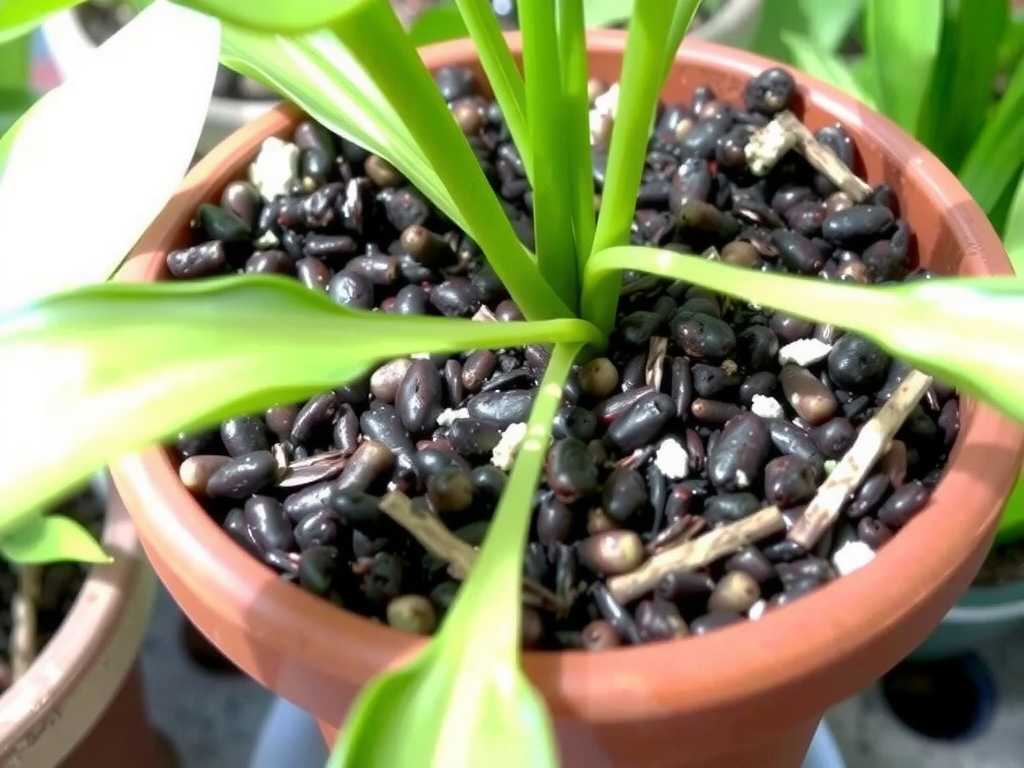
My Two-Week Treatment Protocol: Ventilation and Light
When I found the mold on ‘Verdi’, I committed to a 14-day plan focused solely on correcting the environment. I avoided repotting immediately, as I wanted to see if environmental changes alone could solve the problem.
Week 1: The Immediate Intervention
My first step was physical removal. I gently scraped off the top quarter-inch of affected soil with a small trowel, being careful not to disturb the spider plant’s thick roots. I disposed of this soil in the trash, not the compost, to prevent spreading spores.
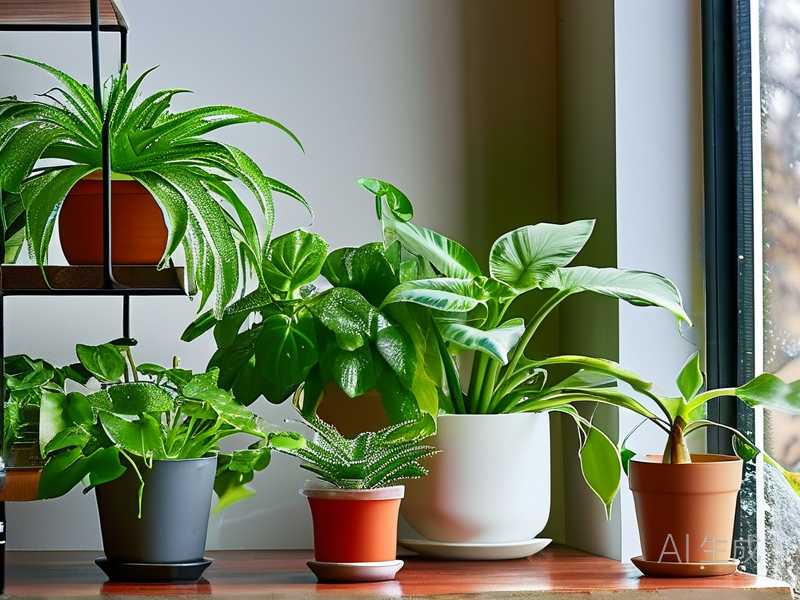
Next, I addressed the core issue: stagnant air. Improving air circulation around spider plants became my mantra. I moved ‘Verdi’ from its cozy corner on a shelf to a spot about three feet away from a north-east facing window. This location received bright, indirect light for most of the day. Crucially, I placed a small, oscillating fan on a low setting across the room, ensuring a gentle, continuous breeze wafted over the plant’s foliage and soil surface. The goal wasn’t to create a wind tunnel, but to disrupt the still, humid microclimate that mold loves.
For sun exposure for moldy plant soil, I had to be strategic. Spider plants can scorch in direct, hot afternoon sun. My north-east window provided perfect, gentle morning light. I made sure the pot itself, not just the leaves, received this light. The sun’s rays help dry the soil surface naturally and create an environment less hospitable to fungi.
I also changed my watering habit completely. I stuck a finger deep into the soil—up to my second knuckle—and only watered when it felt completely dry. I then watered thoroughly until it drained from the bottom, and immediately emptied the cache pot. No more “sips” of water.
The First Week’s Results: By day 3, the visible mold had not returned to the scraped areas. However, by day 5, I noticed a tiny new patch forming near the base of the plant. This was my first “pitfall.”
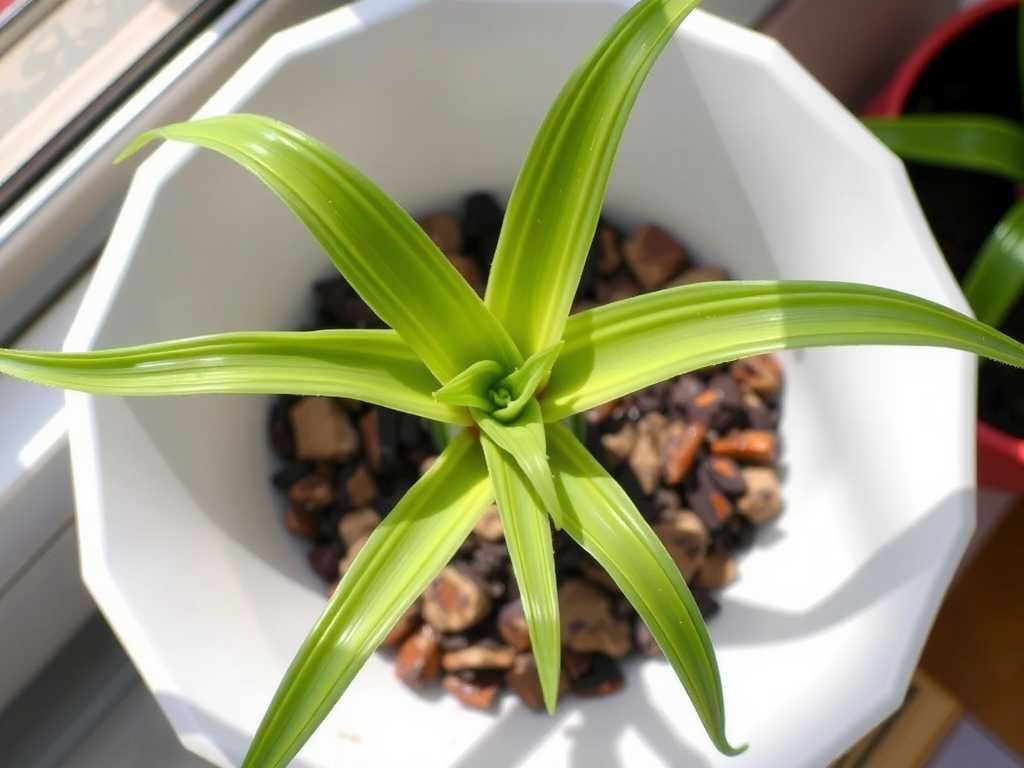
Pitfall #1: The Mold Came Back! I realized my error. While I had improved general room circulation, the dense foliage of the spider plant was trapping humidity right at the soil level. The fan’s breeze was passing over the top, not penetrating the center.
My Solution: I gently used plant stakes to lift and separate some of the outer leaves, creating channels for air to flow down into the heart of the plant and across the soil. This simple adjustment made a dramatic difference.
Week 2: Reinforcement and Observation
Entering the second week, I doubled down. I continued the strict watering rule and maintained the fan schedule. With the foliage propped open, the benefits of sunlight and airflow for spider plant health became even more apparent. The soil surface was drying uniformly between waterings.
I also introduced a natural antifungal aid: cinnamon. After scraping away the new small patch, I lightly dusted the entire soil surface with ground cinnamon. While not a cure-all, cinnamon has mild antifungal properties and is harmless to the plant. It acted as a helpful deterrent while the environmental changes did the main work.
The Second Week’s Results: By day 10, there was zero recurrence of white mold. The soil looked healthy and felt crumbly on top. The plant itself seemed perkier. New growth, which had seemed stalled, began to show. By the end of the 14-day period, the problem was conclusively resolved. The environment was no longer mold-friendly.
Why This Method Works: The Science Behind the Simplicity
This approach aligns perfectly with plant pathology principles. Fungi require constant moisture and stagnant air to proliferate. By introducing consistent, gentle airflow for treating soil fungus, you evaporate excess moisture from the soil surface and the plant’s crown. Sunlight, particularly the gentle morning kind, further aids this drying process and provides energy for the plant to strengthen its own systems. The Royal Horticultural Society (RHS) advises that “improving ventilation and reducing overhead watering are key first steps in managing fungal issues in container plants.” I was essentially following this expert guidance to the letter.
Preventing Future Outbreaks: A New Care Routine
Success isn’t just about treatment; it’s about prevention. My experience with ‘Verdi’ permanently changed how I care for all my spider plants.
- The Right Pot & Soil: I ensure all pots have ample drainage holes. I also mix a handful of perlite or orchid bark into my standard potting mix to increase aeration and drainage from within.
- Watering Wisdom: The “finger test” is now non-negotiable. I water less frequently but more thoroughly, always discarding drainage water.
- Strategic Placement: No more crowded plant shelves. I give each spider plant space for air to move around it freely. The oscillating fan is now a permanent fixture in my plant room during the more humid seasons.
- Regular Soil Checks: Every time I water, I quickly scan the soil surface. Early detection makes management infinitely easier.
Common Questions from Fellow Plant Lovers
Is the white mold harmful to me or my pets? The common saprophytic mold found on soil is generally not harmful to healthy humans or pets upon casual contact. However, it can aggravate respiratory allergies or asthma if spores are inhaled in large quantities. It’s best to remove it and address the cause, and always wash your hands after handling moldy soil.
Should I just repot the plant immediately? Not necessarily. Repotting can stress a healthy plant. My two-week experiment proves that environmental correction is often a successful first line of defense. If the mold returns persistently after improving airflow and light, or if you suspect root rot (smelly, mushy roots), then repotting with fresh, well-draining soil is the next step.
Can I use hydrogen peroxide or vinegar to kill the mold? While a diluted hydrogen peroxide solution (1 part 3% H2O2 to 4 parts water) can be used as a one-time soil drench to kill mold spores, it’s a temporary fix if the environment remains damp and stale. Vinegar can be too harsh and alter soil pH. I view these as emergency tools, not solutions. Fixing the core issues of ventilation and light is a more sustainable, plant-friendly long-term strategy.
Winning the fight against white mold is about shifting your perspective. It’s not an isolated problem to be sprayed away, but a message from your plant about its living conditions. By listening to that message and responding with better air circulation and appropriate sun exposure, you don’t just eliminate a fungus. You create a fundamentally healthier, more resilient home for your spider plant to thrive. My ‘Verdi’ is now more lush than ever, a living testament to the power of getting the basics right.