bluename
 Compacted spider plant Potting Soil: My 2-Week Experiment with Perlite for Dramatic Improvement
If you’ve ever felt that sinking feeling when water pools on the surface of your spider plant’s soil for minutes before slowly draining—or worse, doesn’t drain at all—you’re not alone. I’ve been there, staring at a pot of what felt like concrete, worrying about the health of my beloved Chlorophytum comosum. Compacted potting soil is a silent killer for these otherwise resilient plants, leading to root rot, stunted growth, and a general lack of vitality. The core of the problem is poor soil structure. That’s why I decided to tackle this issue head-on with a simple, widely recommended amendment: perlite. This article documents my hands-on, two-week journey of revitalizing my spider plant’s compacted soil by incorporating perlite, detailing the undeniable improvement effect I witnessed.
Understanding the Enemy: Why Spider Plant Soil Compacts
Before diving into the solution, it’s crucial to understand why this happens. Over time, even quality potting mixes can break down. Organic components decompose, soil particles settle tightly together through repeated watering, and mineral salts from fertilizers can accumulate. This process destroys the essential air pockets in the soil matrix. According to the American Horticultural Society (AHS), adequate pore space is non-negotiable for healthy root function; roots need oxygen as much as they need water and nutrients. In compacted conditions, water displacement of air leads to an anaerobic environment—a perfect setup for root pathogens. My spider plant was showing classic symptoms: slower production of plantlets (spiderettes), slightly pale leaves, and that tell-tale slow water absorption.
The Perlite Solution: Why I Chose This Amendment
I needed a solution that was permanent, inorganic (so it wouldn’t decompose), and effective at creating lasting aeration. Perlite, those lightweight white granules you often see in potting mixes, fit the bill perfectly. It’s essentially superheated volcanic glass that “pops” like popcorn, creating a porous, sterile, and neutral-pH material. The Royal Horticultural Society (RHS) notes that adding perlite to potting composts significantly improves drainage and aeration, preventing compaction. Its physical structure doesn’t break down, meaning it provides long-term soil structure improvement. For my compacted spider plant soil problem, perlite promised to be a game-changer by mechanically forcing particles apart and creating permanent drainage channels.
My Step-by-Step Process: Repotting with Perlite
Here is the exact process I followed, which you can replicate for your own spider plant suffering from hard, compacted soil.
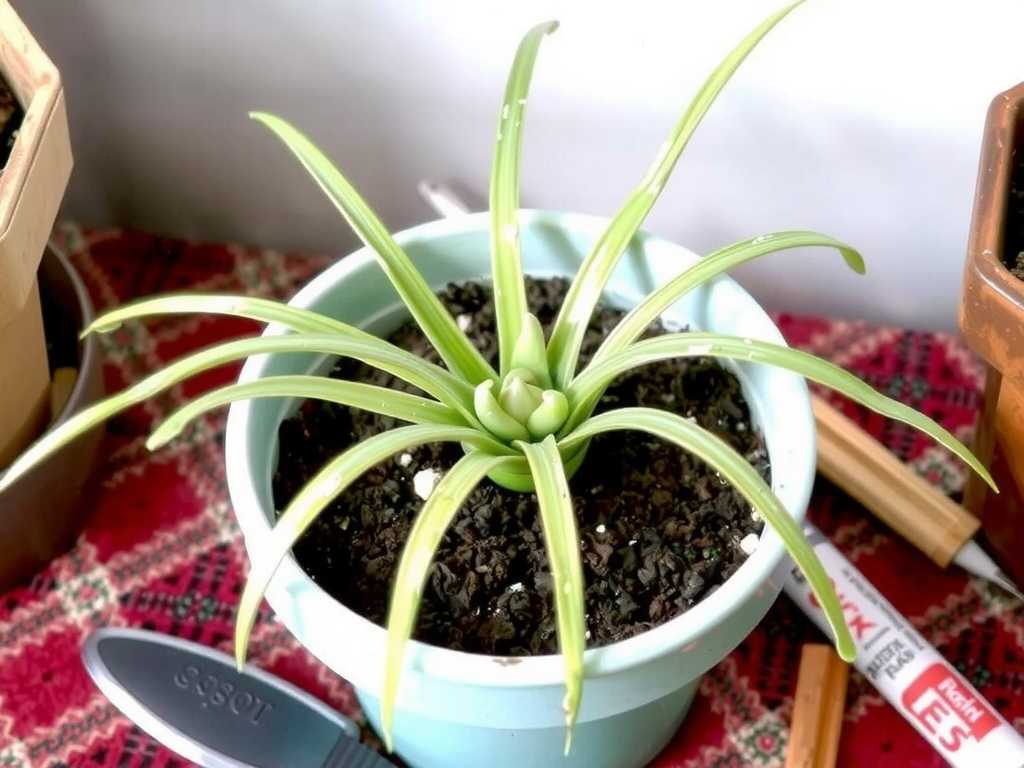
1. Assessment and Gathering Supplies: My spider plant was in a 10-inch plastic pot. I gathered fresh, well-draining potting mix (a peat- or coir-based blend), a bag of coarse horticultural perlite, a clean pot (I opted to use the same one after a deep clean), a trowel, and gardening gloves.
2. Removing the Plant and Diagnosing the Soil: I gently tipped the pot and eased the root ball out. The diagnosis was worse than I thought. The soil was a dense, solid mass. The roots were mostly healthy but circling tightly at the bottom, with few fine roots visible in the core. I could see the clear need for soil amendment—this medium was spent.
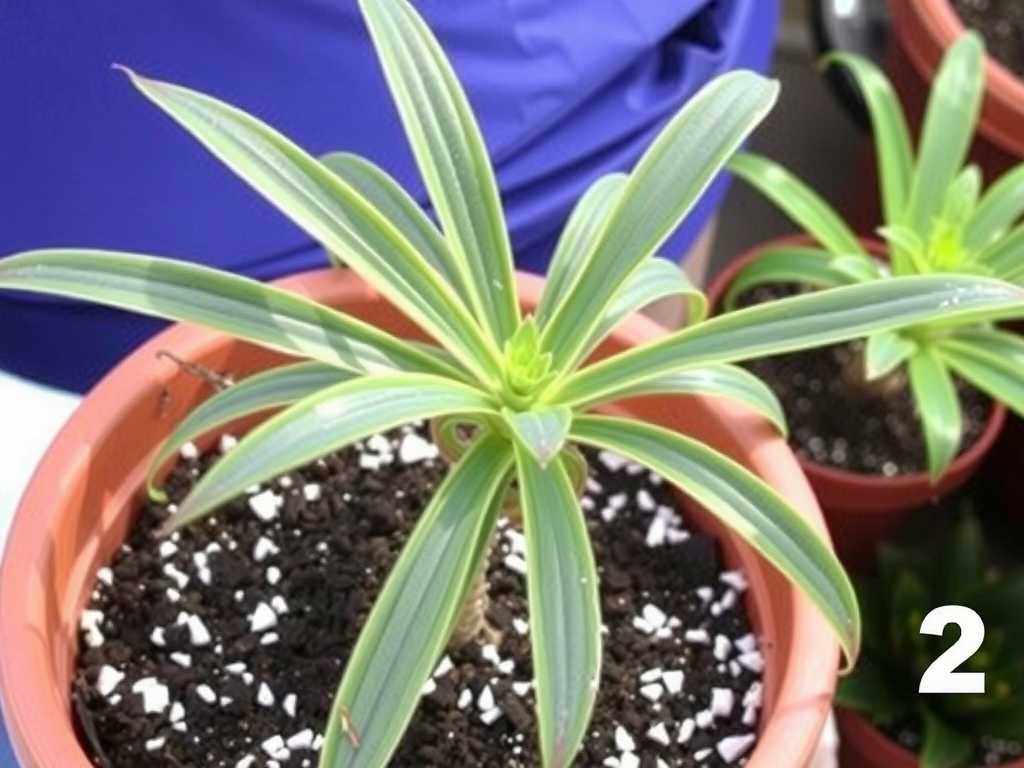
3. Preparing the New Soil Mix: This was the critical step. I didn’t just add a handful of perlite on top; I needed to integrate it thoroughly. My goal was a 30% perlite to 70% potting mix ratio for significant soil structure improvement. I emptied the old, compacted soil into a large basin, breaking apart the large chunks. To this, I slowly added and mixed in the new potting mix and the perlite. The key was to blend until the white perlite granules were evenly distributed throughout the dark soil. The mixture immediately felt lighter and fluffier.
4. Root Pruning and Repotting: I carefully loosened the outer root mat and trimmed away any circling or dead roots. I placed a layer of my new perlite-enhanced mix in the bottom of the cleaned pot, set the plant in at the same depth it was before, and backfilled around the sides, gently firming the soil to eliminate large air pockets without compressing it.
5. The Initial Watering and Placement: I gave the plant a thorough, deep watering until it flowed freely from the drainage holes. This served to settle the new mix. I placed it in bright, indirect light and resolved to observe it closely for the next two weeks.
The 2-Week Observation: Documenting the Improvement Effect
The transformation wasn’t overnight, but the signs of improvement were clear and progressive.
Days 1-3: The most immediate change was in watering. When I checked the soil moisture on day two, the surface had dried evenly, and water immediately soaked in when I tested with a sprinkle. No more surface pooling.
Days 4-7: I noticed a subtle change in leaf turgor. The leaves, which had been slightly less rigid, seemed to perk up. The central growth point appeared more vibrant. This indicated the roots were accessing water more efficiently and likely getting more oxygen.
Days 8-14: The most exciting development occurred in the second week. Two new, small spiderettes began to emerge from the mother plant—a sign it was feeling confident and healthy enough to invest energy in reproduction. Furthermore, when I gently dug a finger into the soil at the pot’s edge, the mix was still loose and crumbly, not starting to re-compact. The perlite amendment for drainage was working exactly as intended.
The Pitfalls I Encountered and How I Solved Them
No project is without its hiccups. Here’s what went wrong and how I fixed it.
1. Perlite Dust and Mess: When I first opened the bag and poured it, a cloud of fine, irritating dust went everywhere. Solution: I learned to dampen the perlite slightly with water in a separate container before mixing. This completely suppressed the dust, making the process safer and cleaner.
2. Incorrect Mixing Ratio (First Attempt): In my initial test mix, I got overzealous and used a 50/50 ratio. The soil became too fast-draining and struggled to retain any moisture or nutrients. Solution: I recalibrated. For spider plants, which enjoy slightly moist but never soggy soil, the 30% perlite blend proved to be the sweet spot for optimal soil aeration. This balanced mix provides the benefits of perlite in potting soil without going overboard.
3. Overwatering Out of Habit: My old watering schedule was based on compacted soil that stayed wet for over a week. The new, well-aerated mix dried out more appropriately in about 4-5 days. I almost overwatered out of habit. Solution: I switched to the “finger test,” watering only when the top inch of soil felt dry. This prevented me from undermining the excellent drainage I had just created.
Sustaining the Benefits: Long-Term Care After Perlite Amendment
Adding perlite isn’t a one-time fix-all; it’s a foundation for better care. I now water more deeply but less frequently, encouraging strong root growth. I fertilize at half-strength during the growing season, as the free-draining mix means nutrients can flush out more easily. Every 6 months, I gently top-dress the soil with a fresh sprinkle of the perlite-mix blend to maintain the structure. The plant continues to thrive, producing abundant spiderettes, which is the ultimate sign of a happy, healthy spider plant.
How often should I add perlite to my spider plant’s soil? Perlite is inorganic and does not decompose. You primarily need to add it when you repot, which is typically every 1-2 years for a healthy spider plant. There’s no need to add it to the surface regularly.
Can I use perlite for other plants suffering from compacted soil? Absolutely. The improvement effect of adding perlite is universal for plants that require well-draining soil, such as succulents, snake plants, pothos, and many herbs. Always research the specific plant’s needs to adjust the ratio accordingly.
Is there an alternative to perlite for fixing compacted soil? Yes, coarse horticultural sand or pumice can serve similar functions. However, sand can be heavy and may not improve aeration as effectively, while pumice is often more expensive. Perlite remains a top choice for its ideal balance of weight, cost, and performance in improving soil structure for container plants like spider plants.
Revitalizing my spider plant by addressing its compacted soil with perlite was one of the most satisfying plant care projects I’ve undertaken. The visible turnaround in just two weeks—from sluggish growth and water anxiety to perky leaves and new offshoots—proved how critical physical soil structure is. It moved my plant from merely surviving to actively thriving. If your spider plant is looking underwhelmed by its home, don’t just water it less; give its roots a better environment. A simple blend with perlite might be the transformative fix you both need.