bluename
 Broken spider plant Runners: Wound Treatment and Healing Promotion Methods
There’s a special kind of plant-parent panic that sets in when you find a broken spider plant runner. One moment, your thriving Chlorophytum comosum is sending out elegant, arching stolons laden with plantlets, and the next, you discover a clean snap or a ragged tear. I’ve been there, staring at the damaged stem, wondering if the entire propagation chain is doomed. The good news? A broken spider plant runner isn't a death sentence. With prompt and proper care, you can treat the wound and successfully promote healing, often saving the precious spider plant babies.
In this guide, I’ll walk you through the exact steps I use, born from years of trial and error. We’ll focus on practical wound treatment for spider plant runners and effective healing promotion methods. I recently had to perform this exact rescue operation on a mature ‘Vittatum’ variety, and I documented the entire two-week healing and recovery process. I’ll share what worked, what didn’t, and how you can ensure your spiderettes thrive.
Understanding the Injury: Why Runners Break
Before we jump into treatment, it’s helpful to understand why these breaks happen. Spider plant runners, or stolons, are naturally somewhat brittle. Common causes include:
- Accidental Trauma: Getting caught while moving the plant, bumped by pets, or snagged during cleaning.
- Weight Stress: An exceptionally long runner with multiple, large plantlets can become too heavy for its own stem.
- Environmental Stress: Low humidity can make the stems less flexible and more prone to snapping.
Recognizing the type of break—a clean snap versus a crushed or torn stem—will inform your first-aid approach. A clean break is actually easier to manage than a mangled one.
Immediate First Aid: Assessing and Treating the Wound
The moment you discover the break, time is of the essence. The goal is to prevent disease and create a clean environment for the plant to callus or re-root.
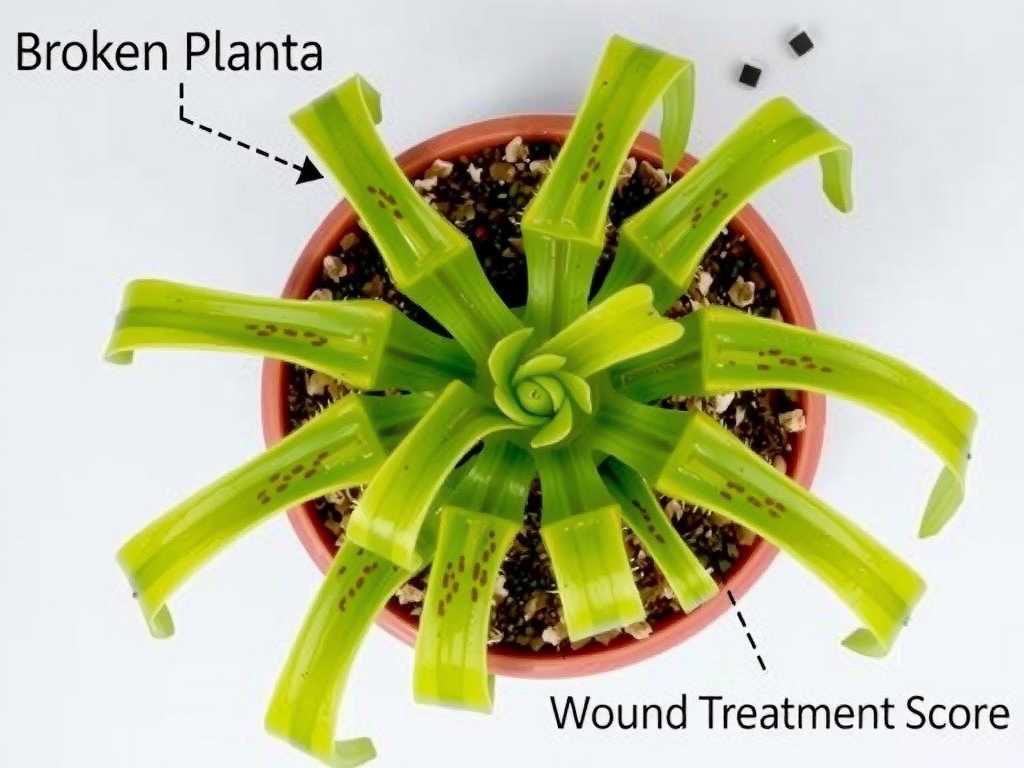
Step 1: The Gentle Evaluation I carefully lifted the broken runner, supporting the plantlets to avoid further stress. The break was about halfway down a 12-inch stolon, a clean snap with four well-developed spiderettes on the detached end. The mother plant’s end was still attached. My priority was saving the babies on the broken piece.
Step 2: The Precision Cut For a clean snap, you might not need to re-cut. However, if the break is ragged, torn, or crushed, you must make a fresh cut. I sterilized a sharp pair of precision pruners with rubbing alcohol. Using a clean cut, I trimmed about a quarter-inch behind the crushed area on the broken piece to reveal healthy, green tissue. This is a critical spider plant runner repair step. As noted by the American Horticultural Society (AHS), clean cuts made with sterilized tools minimize the introduction of pathogens and allow for faster plant wound compartmentalization.
Step 3: The Callusing Period (A Crucial Step Many Skip) Here’s the first “pitfall” I learned about the hard way. Years ago, I’d immediately stick a freshly cut runner in water, leading to mushy, rotten stems. Now, I always allow for callusing. I placed the detached runner with its plantlets on a paper towel in a warm, dry, shaded spot indoors for 24 hours. This lets the wound dry and form a protective seal, dramatically reducing the risk of rot when introduced to moisture later.
The Two-Pronged Healing Approach: Saving the Plantlets
You have two components to heal: the broken end still attached to the mother plant and the detached runner with its spiderettes. I addressed both.
For the Attached Stub on the Mother Plant: The stub left on the mother plant will naturally callus over and stop growing. I left it completely alone. Do not try to re-attach it. The plant will seal itself off, and its energy will redirect to producing new runners from the crown in time.
For the Detached Runner & Plantlets: Promoting Root Regrowth This is where healing promotion methods come into play. The spiderettes on the broken runner already had tiny nubs of aerial roots. My goal was to encourage these to develop into full root systems.
-
My Chosen Method: The Sphagnum Moss Box. I took a shallow plastic container and filled it with pre-moistened (but not sopping) sphagnum moss. I gently nestled the callused end of the runner stem and the base of the plantlets into the moss, using a small hairpin to hold the runner in place. Moss provides constant humidity around the wound site, encouraging root growth without the stem sitting in stagnant water. I placed the box under a grow light, ensuring bright, indirect conditions.
-
The Alternative: Water Propagation. You can also place the callused end in a small vial of water, ensuring only the very base is submerged. Change the water every 3-4 days. I find moss creates a more natural, airy environment and leads to stronger initial root adaptation to soil.
The Two-Week Recovery Diary: Observations and Adjustments
I monitored my sphagnum moss setup daily. Here’s how the two-week healing and recovery process unfolded:
- Days 1-3: No visible change. The plantlets remained perky and green. I kept the moss consistently moist by misting.
- Days 4-7: I noticed the first sign of success! The aerial root nubs on the largest plantlet began to elongate and turn a creamy white, pushing gently into the moss. The stem wound remained firm and green, not mushy.
- Day 10: A pivotal check. I gently lifted the runner to inspect progress. All four plantlets now showed active root growth, ranging from 0.5 to 1 inch long. The stem callus was dry and sealed. This is where I made a key adjustment. The original runner stem was starting to yellow slightly, having done its job of sustaining the babies until they rooted. Following Royal Horticultural Society (RHS) guidance on propagating stoloniferous plants, I made a new, clean cut to remove the now-spent yellowing stem, separating the four now-rooted spiderettes into individual plants.
- Days 11-14: I potted each rooted spiderette into a 2-inch pot with a well-draining potting mix. I kept the soil slightly more moist than usual for the first week to help the transition from moss. By day 14, all four were stable, showing new leaf growth, and were officially healed and thriving on their own.
Common Pitfalls and How I Solved Them
Pitfall 1: Rotting in Water Propagation. As mentioned, skipping the callusing step often leads to rot. Solution: Always allow a 24-hour callus period for any broken or cut runner end before introducing it to water or moist medium.
Pitfall 2: Plantlets Wilting During Recovery. If your spiderettes look sad, it’s often a humidity issue. The broken stem can no longer draw water from the mother plant effectively. Solution: Create a mini-humidity dome. I used a clear plastic bag loosely tented over the moss box for the first 5 days, which kept the plantlets plump while their roots developed.
Pitfall 3: Trying to “Graft” or Re-attach the Broken Runner. It’s tempting to try and tape or bind the broken pieces together. This almost never works and can trap moisture, causing rot. Solution: Accept the break and focus on propagating the plantlets from the detached piece. The mother plant will be fine.
Frequently Asked Questions
Can a broken spider plant runner heal if left attached? No, once physically severed, the vascular connection cannot be rejoined. The plant will not “knit” the piece back on. Your focus should shift from repairing the break on the mother plant to saving the spiderettes on the broken piece.
How long does it take for spider plant babies to root after a break? Under ideal conditions (warmth, bright indirect light, high humidity), you can see initial root nubs in 7-10 days, with established roots suitable for potting in 2-3 weeks. My two-week timeline showed robust roots ready for soil.
Should I use rooting hormone on the broken runner? For spider plants, it’s not necessary. They root readily from plantlets. However, if the break occurred very close to the plantlets with little stem, a light dip of the root nubs in rooting hormone powder can provide a slight boost. I did not use it in my successful two-week process.
Discovering a broken spider plant runner is a setback, but it’s also an opportunity to propagate new plants. The key lies in swift action: a clean cut, a mandatory callusing period, and providing a humid, bright environment for the spiderettes to generate their own roots. By understanding this simple wound treatment for spider plant runners and employing these reliable healing promotion methods, you can turn an accident into a victory, expanding your spider plant family with healthy, independent new plants.