bluename
 spider plant Micropropagation: Operation Techniques for Lateral Bud Separation
Have you ever tried to multiply your beloved spider plant, only to find the process slow, unreliable, or yielding just a few new plants? Traditional methods like rooting plantlets (spiderettes) in water or soil can be hit or miss, susceptible to rot, and limited by season and the health of the mother plant. For horticulturalists, nursery professionals, or dedicated plant enthusiasts aiming for rapid, large-scale, and disease-free propagation, these conventional techniques fall short. This is where the advanced science of spider plant micropropagation shines, particularly through the precise method of lateral bud separation. Mastering this technique allows for the production of hundreds of genetically identical, vigorous plants from a single explant in a controlled laboratory environment.
While it may sound complex, breaking down the operation techniques for lateral bud separation into clear, manageable steps makes this powerful tool accessible. This guide will walk you through the entire process, from initial setup to successful acclimatization, ensuring you understand not just the "how" but also the "why" behind each critical action.
Understanding the Foundation: Why Lateral Buds?
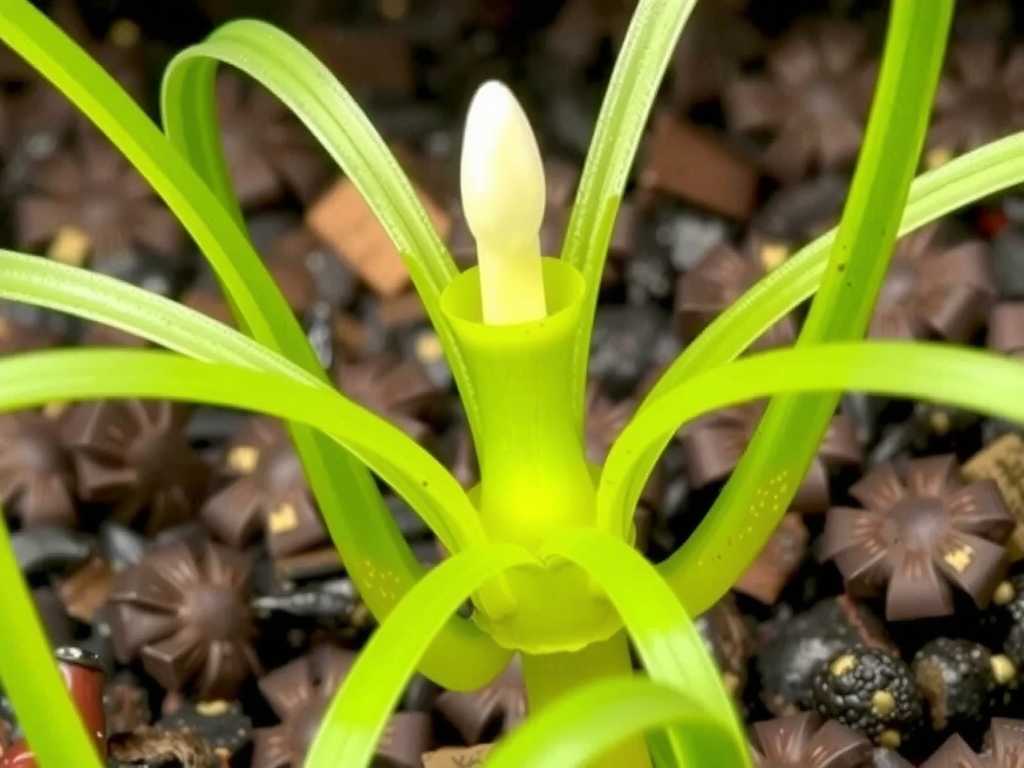
Before diving into the procedure, it's crucial to understand your starting material. Unlike using seeds (which can be genetically variable) or leaf segments, lateral buds—also called axillary buds—are small, dormant meristematic tissues located at the leaf axils (where the leaf meets the stem). These buds are pre-programmed to develop into new shoots. In micropropagation, we use these buds as "explants."
The core advantage is genetic stability. Propagating from a lateral bud ensures the new plant is a true clone of the parent, preserving all its desirable characteristics, such as variegation patterns in cultivars like Chlorophytum comosum 'Vittatum'. Furthermore, starting with a meristematic region often means a lower initial microbial load and high growth potential, leading to cleaner and more responsive cultures.
Phase 1: Laboratory Setup and Mother Plant Preparation
Success in micropropagation is won or lost in the preparation. Aseptic technique is non-negotiable.
- Laboratory Requirements: You will need a dedicated, clean space. Essential equipment includes a laminar flow hood (the cornerstone of sterile work), an autoclave for sterilizing tools and media, a precision balance, pH meter, magnetic stirrer, and culture vessels. All work with plant tissue must be performed under the laminar flow hood with its UV and HEPA filters engaged.
- Selecting and Pre-treating the Mother Plant: The health of your source plant directly impacts your results. Select a vigorous, disease-free spider plant. For several weeks beforehand, consider moving it to a controlled, clean environment with optimal light and minimal pest exposure. Some protocols suggest pre-treating the mother plant with a systemic fungicide and insecticide, but this must be done well in advance to avoid phytotoxicity in the explant.
Phase 2: The Critical Sterilization Protocol
This is arguably the most delicate step. Your goal is to eliminate surface contaminants (fungal spores, bacteria) without killing the delicate plant tissue.
- Initial Collection: Using sterilized tools, carefully excise a runner (stolon) containing young, healthy lateral buds. Avoid old or woody sections.
- Surface Sterilization: In the laminar flow hood, the explant material undergoes a series of baths. A common, effective sequence involves:
- A gentle rinse in 70% ethanol for 30-60 seconds for initial wetting and disinfection.
- Immersion in a sodium hypochlorite solution (a diluted bleach solution, typically 0.5%-1% active chlorine) for 10-15 minutes, with constant gentle agitation. A few drops of a surfactant like Tween-20 help the solution penetrate.
- Three to five thorough rinses with sterile distilled water to completely remove any residual sterilant.
- As noted by Dr. Eleanor Vance, a plant tissue culture specialist, "The sterilization time must be optimized for each species and even cultivar. For spider plants, exceeding 15 minutes in bleach can significantly reduce explant viability."
Phase 3: Explant Excision and Inoculation
Under the sterile hood, place the sterilized runner segment on a sterile petri dish.
- Microscopic Dissection: Using sterile surgical blades, forceps, and a stereomicroscope if available, carefully dissect away the outer leaf scales to expose the tiny, pale green lateral bud. The goal is to obtain a bud tip measuring 0.5-1.0 mm.
- Inoculation: With fine-tipped forceps, swiftly transfer this isolated lateral bud explant onto the surface of the prepared culture medium. Seal the culture vessel with a breathable lid or parafilm.
Phase 4: Culture Media Composition and Growth Regulators
The culture medium is the plant's artificial soil and food source. For spider plant micropropagation via lateral bud separation, a Murashige and Skoog (MS) basal medium is standard.
- Basic Components: It contains macronutrients, micronutrients, vitamins (like myo-inositol and nicotinic acid), and a sugar source (typically 30 g/L sucrose) for energy.
- The Role of Plant Growth Regulators (PGRs): This is where you direct the growth. For the initial establishment and shoot multiplication phase, a cytokinin is essential. Benzylaminopurine (BAP) at a concentration of 1.0-2.0 mg/L is highly effective in breaking bud dormancy and stimulating the proliferation of multiple new shoots from a single explant. A small amount of an auxin like NAA (Naphthaleneacetic Acid, 0.1-0.2 mg/L) can sometimes promote healthier shoot growth.
- Gelling Agent: The medium is solidified with agar (6-8 g/L) to provide physical support.
- pH Adjustment: The medium's pH is critical and must be adjusted to 5.7-5.8 before autoclaving.
Phase 5: The Multiplication Cycle and Subculturing
Once inoculated, cultures are placed in a growth room with controlled conditions: 25°C ± 2°C, a 16-hour photoperiod under cool white fluorescent or LED lights, and low light intensity.
- Shoot Proliferation: Over 4-8 weeks, the lateral bud will swell and develop into a cluster of multiple shoots. This cluster can be carefully divided—a process called subculturing—where individual shoots or small shoot clusters are transferred to fresh media containing the same or a similar PGR formulation. This cycle can be repeated every 4-6 weeks, leading to exponential multiplication. Each cycle is an opportunity to scale up your stock.
Phase 6: Rooting and Acclimatization to Soil
After sufficient multiplication, you have healthy shoots but no roots. They must now be induced to root.
- Rooting Stage: Individual shoots (2-3 cm tall) are transferred to a rooting medium. This medium often has a reduced salt concentration (½ or ¼ strength MS) and is fortified with an auxin. Indole-3-butyric acid (IBA) at 0.5-1.0 mg/L is highly effective for inducing robust root systems in spider plants within 2-3 weeks. Cytokinins are usually omitted at this stage.
- The Hardening-Off Process: This is the most critical transition. Rooted plantlets, accustomed to 100% humidity, sterile conditions, and sugar-fed existence, must now adapt to the real world. The process is gradual:
- Unseal culture vessels in the growth room for a few days to lower humidity.
- Gently wash agar from the roots using lukewarm water.
- Plant the plantlets in a sterile, well-aerated substrate like a peat-perlite mix.
- Place them in a high-humidity environment (e.g., a misting bench or covered propagation tray).
- Over 2-4 weeks, slowly reduce humidity and increase light exposure until they can withstand normal greenhouse or indoor conditions.
Addressing Common Challenges in Practice
Even with perfect technique, issues can arise. Contamination (visible as fuzzy fungal growth or slimy bacterial colonies) requires immediate disposal of the affected culture. Browning of explants can indicate sterilization stress or phenolic oxidation; using antioxidant solutions during excision can help. Hyperhydricity (vitrified, glassy-looking shoots) often results from high cytokinin levels or poor vessel ventilation and is corrected by adjusting PGRs and using vented lids.
How long does it take to go from one lateral bud to a sellable plant? From initial explant establishment through 2-3 multiplication cycles, rooting, and full acclimatization, the entire process typically takes 5-7 months. However, after the first cycle, you are working with dozens or hundreds of shoots simultaneously, not just one.
Can I do spider plant micropropagation at home without a full lab? A simplified "kitchen culture" setup is possible but challenging. The greatest hurdle is maintaining sterility without a laminar flow hood. While hobbyist boxes and still air boxes can be used, contamination rates will be significantly higher. Starting with a very rigorous surface sterilization protocol is even more critical in such settings.
What is the main advantage over just planting the spiderettes directly? The key advantages are scale, speed, and health. One successful culture can yield thousands of plants per year. All plants are genetically uniform and disease-free at the start, which is crucial for commercial production. It also allows for the rapid multiplication of new, rare cultivars that may not produce many offsets.
Mastering spider plant micropropagation through lateral bud separation unlocks a new level of plant production. It transforms propagation from a seasonal, chance-based activity into a predictable, scientific process. By meticulously applying these operation techniques for lateral bud separation—from sterile excision to careful acclimatization—you gain the power to preserve prized genetics, rapidly scale your collection, and contribute to the sustainable production of these popular plants with unprecedented efficiency and control.