bluename
 spider plant Post-Propagation Acclimatization: Dilution Ratio and Timing for Nutrient Solution Application
You’ve successfully propagated your spider plant, watching eagerly as new roots sprouted in water or a propagation medium. Now, you face the critical transition: moving these tender pups to soil and helping them thrive. This phase, known as post-propagation acclimatization, is where many plant enthusiasts stumble. The most common questions are, “When do I start feeding my new spider plant?” and “How strong should the fertilizer be?” Getting the dilution ratio and timing wrong can lead to fertilizer burn, stunted growth, or even the loss of your carefully propagated offspring. This guide will walk you through the exact steps to navigate this delicate period, ensuring your young spider plants develop into robust, air-purifying champions.
Understanding the Acclimatization Phase
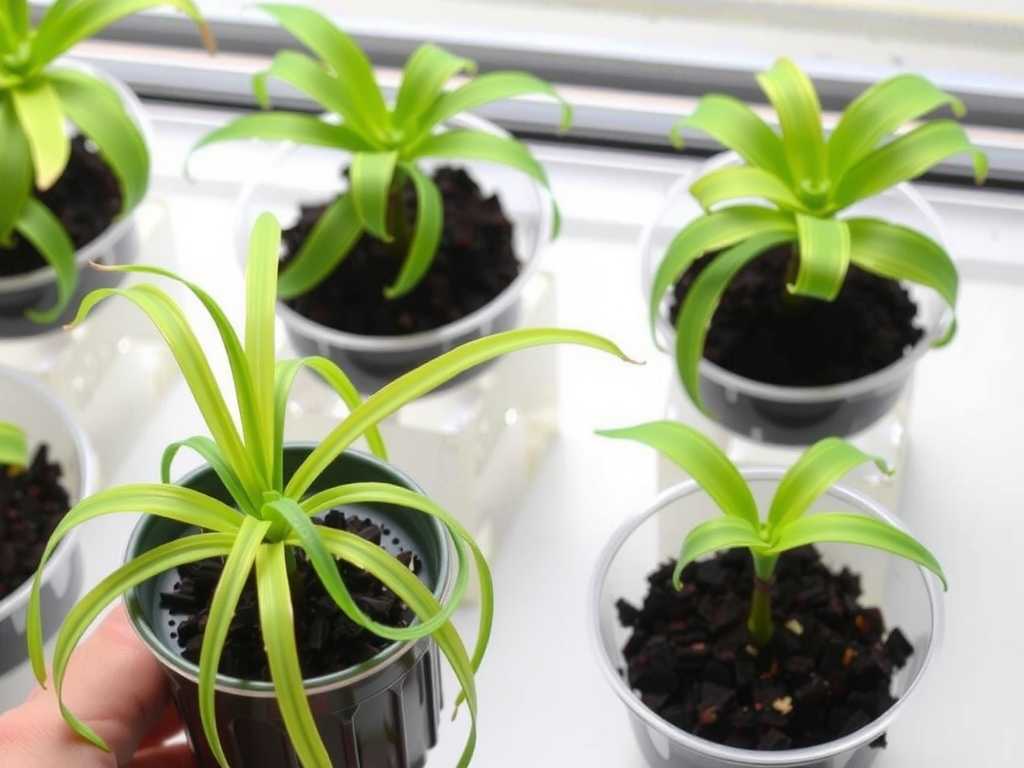
Acclimatization is the process where your newly potted spider plant pup adjusts from a life of simple root development to establishing itself in a more complex soil environment. During propagation, whether in water or a moist medium, the plant focuses almost exclusively on root growth. These initial roots are often fine and water-adapted. When transferred to soil, they must adapt to absorbing water and nutrients from a new substrate.
At this stage, the plant is under mild stress and its root system is immature and highly sensitive. The primary goal is not rapid growth but stable establishment. Introducing nutrients too early or at full strength can overwhelm these delicate roots. The salts in fertilizers can draw moisture out of the root tissues, causing “burn” and setting back the plant’s development significantly. Therefore, patience and a gentle approach are key.
The Critical First Weeks: Holding Off on Fertilizer
Immediately after potting your spider plant pup in a well-draining, sterile potting mix, your first task is to water it thoroughly to settle the soil around the roots. For the next 3 to 4 weeks, nutrient solution application should not be on your agenda.
Why the wait? High-quality commercial potting mixes typically contain a mild starter charge of nutrients. More importantly, the plant needs to expend its energy on root expansion into the new soil, not on processing fertilizers. Its initial focus is on water uptake and stabilizing itself. Providing only plain water during this period encourages the roots to search and grow, building a stronger foundation. Horticulturist Dr. Linda Chalker-Scott emphasizes in her work with the University of Washington that “newly transplanted plants benefit from a fertilizer-free period to redirect resources to root regeneration before facing the metabolic demand of processing nutrients.”
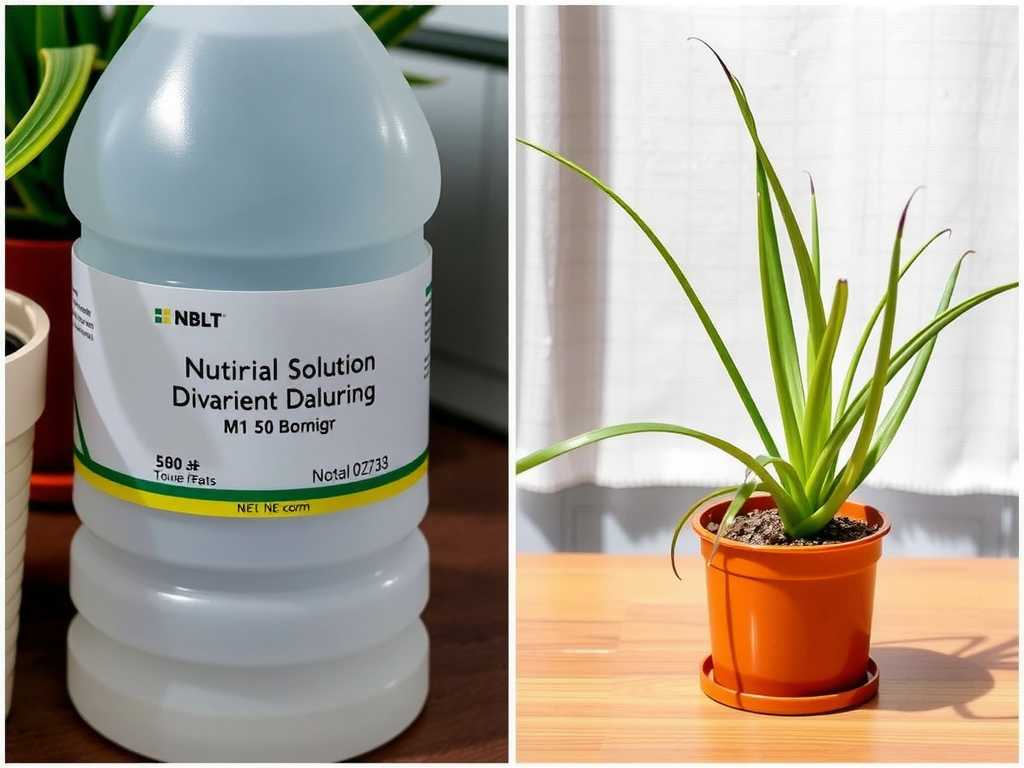
When to Apply the First Nutrient Solution: Reading Your Plant’s Signals
Timing is not a fixed calendar date but a response to your plant’s progress. The ideal timing for nutrient solution application is after the plant shows clear signs of having established itself. Look for these positive indicators:
- New Growth: The most definitive signal is the emergence of fresh, green leaves from the center of the plant. This active top growth confirms that the root system below is functioning and ready to support more development.
- Established Appearance: The plant no longer looks like it was just transplanted. It appears perky, firm, and anchored.
- Time Elapsed: Typically, this occurs 4 to 6 weeks after potting. If growth is slow due to lower light or cooler temperatures, you may need to wait 6-8 weeks.
Once you observe these signs, your spider plant is communicating its readiness for a gentle nutritional boost.
The Golden Rule: Dilution Ratio for Young Spider Plants
The single most important rule for fertilizing newly acclimatized spider plants is: Dilute, dilute, dilute. A standard, balanced, water-soluble fertilizer (such as a 10-10-10 or 20-20-20 formula) is perfect for spider plants.
For the first 2-3 feeding sessions, apply the fertilizer at one-quarter (¼) of the recommended strength listed on the product label. If the bottle says “mix 1 teaspoon per gallon,” you would use only ¼ teaspoon per gallon.
This ultra-weak solution provides a minimal, safe level of essential nutrients like nitrogen, phosphorus, and potassium without risking salt accumulation or root shock. It’s akin to offering a light snack rather than a heavy meal.
A Step-by-Step Feeding Schedule for Post-Propagation Care
Follow this phased schedule to safely nourish your young spider plant:
- Weeks 1-4 (Acclimatization): No fertilizer. Water only when the top inch of soil feels dry.
- First Feeding (Week 4-6): Upon seeing new growth, apply the nutrient solution at ¼ strength. Water the soil thoroughly until it drains from the bottom, ensuring even distribution.
- Subsequent Feedings (Next 2-3 Months): Continue fertilizing at ¼ to half (½) strength. Adhere to a “less is more” frequency, feeding only once per month during the active growing season (spring and summer).
- Mature Plant Schedule: After about 4-6 months, when the plant is visibly larger and well-established, you can transition to feeding at half-strength every 4-6 weeks during growth periods, tapering off completely in fall and winter.
Best Practices for Application and Ongoing Care
- Always Water First: Never apply fertilizer to dry soil. Lightly moisten the soil with plain water a few hours before feeding. This hydrates the roots and prepares them to absorb nutrients evenly, further reducing burn risk.
- Use a Balanced Formula: Spider plants are not heavy feeders. A simple, all-purpose fertilizer provides everything they need for lush foliage and eventual “pup” production.
- Flush the Soil: Every 3-4 months, water the plant thoroughly until water runs freely from the drainage holes for a minute. This helps flush out any accumulated mineral salts from the soil.
- Observe and Adjust: If the leaf tips turn brown shortly after feeding, you may be over-fertilizing or the solution is still too strong. Increase dilution or extend the time between feedings.
Common Questions on Nourishing New Spider Plants
Can I use the fertilizer immediately if I used a soil mix with no nutrients? Even with a no-nutrient mix like plain coco coir, it’s still advisable to wait 2-3 weeks for initial root establishment. When you do begin, start with the ¼ strength dilution. The priority is root adaptation, not nutrition.
My propagated pup’s leaves are pale. Does it need fertilizer now? Pale leaves can indicate a need for nutrients, but first rule out other issues. The most common causes in new pups are too much direct sun (which bleaches leaves) or overwatering. Ensure it’s in bright, indirect light. If conditions are good and the plant is established (4+ weeks in soil), then a diluted feeding can help address mild chlorosis.
How long should I continue with the diluted fertilizer ratio? Maintain the diluted feeding regimen (¼ to ½ strength) for the plant’s first full growing season. Once the plant is mature, producing multiple offshoots, and filling its pot, you can consider it fully acclimatized. At that point, the standard half-strength, monthly feeding during spring and summer is sufficient.
Successfully transitioning a propagated spider plant hinges on respecting its delicate early stages. By prioritizing root establishment, patiently waiting for signs of new growth, and meticulously adhering to a highly diluted feeding schedule, you provide the strongest possible foundation. This careful approach to post-propagation acclimatization ensures your spider plant pups will mature into resilient, vigorous plants that reward your patience with cascading greenery and abundant offspring for years to come.