bluename
 spider plant Cutting Propagation: The Ultimate Guide to Medium Selection (Vermiculite vs. Peat Moss)
You’ve snipped a healthy spider plant pup, ready to grow your plant family. But now you’re stuck, staring at bags of potting mix, wondering: “What’s the best medium to root these cuttings?” Choosing the wrong one can lead to slow growth, dreaded root rot, or complete failure. The debate often narrows down to two popular, yet very different, options: vermiculite and peat moss. This guide will cut through the confusion, providing a clear, evidence-based comparison to ensure your spider plant propagation is a resounding success.
Understanding Your Spider Plant’s Rooting Needs
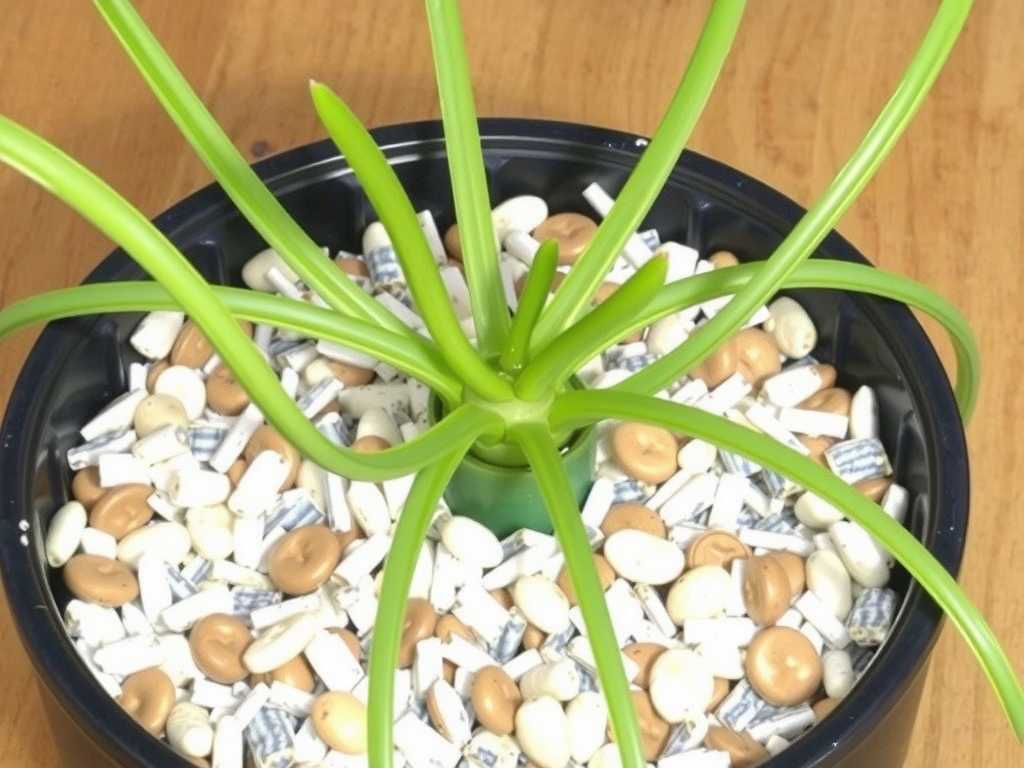
Before diving into the mediums, let’s understand what spider plant cuttings require. Chlorophytum comosum, the spider plant, is remarkably resilient. Its pups, or plantlets, are pre-programmed for growth. They need a medium that provides three key things: consistent moisture, excellent aeration, and a stable environment for delicate new roots to emerge without threat of disease.
The Core of the Matter: Moisture Retention vs. Aeration
All propagation media balance water and air. Roots need moisture to develop but require oxygen to breathe and grow healthily. A medium that stays too wet suffocates roots, inviting fungal pathogens. One that dries too quickly stresses the cutting before it can establish itself. This balance is the critical factor in your choice.
Vermiculite for Spider Plant Propagation: A Detailed Look
Vermiculite is a naturally occurring mineral that expands into lightweight, accordion-like flakes when heated. It’s a staple in horticulture for its unique properties.
How It Performs for Rooting Cuttings
Vermiculite excels at moisture retention. It can absorb and hold significant water and nutrients, releasing them slowly to the developing root zone. This creates a consistently moist environment, which is ideal for initiating root growth. Its structure is also soft and malleable, posing no abrasion risk to tender new roots.
Furthermore, its sterile, inorganic nature means it comes free of weed seeds, fungi, or bacteria, giving your cuttings a clean start. This sterility is a major advantage in preventing damping-off, a common fungal issue that kills seedlings and cuttings.
The Potential Drawbacks to Consider
Its greatest strength can also be a weakness. If overwatered, vermiculite can hold too much moisture, reducing vital air pockets. It’s also very light and can float or displace easily if watered from above aggressively. Over time, it can break down and compact slightly, though it remains usable for several propagation cycles.
Peat Moss for Spider Plant Propagation: An In-Depth Analysis
Peat moss is the partially decomposed remains of sphagnum moss harvested from peat bogs. It’s an organic material widely used in potting mixes.
Its Role in Root Development
Peat moss is a champion of water retention, often holding 10-20 times its dry weight in water. It provides a fibrous structure that, when fresh and fluffy, offers good aeration. Its acidic pH (typically 3.5-4.5) can be beneficial for spider plants, which tolerate slightly acidic to neutral soil. This acidity also has mild antifungal properties.
The Challenges You Might Face
The primary issue with peat moss is its hydrophobicity. When it becomes completely dry, it repels water. Re-wetting a dry peat pot or plug can be extremely difficult, leading to a dry root zone even while the surface looks damp. For a forgetful waterer, this can be catastrophic.
There are also environmental and consistency concerns. Harvesting peat raises sustainability questions due to its slow regeneration rate. Additionally, its quality and texture can vary between brands and batches, leading to inconsistent results.
Head-to-Head: Vermiculite vs. Peat Moss for Spider Plant Pups
Let’s break down the direct comparison across key factors.
Moisture Management and Aeration
- Vermiculite: Offers superior, even moisture retention from the first watering. Provides good aeration when not saturated. Maintains consistency.
- Peat Moss: Holds immense moisture but risks uneven drying and water repellency. Aeration depends on texture; it can compact over time.
Root Health and Growth Speed
- Vermiculite: Promotes fast initial root development due to consistent moisture and a soft environment. Sterile nature minimizes disease risk.
- Peat Moss: Can support good growth if moisture is perfectly managed. The organic matter may harbor beneficial microbes, but also potential pathogens if not sterile.
Practicality for Home Gardeners
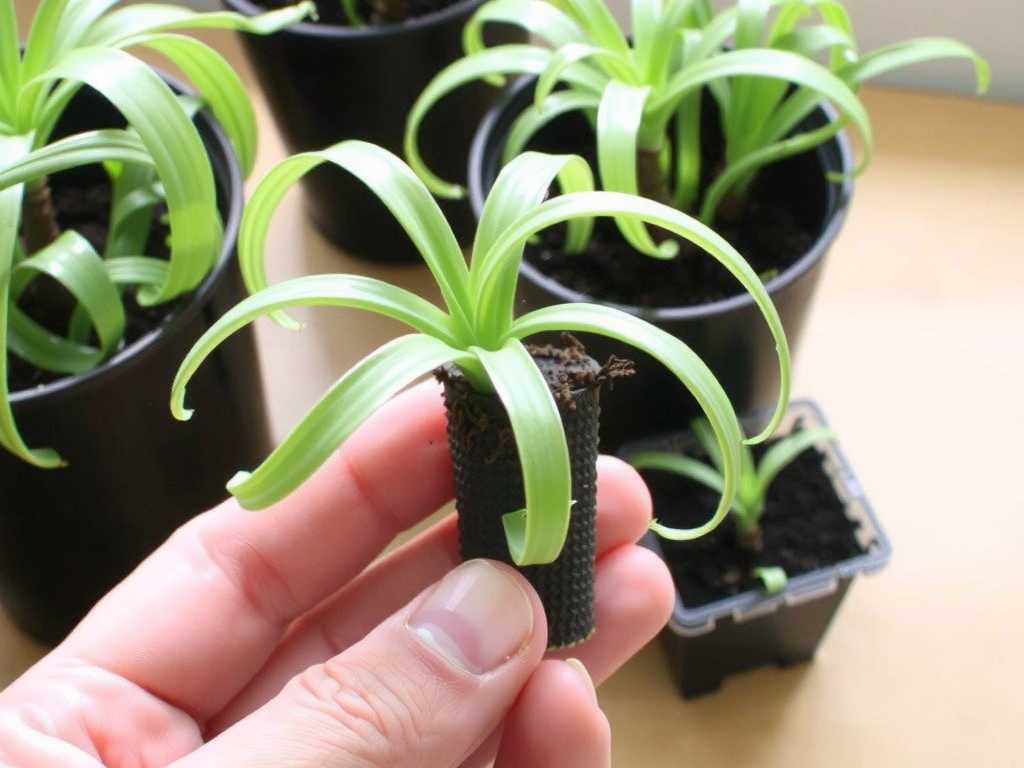
- Vermiculite: Clean, easy to handle, and reusable. Simple to judge moisture by weight.
- Peat Moss: Messier, can be difficult to wet thoroughly, and is generally used once. The environmental impact is a consideration for many.
Expert Insight and a Third Option
Many professional growers, like those at the University of Florida IFAS Extension, recommend using a soilless, sterile medium like vermiculite or perlite for rooting cuttings to maximize success rates. However, the debate isn’t strictly either/or.
The Winning Combination: Blending Media
Often, the most effective approach is not choosing one, but combining them. A 50/50 mix of peat moss and vermiculite (or perlite) creates an ideal propagation medium. The peat provides structure and organic content, while the vermiculite ensures even moisture distribution and prevents compaction and hydrophobicity. This blend offers the perfect balance of aeration, drainage, and water retention for spider plant cuttings.
Step-by-Step: Propagating in Your Chosen Medium
- Prepare Your Cutting: Snip a healthy pup from the mother plant, ensuring it has some aerial nubs (the beginnings of roots).
- Prepare Your Medium: Moisten your vermiculite, peat moss, or blend thoroughly until it feels like a damp sponge. Fill a small pot with drainage holes.
- Plant: Make a small hole and insert the base of the pup. Gently firm the medium around it.
- Environment: Place the pot in bright, indirect light. Avoid direct sun, which can cook the cutting.
- Watering: For vermiculite or a blend, water only when the top feels lightly dry. For pure peat moss, never let it dry out completely.
- The Wait: Roots typically establish in 2-4 weeks. You can test for resistance with a gentle tug.
Will my spider plant cuttings root in water instead? Yes, spider plants root readily in water. It’s a great way to observe root growth. However, water roots are different from soil roots. When transplanted to soil, the cutting can suffer shock and stall. Rooting directly in a medium like vermiculite or a peat blend often leads to a stronger, faster-growing plant.
How often should I water cuttings in vermiculite? Check every few days. Vermiculite should stay consistently damp but not soggy. If the top 1/2 inch feels dry, it’s time to water lightly. The pot will feel noticeably lighter when dry.
Is peat moss bad for the environment, and are there alternatives? The harvesting of peat from bogs releases stored carbon and destroys unique ecosystems. For eco-conscious gardeners, excellent alternatives exist. Coco coir, made from coconut husks, is a sustainable product with similar water-retention properties but is easier to re-wet and has a more neutral pH. It can be used similarly to peat moss in propagation blends.
Choosing between vermiculite and peat moss ultimately depends on your watering habits and goals. Vermiculite offers a foolproof, sterile path for reliable rooting. Peat moss works well with careful moisture management. But for the absolute best results, combining them leverages the strengths of both. By providing the perfect balance of air and water, you give your spider plant pups the strongest possible foundation for a long and thriving life in your home.