bluename
 Office spider plant Care: Humidification Tips for Air-Conditioned Rooms
If you’re like me, trying to keep your office spider plant thriving in an air-conditioned room, you’ve probably noticed the struggle. The crisp, cool air from the AC feels great for us but creates a desert-like environment for our green companions. I love my spider plants, but seeing their leaf tips turn brown and crispy was a constant battle. That’s when I dedicated myself to mastering office spider plant care, specifically finding the right humidification tips for air-conditioned rooms. This journey wasn’t just about misting a few times a day; it was a two-week experiment to find what truly works.
Why Your Spider Plant Hates the AC (And What It Really Needs)
We often think plants just need water and light, but humidity is the silent third pillar, especially for spider plants (Chlorophytum comosum). The Royal Horticultural Society (RHS) notes that spider plants prefer moderate humidity and can suffer in dry air, which is exactly what air conditioning produces. AC units remove moisture from the air to cool it, often dropping relative humidity levels well below the 40-60% range where these plants flourish.
The signs are clear: brown, scorched-looking leaf tips, a general lack of vibrancy, and slower production of those delightful spiderettes, or baby plantlets. My own ‘Vittatum’ started showing these symptoms, prompting my deep dive into humidification. It’s not just about aesthetics; low humidity stresses the plant, making it more susceptible to pests and hindering its natural air-purifying abilities.
My 2-Week Humidification Experiment: Methods and Daily Routine
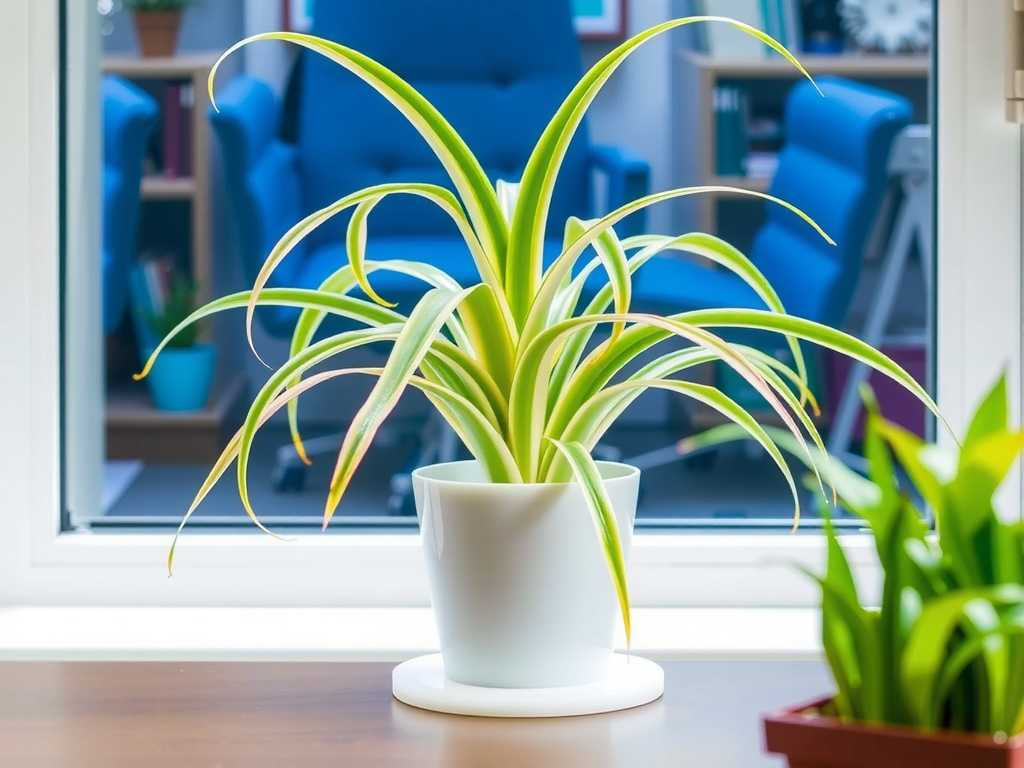
I decided to test three common humidification methods side-by-side over two weeks to see which yielded the best results for my office spider plant. I used three healthy, similarly sized spider plants from the same mother plant to ensure fairness.
Plant A: The Pebble Tray Method.
Plant B: The Strategic Grouping Method.
Plant C: The Desktop Humidifier Method.
My daily care routine was consistent for all: bright, indirect light from a north-facing office window, watering only when the top inch of soil felt dry, and a weekly check-up every Sunday to document progress with notes and photos.
Week 1: Setup and Initial Observations
The first step was implementation. For Plant A (Pebble Tray), I took a shallow tray, filled it with clean pebbles, and added water until it sat just below the top of the stones. I placed the pot on top, ensuring it wasn’t sitting in water to prevent root rot. This creates a localized zone of evaporating moisture.
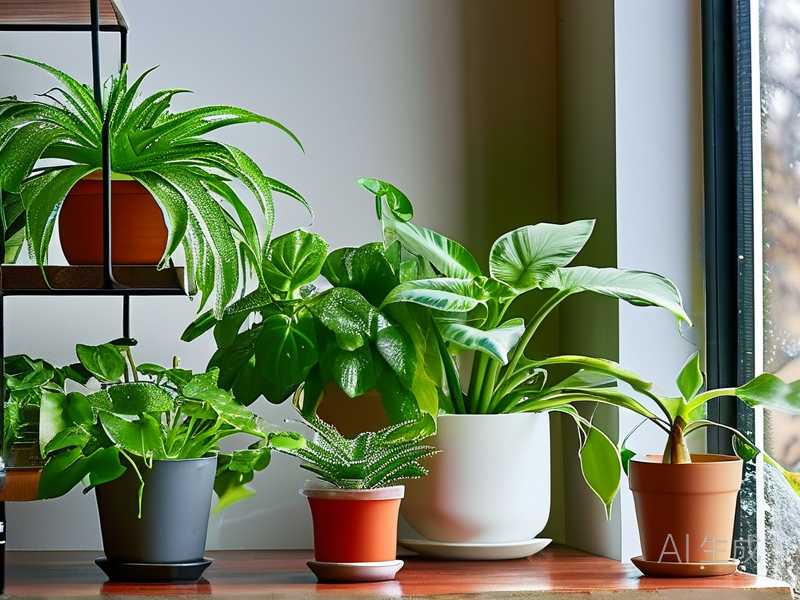
For Plant B (Grouping), I clustered it with two other humidity-loving plants—a peace lily and a pothos—on a separate desk. The theory is that plants release moisture through transpiration, creating a communal microclimate.
For Plant C (Humidifier), I placed a small, quiet ultrasonic humidifier about three feet away on my desk, setting it to maintain roughly 50% humidity during office hours. I used a simple hygrometer to monitor the levels.
The first few days were about adjustment. I immediately noticed a common mistake: I placed Plant A’s pebble tray on a windowsill that got a sliver of direct afternoon sun. The water evaporated too quickly, and I had to refill it twice a day. The fix was simple—I moved it to a spot with consistent indirect light, which slowed evaporation to a more manageable once-daily top-up.
By the end of Week 1, Plant C (with the humidifier) showed the most promise. The leaves seemed perkier. Plant A and B were stable, but no visible improvement yet. The grouping around Plant B did seem to create a slightly cooler, fresher feel to the immediate area.
Week 2: Visible Results and Troubleshooting
During the second week, the differences became clear. The brown tips on Plant C had completely stopped progressing. New foliage was emerging with vibrant, entirely green tips. The plant just looked happier. The American Horticultural Society (AHA) emphasizes that consistent ambient humidity supports robust cellular function in plants, and I was seeing it firsthand.
Plant A (Pebble Tray) showed a slight improvement. The oldest brown tips were still there (they never heal), but the newest leaves looked better. However, I encountered another pitfall: algae started growing on the wet pebbles. My solution was to do a weekly clean: I dumped the water, scrubbed the tray and pebbles with a brush, and refilled with fresh water. This kept it hygienic.
Plant B (Grouping) was the least impressive. While it prevented further severe drying, the effect was minimal. The microclimate was too weak to counteract the powerful, dry airflow from the AC vent nearby. I learned that plant grouping for humidity is effective only in still air or very sheltered spots, away from direct AC drafts.
By the end of the two weeks, the ranking was evident. The humidifier provided the most effective and consistent humidity control for spider plants in air-conditioned offices. The pebble tray was a decent, low-tech supplement, while grouping alone was insufficient for my particular dry environment.
The Winning Strategy: How to Properly Humidity Your Office Spider Plant
Based on my experiment, here is a consolidated, step-by-step guide to optimal humidification.
1. Invest in a Small Desktop Humidifier.
This is the most reliable method. Choose an ultrasonic model for quiet operation. Place it 2-4 feet from your spider plant, ensuring the mist doesn’t directly blow onto the leaves (this can cause water spots or fungal issues). Set it to maintain 45-55% humidity if possible. Run it during work hours. Remember to use distilled or demineralized water to prevent white mineral dust from settling on your plant and desk.
2. Use a Pebble Tray as a Effective Supplement.
Don’t dismiss the pebble tray. Use it in conjunction with other methods or if a humidifier isn’t an option. The key is a large surface area tray relative to the pot size. Keep it clean, top up the water regularly, and always ensure the pot has drainage holes and sits above the water line.
3. Master the Art of Strategic Placement.
This was my biggest takeaway. Positioning is crucial for humidity retention. Move your spider plant away from direct blasts from AC vents, heaters, or doorways. Even the best humidifier won’t help if the plant is in a drying draft. A more sheltered corner, perhaps with other plants, will help any humidification method work more efficiently.
4. Implement Supportive Care Practices.
Humidification isn’t a standalone fix. Proper watering for spider plants in dry air is critical. The soil may dry out faster than you think. Check it frequently, but always do the finger test—water only when the top inch is dry. Combine this with cleaning spider plant leaves for better health. Gently wipe the leaves with a damp cloth every few weeks. This removes dust, allowing the plant to breathe and absorb moisture from the air more effectively.
Common Questions About Spider Plants in Dry Air
Can I just mist my spider plant instead?
I tried this extensively before my experiment. While misting provides temporary relief, its effect lasts only minutes in a well-ventilated, air-conditioned room. It can also leave water droplets that, if followed by strong sun, might scorch leaves. For consistent humidity, misting is not a substitute for the methods above. It’s better for a quick refresh rather than a care strategy.
My spider plant has brown tips even with a humidifier. What now?
First, don’t panic. Existing brown tips won’t turn green again. You can snip them off with clean scissors, following the natural leaf shape for aesthetics. The goal is to prevent new tips from browning. If browning continues, double-check your watering—overwatering in a humid environment can cause root issues that also manifest as brown tips. Ensure your humidifier is correctly calibrated and that the plant isn’t still in a hidden draft.
What type of water is best for both humidifiers and watering?
Spider plants are sensitive to fluoride and chlorine found in tap water, which can contribute to tip burn. For your humidifier, use distilled water to avoid mineral dust. For watering, if possible, use rainwater, distilled water, or tap water that has been left out overnight to allow some chemicals to evaporate. This simple switch can make a significant difference in conjunction with your humidification efforts.
Keeping a spider plant lush in an air-conditioned office is absolutely achievable. It requires moving beyond guesswork and adopting a targeted approach to humidity. My two-week test proved that a small investment in a desktop humidifier, paired with smart placement and consistent care, transforms the struggle into success. Your spider plant will reward you with vigorous growth, vibrant leaves, and an abundance of plantlets, turning your dry office into a thriving green oasis.