bluename
 spider plant Seedling Fertilization: My Foolproof Guide to Diluted Liquid Fertilizer Application Frequency
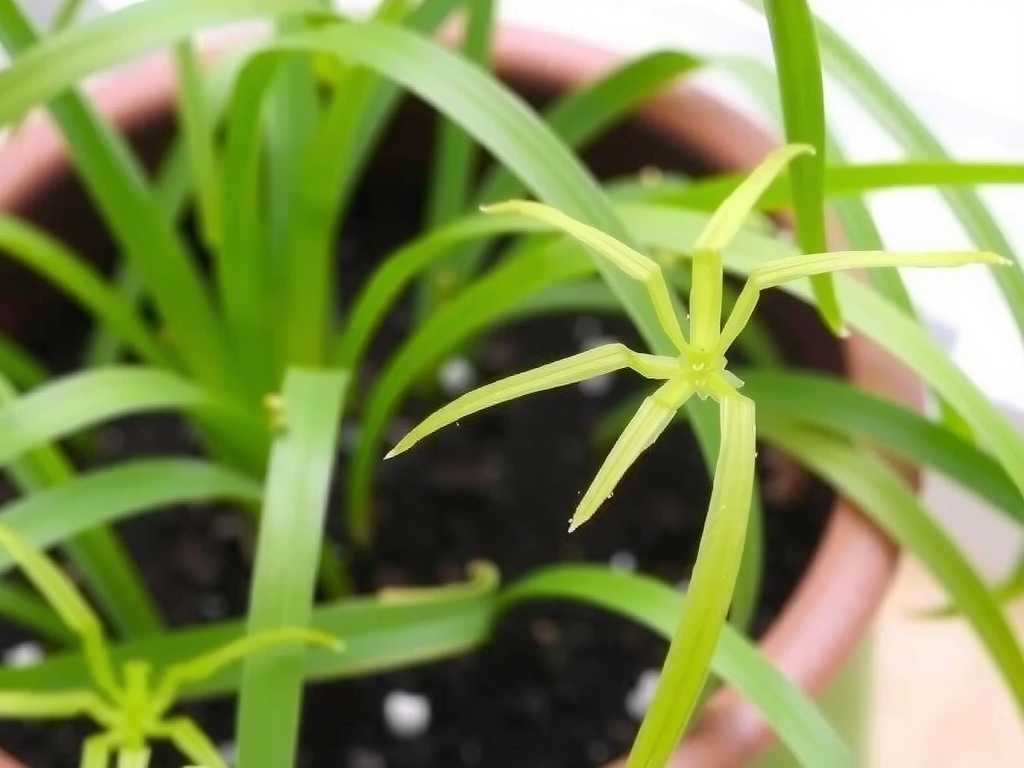
I’ve lost count of how many spider plant seedlings I’ve nurtured from tiny sprouts to lush, arching beauties. But I vividly remember the early days of uncertainty, especially when it came to feeding them. The question of spider plant seedling fertilization, specifically the application frequency of diluted liquid fertilizer, used to keep me up at night. Too little, and growth stalls; too much, and those tender roots burn. If you're holding a bottle of fertilizer and a watering can, wondering "how often is too often," you've come to the right place. This guide is born from my hands-on trials, errors, and successes over countless growing seasons.
Why Getting the Frequency Right Is a Game-Changer for Seedlings
Spider plant (Chlorophytum comosum) seedlings are remarkably resilient, yet they exist in a delicate state. Their root systems are developing, and their primary leaves are just beginning to photosynthesize efficiently. According to the Royal Horticultural Society (RHS), over-fertilizing is a leading cause of stress and failure in young plants. Their roots are highly susceptible to salt buildup from fertilizer, which can dehydrate and damage them.
This is where dilution and timing become non-negotiable. A diluted liquid fertilizer provides a gentle, readily available nutrient boost without overwhelming the plant. My goal was never to force explosive growth but to support steady, healthy development. Getting the application frequency correct is the cornerstone of this approach.
My Two-Week Fertilization Experiment: A Step-by-Step Log
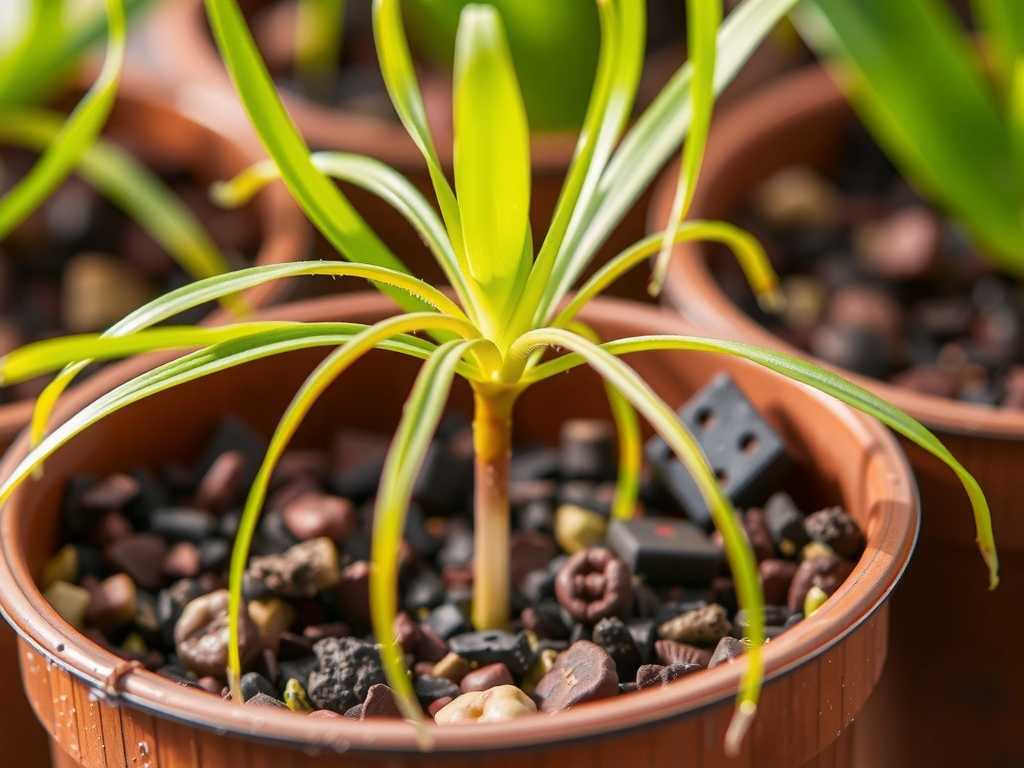
To cut through the guesswork, I designed a simple two-week observation on a batch of six spider plant seedlings that had each developed three true leaves. They were planted in a well-draining, sterile seed-starting mix. I used a balanced, water-soluble fertilizer (with an NPK ratio of 10-10-10).
Week 1: The Initial Application and Setting a Baseline
- Day 1: I prepared the fertilizer solution at one-quarter of the recommended strength on the bottle label. For my product, the standard dose was 1 teaspoon per gallon. I used ¼ teaspoon instead. This is a critical first step—always dilute more for seedlings. I watered the seedlings thoroughly with this solution until it drained from the bottom, ensuring the entire root zone was reached. I labeled this day clearly on my plant journal.
- Day 2-3: Observation mode. I placed the seedlings in bright, indirect light and monitored for any immediate signs of distress, like leaf drooping or discoloration. None appeared.
- Day 4-6: I noticed the soil surface was drying appropriately. I watered one seedling with plain, distilled water to maintain moisture without adding more nutrients. The others were left to continue absorbing the initial feed.
- Day 7: A visual check showed a subtle but perceptible improvement. The newest central leaves seemed a slightly deeper green, and growth appeared steady, not sluggish.
Week 2: Assessing Response and Adjusting the Rhythm
- Day 8: This was decision day for the second application. I checked the seedlings' soil moisture and overall vigor. Since they looked healthy and were actively growing, I proceeded with a second feeding. I used the same one-quarter strength solution. Consistency is key when establishing a routine.
- Day 9-11: Continued daily observation. The seedlings responded well. There was no tip burn (a classic sign of fertilizer salt accumulation), and the leaves remained firm and perky.
- Day 12-14: By the end of the second week, the difference was clear. Compared to a control seedling I was watering only with plain water (for science!), my fertilized seedlings had more robust leaf development and a generally more vibrant appearance. The frequency of applying diluted fertilizer—once per week—proved successful for this stage of growth under my conditions.
The Pitfalls I Encountered (And How You Can Avoid Them)
My journey wasn't without its stumbles. Here are the key lessons from my mistakes:
- The "More is Better" Trap: Early on, I once applied a half-strength solution weekly, thinking it would accelerate growth. Within ten days, the leaf tips began to brown and crisp—a textbook case of fertilizer burn. The Fix: I immediately leached the soil by running a slow stream of distilled water through the pot for several minutes to flush out excess salts. I then suspended all fertilization for three weeks to let the seedlings recover. This taught me the irreplaceable value of starting with a very weak solution.
- Ignoring Environmental Cues: I initially tried to stick to a rigid "every 7 days" schedule. However, during a cool, cloudy week, the seedlings' growth and water uptake slowed. Feeding on schedule left the soil soggy and nutrients unused, risking root rot. The Fix: I learned to let the plant and soil guide me. Now, I only fertilize when the soil is moderately dry and the plant is in an active growth phase (not dormant). In lower light or cooler temperatures, I might extend the interval to 10-14 days.
- Choosing the Wrong Fertilizer Type: I once used a fertilizer high in nitrogen designed for foliage plants. While it made the leaves grow quickly, the growth was soft and slightly leggy. The Fix: I switched to a balanced fertilizer. The American Horticultural Society (AHS) emphasizes that balanced nutrition supports overall root, shoot, and cellular development, which is far more important for a seedling's long-term health than rapid leaf production alone.
Building Your Personalized Fertilization Schedule
Based on my experience, here is a reliable framework. Remember, this is a starting point, not a rigid rule.
- The Golden Rule: Always use a diluted liquid plant food at 1/4 to 1/2 the label's recommendation for seedlings.
- Standard Frequency: During active growth in spring and summer, a schedule for feeding spider plant sprouts every 7-10 days is effective. Incorporate this into your regular watering routine, following the "feed, water, feed" pattern: one watering with fertilizer, the next with plain water to prevent buildup.
- Critical Adjustments: Reduce frequency to once every 3-4 weeks in fall and winter when growth naturally slows. Always apply to moist soil to prevent root shock.
How do I know if I'm over-fertilizing my spider plant seedlings? Look for telltale signs: white crusty deposits on the soil surface (mineral salts), brown and crispy leaf tips, yellowing lower leaves, or a general wilting despite moist soil. If you see these, stop fertilizing immediately and leach the soil.
Can I use organic alternatives to synthetic liquid fertilizer? Absolutely. I've had great success with diluted fish emulsion or seaweed extract. They are gentler and less likely to cause burn. The application frequency can be similar, but always follow the dilution instructions for seedlings, as these can vary by product.
My seedling hasn't grown much. Should I fertilize more often? Not necessarily. First, check the fundamentals: light, temperature, and watering. A seedling in low light won't grow quickly regardless of fertilizer. Increasing feed frequency in poor light will only cause problems. Address the environmental factors first before altering your fertilization routine.
Finding the perfect rhythm for spider plant seedling fertilization is an exercise in attentive care. It’s about observing more than calendaring. By starting with a highly diluted solution, feeding at a moderate frequency of every 7-10 days during growth periods, and always prioritizing the plant's cues over a fixed schedule, you provide the foundational support your spider plant babies need. This gentle, consistent approach has given me the healthiest, most resilient plants—the ones that mature into stunning, prolific specimens.