bluename
 Spots on spider plant Leaves: Distinguishing Skills Between Physical Damage and Diseases
There's a special kind of panic that sets in when you notice spots on your spider plant leaves. Is it a sign of a fatal disease, or just a cosmetic blemish? I've been there, staring at my beloved Chlorophytum comosum, heart sinking. For years, I struggled to tell the difference between harmless physical damage and serious fungal or bacterial issues. This confusion often led me down the wrong path—overwatering a plant that just needed less fuss, or ignoring a creeping infection until it was almost too late.
The core of the problem is misdiagnosis. Treating a bruise like a blight can stress your plant unnecessarily, while mistaking a disease for simple damage can allow it to spread. My journey to clarity wasn't instant. It took a dedicated, two-week investigation on my own collection, applying a systematic method to finally learn the distinguishing skills. I want to share that practical, step-by-step process with you, so you can become a confident plant detective in your own home.
The First Clue: A Hands-On Diagnostic Framework
Before you reach for any spray bottle or fertilizer, you need to play detective. The Royal Horticultural Society (RHS) emphasizes that accurate diagnosis is the first and most critical step in plant care. I developed a simple framework based on observation, touch, and pattern recognition.
My process always starts with isolation. If I suspect a contagious disease, I move the plant away from others immediately. This simple step, often overlooked, can save an entire indoor jungle.
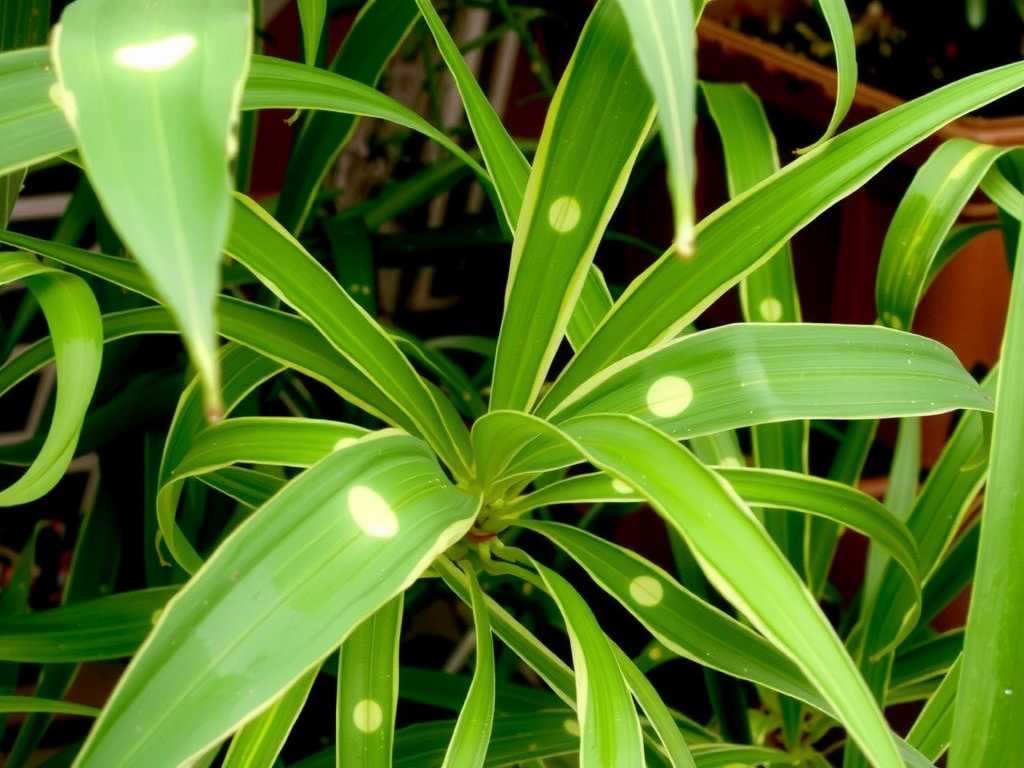
Next, I put on my reading glasses and get close. I examine the spots on spider plant leaves not just on the surface, but by gently lifting the plant and looking at the undersides—a favorite hiding spot for pests and some fungi. I ask myself a series of questions: Is the spot sunken or raised? Is there a colorful halo? Is the texture crispy or mushy? The answers are more telling than any quick internet search.
The Telltale Signs of Physical Damage
Physical damage is often the easiest to identify once you know what to look for. It's localized, static, and tells a story of a specific event.
Common Culprits: Bruises, Scrapes, and Sunburn
In my experience, the most frequent cause of spots is simple mechanical injury. A leaf might have gotten pinched in a window, brushed roughly against a shelf, or been investigated a bit too enthusiastically by a pet. These spots on spider plant leaves typically appear as pale brown, tan, or whitish areas. They are often dry and papery to the touch. The key characteristic? They don’t spread. The spot you see today will look exactly the same in a week.
Sunburn is another form of physical damage. After moving a spider plant to a much brighter spot last summer, I noticed several leaves developed bleached, straw-colored patches, usually on the areas most directly facing the light. According to the American Horticultural Society (AHA), this is a classic sign of sudden light stress. The damage is permanent on those leaves, but the plant will recover if returned to appropriate, indirect light.
My Two-Week Observation: The Static Spot Test
I decided to test this on a spider plant pup that had a suspicious brown patch on a leaf tip. I suspected it was damage from shipping. For 14 days, I monitored it closely, taking daily photos under consistent lighting.
- Day 1-3: The spot remained a uniform light brown, with a slightly crispy edge. No change.
- Day 4-7: I checked for any yellowing around the spot or signs of it enlarging. None.
- Day 8-14: The spot was completely unchanged. The rest of the plant continued to produce vibrant, healthy new growth.
This confirmed it was physical damage. The solution? Simply snip off the damaged leaf tip with clean, sharp scissors for aesthetics, or leave it be. The plant had already compartmentalized the injury.
The Red Flags of Disease-Related Spots
Disease spots are dynamic. They tell a story of progression and infection. Learning to spot (pun intended) the difference between physical damage and diseases is the crucial skill.
Fungal Foes: Leaf Spot and Root Rot
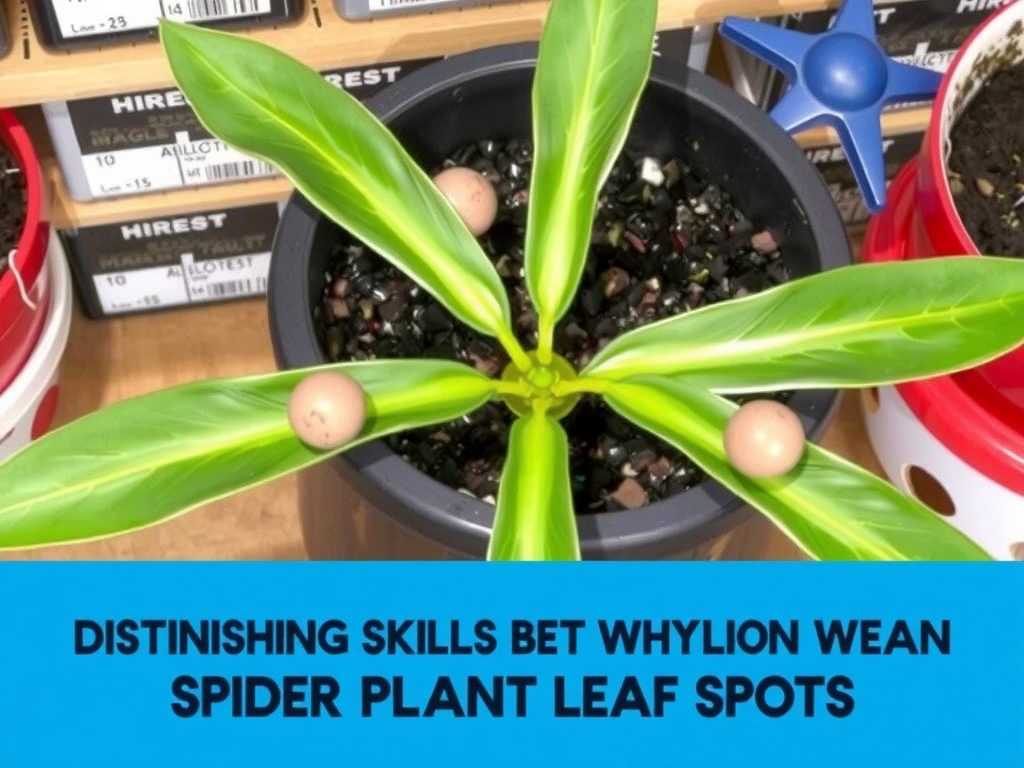
The most common disease I've encountered is fungal leaf spot, often caused by Cercospora or Alternaria species. These spots are sneaky. They often start small but have distinct features: they may be circular or irregular, with a dark brown or black center and a yellowish halo around the edges. Critically, they spread. A small spot can grow, and new spots can appear on other leaves, especially in conditions of high humidity and poor air circulation.
During my two-week experiment, I observed a different spider plant that had been consistently over-loved (overwatered). It developed small, dark brown spots with faint yellow rings.
- Day 1-3: Three small spots on two lower leaves.
- Day 4-7: The original spots grew slightly larger, and two new spots appeared on a middle leaf. The yellow halos became more pronounced.
- Day 8-14: The affected leaves began to yellow overall, and the spots started to merge. This active progression was the definitive sign of a fungal issue.
Bacterial Blight: The Soggy Menace
Bacterial leaf blight is less common but more aggressive. The spots often look water-soaked or greasy initially, later turning brown or black. They can feel soft and mushy. The RHS notes that bacterial infections can spread rapidly in wet conditions and may even produce a slimy ooze.
My Action Plan: Treatment and Recovery Over Two Weeks
Once I confirmed a disease, I moved to treatment. For the fungal case, here was my regimen:
- Immediate Isolation: The plant was moved to a separate room.
- Surgical Removal: Using sterilized scissors (wiped with isopropyl alcohol), I carefully cut off the most severely affected leaves at the base. I disposed of them in the trash, not the compost.
- Environmental Adjustment: I placed the plant in an area with significantly better airflow and ensured it received bright, indirect light. I stopped all watering until the top two inches of soil were bone dry.
- Fungicide Application: I applied a copper-based fungicide, following the label instructions precisely. I sprayed it thoroughly on all leaf surfaces, top and bottom.
- The Two-Week Watch: I watered only from the bottom going forward to keep leaves dry. I continued to monitor daily.
The Results and The "Aha!" Moment: By the end of the two weeks, the spread had completely halted. No new spots appeared after Day 10. The existing spots on remaining leaves dried out and became static, like physical damage. New growth emerged clean and healthy. The key lesson was that successful treatment stops the progression; the old spots remain as scars but cease to be an active threat.
The Pitfalls I Encountered (And How You Can Avoid Them)
My path wasn't perfect. I made mistakes that taught me invaluable lessons.
The Overwatering Overcorrection: In my zeal to treat a suspected fungal issue, I once let a spider plant get so dry it went completely limp and several leaves crisped up. I mistook this drought stress for a disease getting worse! The fix was a gentle, thorough bottom-watering and patience. It recovered fully in about a week.
The Misdiagnosis of Mineral Buildup: I once fretted over white, crusty spots on the leaf tips and bases. After panicking about mildew, I realized it was simply mineral deposits from tap water. A switch to distilled or rainwater for watering, and occasionally wiping the leaves with a damp cloth, solved it. This highlighted that not all spots are biotic; some are environmental.
The Importance of Tool Hygiene: Early on, I spread a bacterial issue from one plant to another by using the same unsterilized pruners. Now, I keep a small bottle of isopropyl alcohol and a rag next to my tools and wipe them between every single plant.
How can I prevent spots on my spider plant in the first place? Focus on consistent care: use well-draining soil, water only when the top soil is dry, provide bright indirect light, and ensure good air circulation. Avoid wetting the leaves when watering. Quarantine new plants for a few weeks before introducing them to your collection.
Should I cut off every spotted leaf? Not necessarily. For static physical damage, it's purely cosmetic. For disease, remove only the heavily affected leaves to reduce the pathogen load and improve airflow. Never remove more than 1/3 of the plant's foliage at once to avoid shock.
Are spider plants with spots a danger to pets or children? The spots themselves are not a direct hazard. However, some fungicides or pesticides you might apply can be toxic. Always treat plants in a well-ventilated area, keep pets and children away during application, and store all chemicals safely. The spider plant itself remains non-toxic.
Learning to distinguish between physical damage and diseases on your spider plant is empowering. It transforms anxiety into actionable knowledge. Remember the core principles: physical damage is a snapshot, a one-time event etched on a leaf. Disease is a movie, an active process that changes and spreads. By becoming a keen observer, adjusting your care with precision, and having patience over a monitoring period of a week or two, you can move from guesswork to confident care. Your spider plant will thank you with resilient, vibrant growth.