 bluename
Chlorophytum Leaf Spot: My 2-Week Journey to Decode Physical Damage vs. Disease
If you’re like me, seeing a new spot on your beloved spider plant (Chlorophytum comosum) sends a jolt of panic. Is it a sign of a deadly fungus, or just a simple scrape? For years, I struggled to tell the difference between Chlorophytum leaf spot caused by physical damage and that stemming from disease. The uncertainty led to missteps—overwatering in fear, or worse, ignoring a real infection until it spread. This confusion is the core pain point for so many plant lovers. After a recent scare with my own variegated ‘Vittatum,’ I decided to conduct a deliberate, two-week investigation to finally learn how to distinguish between these issues with confidence. My goal was to create a clear, actionable guide based on firsthand observation, not just theory.
My Diagnostic Toolkit: Setting Up the Observation
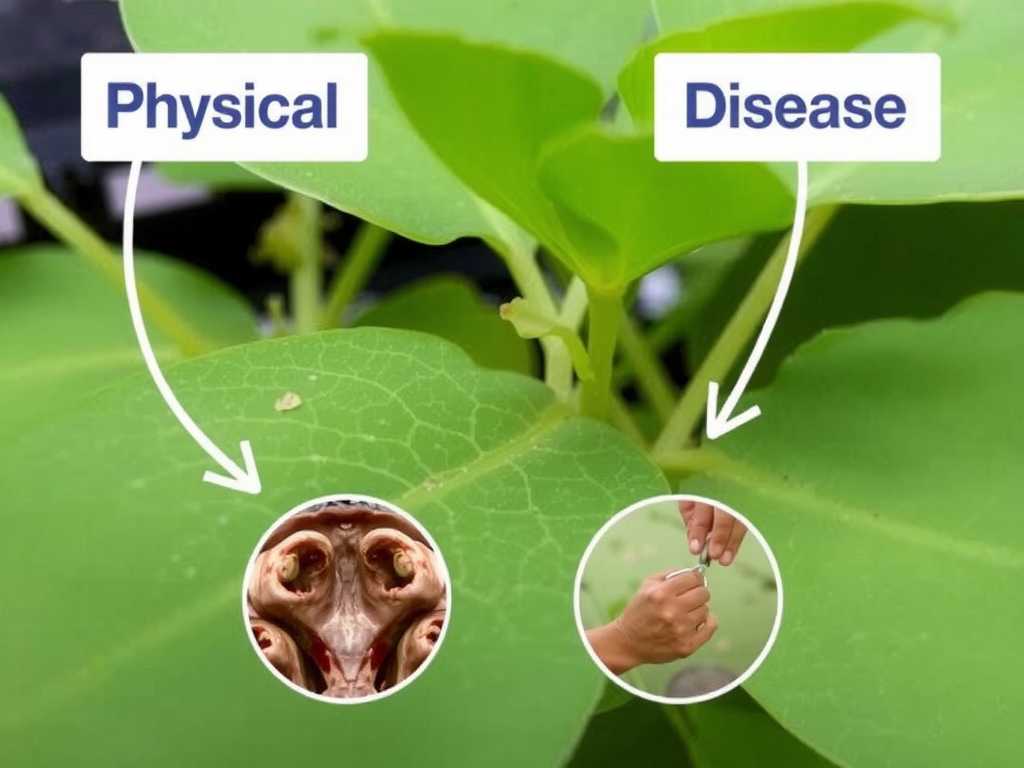
I gathered three suspect spider plants from my collection, each showing different types of spots. I armed myself with a 10x magnifying loupe, a notebook, my phone’s macro camera, and a resolve to not jump to treatment. The key, as emphasized by the Royal Horticultural Society (RHS), is that accurate diagnosis always precedes any action. Misdiagnosis often exacerbates the problem.
Week 1: The Close-Up Investigation
I started by isolating the plants in separate, well-lit areas to prevent any potential cross-contamination. My process was meticulous.
First, I Looked for Patterns and Textures. Plant A had a single, irregular brown spot on the outer tip of a lower leaf. The spot was dry, slightly sunken, and had a crisp edge. Crucially, when I rubbed it gently, no residue came off on my finger, and there was no yellow “halo” surrounding it. This matched the classic signs of physical damage on spider plant leaves—perhaps a bump against a shelf or minor sun scald. The RHS notes that physical injuries are often localized, dry, and don’t spread if the source of damage is removed.
Plant B was more concerning. Several leaves, both old and new, displayed small, water-soaked looking lesions that were turning tan or grayish-brown. Some were centered, not just on edges. Using my loupe, I observed a faint, fuzzy gray growth in the center of one older spot. This raised a major red flag for a fungal issue, possibly Botrytis cinerea (gray mold) or another pathogen.
Plant C showed yellowing leaf tips that were slowly browning back—a classic sign of fluoride or boron sensitivity in tap water, which is a physiological disorder, not an infectious disease.
My Initial (and Flawed) Reaction Here’s where I hit my first “pitfall.” I almost immediately treated Plant B with a broad-spectrum fungicide. I stopped myself, remembering the American Horticultural Society’s (AHS) advice on integrated pest management: “Identify before you apply.” What if it was bacterial? Fungicides are useless against bacteria. I decided to hold off and instead adjusted my care routine as a test. I moved all plants to a spot with bright, indirect light (no direct sun), ensured consistent but careful watering (allowing the top inch to dry), and, most importantly, I stopped misting the foliage. High humidity is a prime driver of fungal Chlorophytum leaf problems.
Week 2: Monitoring Progression and Behavior
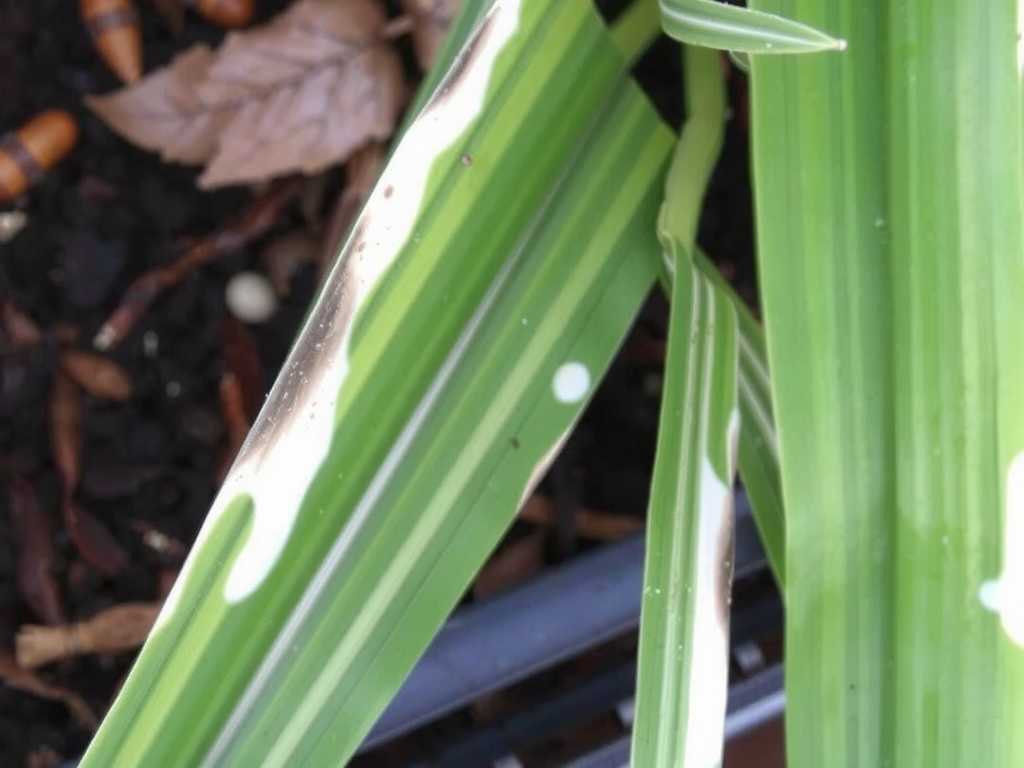
This week was all about watching and documenting changes. I checked each plant daily, noting even minor developments.
The Tale of Three Plants: Clear Divergence Plant A (suspected physical damage): The spot remained completely unchanged. It did not enlarge, and no new spots appeared on any other leaves. This was a strong confirmation. The leaf was scarred, but the plant was healthy.
Plant B (suspected fungal disease): The story evolved. The existing spots grew slowly but noticeably over the 14 days. A new spot appeared on a previously clean leaf near the soil line. The faint gray fuzz became more distinct. This progression of spider plant leaf spots was the definitive evidence of an active disease. The pathogen was spreading.
Plant C (water quality issue): The browning tips progressed slightly, but only on the oldest leaves. No spots formed on the leaf blades themselves.
My Targeted Intervention and Solution With a confirmed diagnosis of a likely fungal infection on Plant B, I acted. I first removed the most severely affected leaves with sterile scissors, cutting into healthy tissue to ensure I removed all of the infection. I then applied a copper-based fungicide, following the label instructions precisely. Copper is often recommended by extension services for a range of fungal and bacterial issues, but it’s most effective early. I continued perfecting my watering habits—watering at the soil level only, in the morning, so leaves stayed dry.
For Plant A, I simply left it alone. For Plant C, I switched to watering with distilled water for a month to see if the tip-browning would halt on new growth.
Key Distinctions I Learned Through Practice
1. The Edges and Halos Tell the Story. Physical damage spots are often dry, have crisp or ragged borders, and lack a colored halo. Disease spots, particularly fungal or bacterial, frequently present with a yellow or chlorotic ring surrounding the lesion. This halo indicates the pathogen’s activity disrupting the leaf’s healthy cells around the immediate damage.
2. Location and Spread are Critical Clues. Physical trauma is often random—a torn leaf tip, a scrape on the side facing a walkway. It’s usually solitary or follows a logical pattern of injury. Disease is democratic. It appears on multiple leaves, often starting on lower, older foliage or in overly moist conditions. If new spots pop up in different locations over days, you’re almost certainly dealing with a disease.
3. Texture and Residue Don’t Lie. Gently feel the spot. Is it dry and scabby? Or is it soft, mushy, or does it have a powdery or slimy texture? Fungal issues may show powdery or fuzzy growths; bacterial spots can feel greasy or water-soaked and may ooze. A simple “finger test” for residue (like rubbing a powdery mildew spot) can be very revealing.
Addressing Your Spider Plant Concerns
Can a physical damage spot turn into a disease? Yes, this is possible. A wound is an open door. If the plant is stressed (e.g., overwatered, in poor air circulation), a fungal or bacterial agent can colonize the damaged tissue. This is why improving overall care is the first step, even for what looks like simple damage.
What’s the most common disease causing spots on Chlorophytum? While several can occur, fungal leaf spot diseases (from pathogens like Cercospora or Alternaria) are frequent culprits, favored by overhead watering and poor air circulation. Root rot from overwatering can also manifest as spotting and wilting leaves.
Should I always use a fungicide at the first sign of a spot? Absolutely not. My two-week experiment proved that patience is a diagnostic tool. Start with cultural corrections: isolate the plant, improve light and air flow, let the soil dry more between waterings, and avoid wet leaves. Monitor for 7-10 days. If the spotting halts, it was likely environmental. If it progresses, then you can apply a targeted treatment with confidence.
The health of your spider plant hinges on observation and calm, informed action. By taking the time to truly look—examining the pattern, texture, and progression—you move from a worried plant owner to a confident plant caretaker. Remember, a spot is just a message. Our job is to learn its language. In my case, two weeks of patience provided a clearer answer than any instant treatment ever could, saving my healthy plants from unnecessary chemicals and giving the sick one the correct help it needed.





