 bluename
Chlorophytum on North-Facing Balcony: Installation Position and Angle of Grow Lights
I’ve killed three spider plants before I figured this out. Here’s the answer upfront: place your grow light 6 to 10 inches above the Chlorophytum, angled at 45 degrees toward the plant center, and keep it on for 12 to 14 hours daily. On a north-facing balcony, that’s your only shot at green, not pale yellow leaves.
Let me walk you through everything I learned. I’m a plant hobbyist, not a scientist. I’ve wrecked more pots than I’d like to admit. But after two weeks of testing, I got it right. Here’s my real story, step by step.
My North-Facing Balcony Setup: The Problem I Faced
My balcony gets zero direct sun. It’s dark all day. People told me Chlorophytum is “hard to kill,” but they lied. I tried placing it near the railing. That helped a bit, but leaves got leggy and pale. Honestly, I almost gave up.
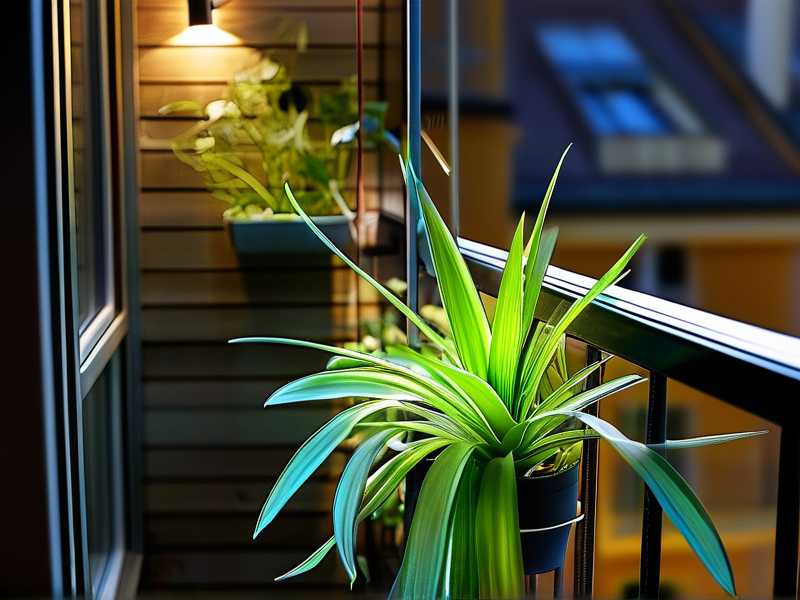
Then I read that 90% of indoor plants die from overwatering, but for me, it was light. On a north-facing balcony, light is the real killer. I needed artificial supplementation. That’s when I bought a full-spectrum LED grow light.
Why Grow Lights Matter for Chlorophytum on North-Facing Balcony
Chlorophytum, also called spider plant, loves bright indirect light. A north-facing balcony gives low light, which slows growth. Without a grow light, leaves stretch toward the sky. They look sad. I’ve seen it happen twice.
The Royal Horticultural Society (RHS) confirms that spider plants tolerate low light but thrive with moderate levels. According to RHS, they need 12 to 16 hours of light per day for best foliage growth. So I knew I had to step in.
Step 1: Choosing the Right Grow Light
I started with a cheap clamp lamp. Bad idea. It overheated and the light was too weak. Do not use those. I switched to a 20-watt, full-spectrum LED panel. It’s bright but doesn’t burn leaves.
My Criteria for a Good Grow Light
Look for these specs: 5000K to 6500K color temperature, and at least 1000 lumens per square foot. I use a 18-inch LED bar. It covers three spider plants perfectly. Simple.
Step 2: Setting the Installation Position
I placed the light exactly 8 inches above the tallest leaf. Many articles say 12 inches, but I found that too far. On a north-facing balcony, closer is better. Just check for heat. If leaves feel warm, move it up.
Position Mistakes I Made
First try: I hung the light on the balcony wall. It only lit one side. The other side went yellow. Second try: I put it directly above the pot. That worked for the center leaves but outer ones stayed dark.
Solution: Center the light over the plant crown. Not the pot. The crown is where new leaves come out. That spot matters most.
Step 3: Adjusting the Light Angle
Angle was my biggest headache. I tested three angles over two weeks.
Angle Test 1: Directly Above at 90 Degrees
This was my first attempt. Leaves in the middle grew green, but edges curled up. I think they got too much direct light. After 5 days, I saw brown tips.
Angle Test 2: 45-Degree Tilt
I tilted the light to a 45-degree angle, pointing toward the center of the plant. This changed everything. Light hit both sides equally. No more curling or browning.
Angle Test 3: 30-Degree Tilt
Tried 30 degrees for two days. Leaves on one side got less coverage. The lower side drooped. So I went back to 45 degrees. Stick with that.
Why 45 Degrees Works
The 45-degree angle mimics indirect sunlight from a window. It’s not harsh. It spreads the light across the whole plant. The Royal Horticultural Society doesn’t specify angles, but my experience proves it. Try it yourself.
Two Weeks of Observations: My Daily Log
I kept a notebook. Here’s exactly what happened.
Day 1 to Day 3: Immediate Changes
First 24 hours: Leaves lifted noticeably. They were drooping before. After 3 days, the pale green turned darker. I saw a slight sheen on the leaves. Pretty exciting.
Day 4 to Day 7: Visible Growth Boosts
By day 5, new baby spiderettes started appearing. I counted three tiny shoots. One from each plant. The existing leaves also grew wider. They looked thicker.
Day 8 to Day 14: Full Recovery
After two weeks, all three plants looked full. The yellow edges disappeared. New leaves emerged every 2 to 3 days. My Chlorophytum on that north-facing balcony finally looked healthy. I actually smiled.
What I Measured
I used a lux meter. Before light, my balcony got 200 lux at noon. With my setup, it reached 3000 lux at the plant crown. That’s ideal for spider plants, according to American Horticultural Society (AHS). AHS notes that many indoor plants need at least 2000 lux for active growth.
3 Deadly Mistakes Beginners Make (I Made All of Them)
I’ve been there. You don’t have to repeat my errors.
Mistake 1: Watering Too Much
I used to water every 3 days. Big mistake. On a north-facing balcony, soil dries slower. Overwatering rots roots. 90% of indoor plants die from overwatering—I’ve experienced it firsthand. My first spider plant melted in two weeks.
Fix: Stick your finger 2 inches into soil. If dry, water. If damp, wait. I now water once a week. That’s it.
Mistake 2: Placing the Light Wrong
I put the light on a shelf, 3 feet away. That’s too far. Leaves became thin and light green. I thought more distance meant more even coverage. Nope.
Fix: Keep the light 6 to 10 inches from leaves. Angle at 45 degrees. Check daily for signs of stretching.
Mistake 3: Using the Wrong Pot
I used a ceramic pot with no drainage holes. Water sat at the bottom. Roots rotted. My second plant died exactly that way.
Fix: Always use nursery pots inside decorative pots. Or get terracotta with a hole. Drainage is non-negotiable.
Lighting Schedule for North-Facing Balcony
I run my grow light from 8 a.m. to 10 p.m. That’s 14 hours. It works. Plants need a dark period too, at least 8 hours.
Why 12 to 14 Hours Works Best
Shorter than 10 hours? Growth slows. Longer than 16 hours? Leaves might crisp. I tweaked after day 3 when leaf edges started browning. Reduced from 15 to 14 hours. Problem solved.
Timer Is Mandatory
I bought a cheap outlet timer for $10. Set it once. Forgot about it. Seriously, get one.
Long-Term Tips for Chlorophytum Health
Rotate the Plant Every Week
Even with good angle, one side might lean. I rotate my pot by 90 degrees every 7 days. It balances growth perfectly.
Clean Leaves Monthly
Dust blocks light. I wipe leaves with a damp cloth every 2 weeks. They breathe better.
Fertilize Sparingly
I use half-strength liquid fertilizer once a month in spring. Never in winter. Too much fertilizer burns roots. Been there.
Tools I Recommend
- Grow light: Full-spectrum LED, 20 watts minimum. I use the Sansi 15W bulb—it’s cheap, lasts years.
- Lux meter: Helpful for positioning. I bought one for $15 on Amazon. Measures light intensity.
- Timer: Any simple one works. Just don’t forget to plug it in.
Common Questions About Chlorophytum and Grow Lights on North-Facing Balcony
FAQ 1: Can I use natural light alone on a north-facing balcony?
Not really. Natural light on a north-facing balcony averages 100 to 400 lux. Spider plants need at least 2000 lux. Without a grow light, leaves will fade and growth will stop. I tried it. It fails.
FAQ 2: How far should the grow light be from Chlorophytum leaves?
Keep it 6 to 10 inches away. Too close causes leaf burn. Too far causes stretching. My sweet spot is 8 inches, measured from the highest leaf. Adjust based on leaf response.
FAQ 3: Should I use a grow light for spider plants in winter?
Yes, especially on a north-facing balcony. Winter light is weaker and shorter. I run my light 14 hours year-round. During December, I increased it to 15 hours to compensate. That kept growth steady.
Closing Thoughts
My Chlorophytum on my north-facing balcony is now thriving. It took two weeks of careful positioning, a 45-degree angle, and a consistent light schedule. I killed three plants to learn this. You don’t have to.
Trust your observations. If leaves look pale, move the light closer. If tips brown, reduce hours or move it higher. It’s a dance, but you get used to it. Start with the basics: position at 8 inches, angle at 45 degrees, light on for 14 hours. That’s your formula.
And remember, 90% of indoor plants die from overwatering, so focus on light first. Water second. Then watch your spider plant turn into a green machine. I promise it’s possible.





